

Science & Tech · Space · 23 hrs ago
Rassvet-3 satellite 17 burns up after about three months in orbit
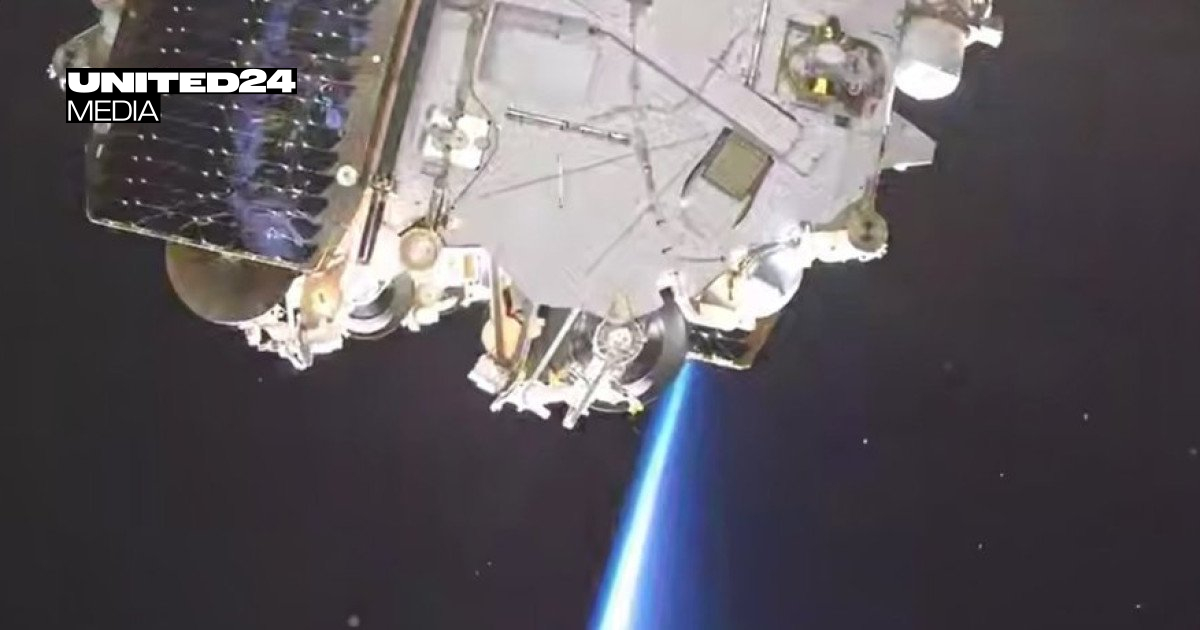
Russian satellite Rassvet-3 No.
17 re-entered the atmosphere after about three months in orbit.
It was part of the Rassvet network, a low-Earth-orbit communications constellation developed by Bureau 1440 as a Russian alternative to Starlink.
The satellite was launched on July 19, and one account says it spent 102 days in orbit.
Accounts give different re-entry dates: October 29 or 30.
One account says the satellite apparently did not activate its propulsion system or make orbit corrections, allowing atmospheric drag to lower its altitude.
The other satellites from its launch remain in orbit; another account says 26 of the 30 Rassvet-3 satellites in orbit have reached about 500 kilometres.
The constellation is still being deployed and tested, with its satellites expected to move to higher orbits and assigned positions later.

Rassvet-3 satellite No. 17 burned up in Earth’s atmosphere in late October 2026 after about three months in orbit.
Reports say it apparently did not activate its propulsion system or make orbital corrections, allowing atmospheric drag to lower its altitude.
Most sources date the reentry to October 30, while iXBT.com says the satellite entered the atmosphere on October 29.
The satellite launched on July 19 aboard a Soyuz-2.1b rocket as part of a batch of 16 spacecraft.
The other Rassvet-3 satellites remain in orbit, and reports say satellite No. 23 was rescued by raising its orbit.
- Who
- Rassvet-3 satellite No. 17, part of the constellation developed by Bureau 1440.
- What
- It burned up in Earth’s atmosphere after apparently failing to activate its propulsion system.
- When
- October 29, according to iXBT.com; October 30, according to the other reports. It launched on July 19, 2026.
- Where
- In Earth’s atmosphere; the exact reentry location was not recorded.
- Why
- Reports say it did not activate its propulsion system or make orbital corrections, so atmospheric drag lowered its altitude.
This story does not have two clearly opposing sides.
Rassvet-3 satellite No. 4 launched as part of the first batch, according to Defense Express.
Satellite No. 4 reentered the atmosphere after similar reported difficulties.
Satellite No. 17 launched aboard a Soyuz-2.1b rocket as part of a batch of 16.
Satellite No. 23 began raising its orbit after descending to about 220 kilometers, according to Defense Express.
Satellite No. 17 entered the atmosphere and burned up; sources give different dates.
- Satellite
- Rassvet-3 No. 17; NORAD identifier 100083
- Launch date
- July 19, 2026
- Time in orbit
- 102 days, according to Orbital Radar data cited by iXBT.com; three months and 11 days in other reports
- Launch vehicle
- Soyuz-2.1b
- Satellite mass
- About 370 kilograms, according to iXBT.com
- Reentry date
- October 29, according to iXBT.com; October 30, according to other reports
4 sources
Orbital Radar: российский спутник «Рассвет-3 17» сгорел в атмосфере 29 октября, он провел на орбите чуть больше трех месяцев
Rassvet Satellite Burns Up: 900-Sat Plan at Risk [2026]
Another Satellite for russia's Starlink Rival Falls Out of Orbit: How Are Other Rassvet-3 Satellites Doing?
Russia’s Starlink Dream Goes Up in Flames as Second Satellite Burns Up