

Science & Tech · Science & Environment · 16 hrs ago
Papua New Guinea Rock Reveals Unexpected Heat During Descent
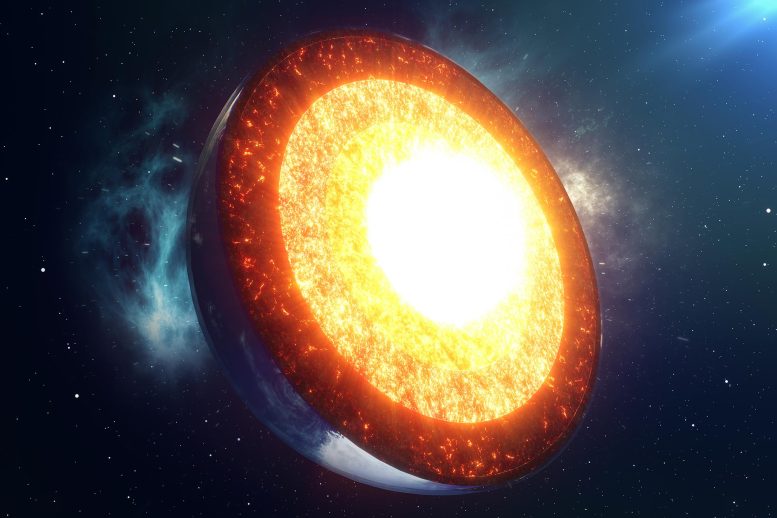
A rock from Papua New Guinea sank deep beneath Earth about four million years ago as one tectonic plate moved under another.
An international team led by Göttingen University studied the rock, called eclogite, whose minerals preserve clues to the conditions it experienced underground.
Mineral evidence showed it reached at least 90 kilometers deep, where it experienced temperatures of about 800°C.
At roughly 45 kilometers deep, it was already around 700°C, much hotter than current models predict for that depth.
The rock’s temperature was relatively lower for its depth farther down, revealing a shift from hot to comparatively cold conditions during its descent.
That pattern challenges scientists’ understanding of subduction zones, which are linked to earthquakes and volcanoes and help recycle carbon dioxide over millions of years.

A rock from Papua New Guinea recorded unexpectedly high temperatures during part of its descent into Earth.
Researchers found it had reached about 700°C at a depth of roughly 45 kilometers, much hotter than current models predict.
The eclogite later reached at least 90 kilometers deep, where it experienced about 800°C.
The findings challenge models of temperatures in subduction zones, which are linked to earthquakes, volcanoes and long-term climate regulation.
The international research team was led by Göttingen University, and its study was published in Nature Geoscience.
- Who
- An international research team led by Göttingen University studied the rock.
- What
- Researchers found evidence that a Papua New Guinea rock was unusually hot at a relatively shallow point in its descent. The findings challenge current thermal models of subduction zones.
- When
- The rock descended about four million years ago. The study was published in 2026.
- Where
- The rock sample came from an outcrop at Taleba Bay on Goodenough Island, Papua New Guinea.
- Why
- The research examined the temperatures the rock experienced as it descended in a subduction zone.
This story does not have two clearly opposing sides.
The rock began its descent into Earth.
The rock had reached around 700°C.
The rock experienced temperatures of around 800°C.
The research findings were published in Nature Geoscience.
- Rock type
- Eclogite
- Sample location
- Taleba Bay, Goodenough Island, Papua New Guinea
- Shallow depth
- About 45 kilometers
- Temperature at shallow depth
- Around 700°C
- Maximum recorded depth
- At least 90 kilometers
- Temperature at maximum depth
- Around 800°C
What people are saying
Finding this change from hot to cold subduction was unexpected, as this contradicts our current thermal models of subduction zones.