Business · Energy & Commodities · 14 hrs ago
Monsoon risks could raise costs for India’s food businesses
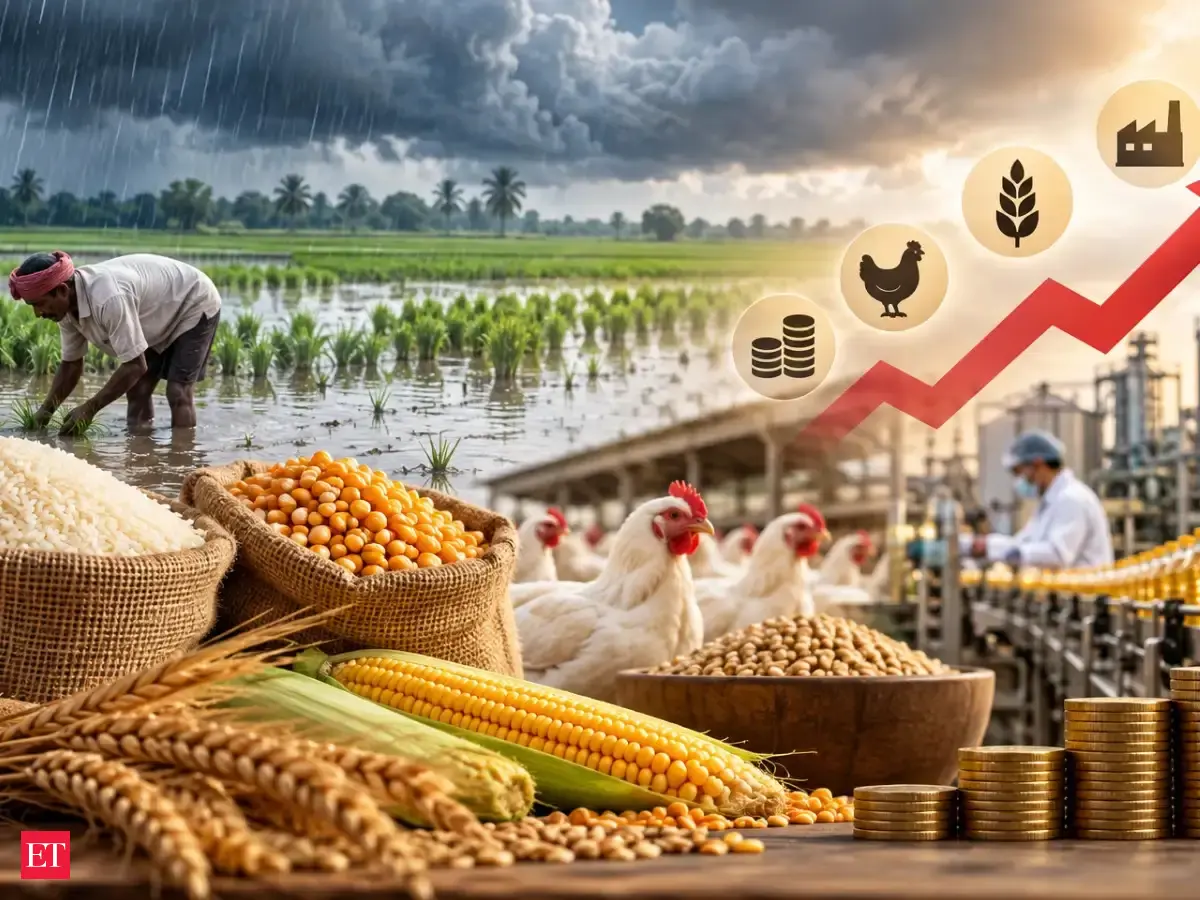
A Dun & Bradstreet India white paper says monsoon-related crop risks could raise costs for food processors, poultry producers and other businesses.
As of October 5, 2026, sowing of kharif crops was 1.1% lower than a year earlier, while rice and maize acreage had also fallen.
Below-average reservoir storage adds concern about water supplies for farming.
The risks are concentrated in particular crops and regions, rather than pointing to an immediate nationwide food shortage.
Rice stocks and wheat reserves could help limit near-term supply problems and price rises, but maize and pulses have less protection.
A maize shortfall could affect animal feed, poultry, aquaculture, processed food, starch and ethanol supply chains.
Businesses may face higher raw-material costs, need to hold more stock and require more working capital before consumers see higher food prices.
The eventual impact will depend on where rainfall deficits occur, crop growth stages, irrigation and the resulting harvest.

Dun & Bradstreet India says monsoon-related agricultural risks could raise costs for food processors, poultry producers and other businesses.
Businesses may face higher procurement costs, larger inventory needs and increased working-capital requirements before any impact appears in retail inflation.
Kharif sowing was 1.1% lower year on year as of October 5, 2026, while foodgrain acreage was down 1.6%.
Lower rice and maize acreage and below-average reservoir storage have heightened concerns about crop-specific and regional production risks.
The report says rice and wheat stocks could help prevent an immediate nationwide food-supply shock, while maize and pulses have less of a cushion.
- Who
- Dun & Bradstreet India assessed the risks to food businesses and agricultural supply chains.
- What
- Monsoon-related agricultural risks could increase business costs and disrupt some crop-dependent supply chains.
- When
- The report was published on October 12, 2026; sowing figures were reported as of October 5, 2026.
- Where
- India, with exposure across crop-producing states including Madhya Pradesh, Rajasthan, Telangana, Maharashtra and Andhra Pradesh.
- Why
- Lower acreage under key crops and below-average reservoir storage have raised concerns about crop and regional production risks.
This story does not have two clearly opposing sides.
Kharif sowing was 1.1% lower year on year, and foodgrain acreage was down 1.6%.
Economic Times reported Dun & Bradstreet India’s assessment of monsoon risks to agricultural production and food businesses.
- Kharif sowing
- 1.1% lower year on year as of October 5, 2026
- Foodgrain acreage
- 1.6% lower year on year
- Rice acreage
- 3.5% lower than a year earlier
- Maize acreage
- 2.9% lower than a year earlier
- Five states’ foodgrain output
- 1,400.3 lakh tonnes, or 37.7%, of output across 20 states analysed for 2025–26
- Agriculture’s share of intermediate consumption
- 57% in food products, beverages and tobacco manufacturing
Sources
Related news
India opens dollar window for oil companies to support the rupee

DMart Q2 profit rises 8.5% as revenue grows 17.8%

India draft policy targets 604 million tonnes of steel capacity by 2047

Musk says Starlink will be affordable in India as it seeks to compete with Jio

Hyundai nears 10 million cumulative vehicle sales in India

Musk criticizes Ambani as Starlink awaits approval to launch in India

SEBI expects derivative expiry-price guidelines within a week

Zetwerk sets IPO price band at ₹143–₹151 per share
Rupee rises about 1% after India’s central bank takes support measures

RBI moves to support rupee by supplying dollars to state-run oil firms

Investors buy 3.19% stake in Fusion CX ahead of ₹702 crore IPO