

Business · Economy · 8 hrs ago
IG Metall rejects pay offer as warning strikes become possible
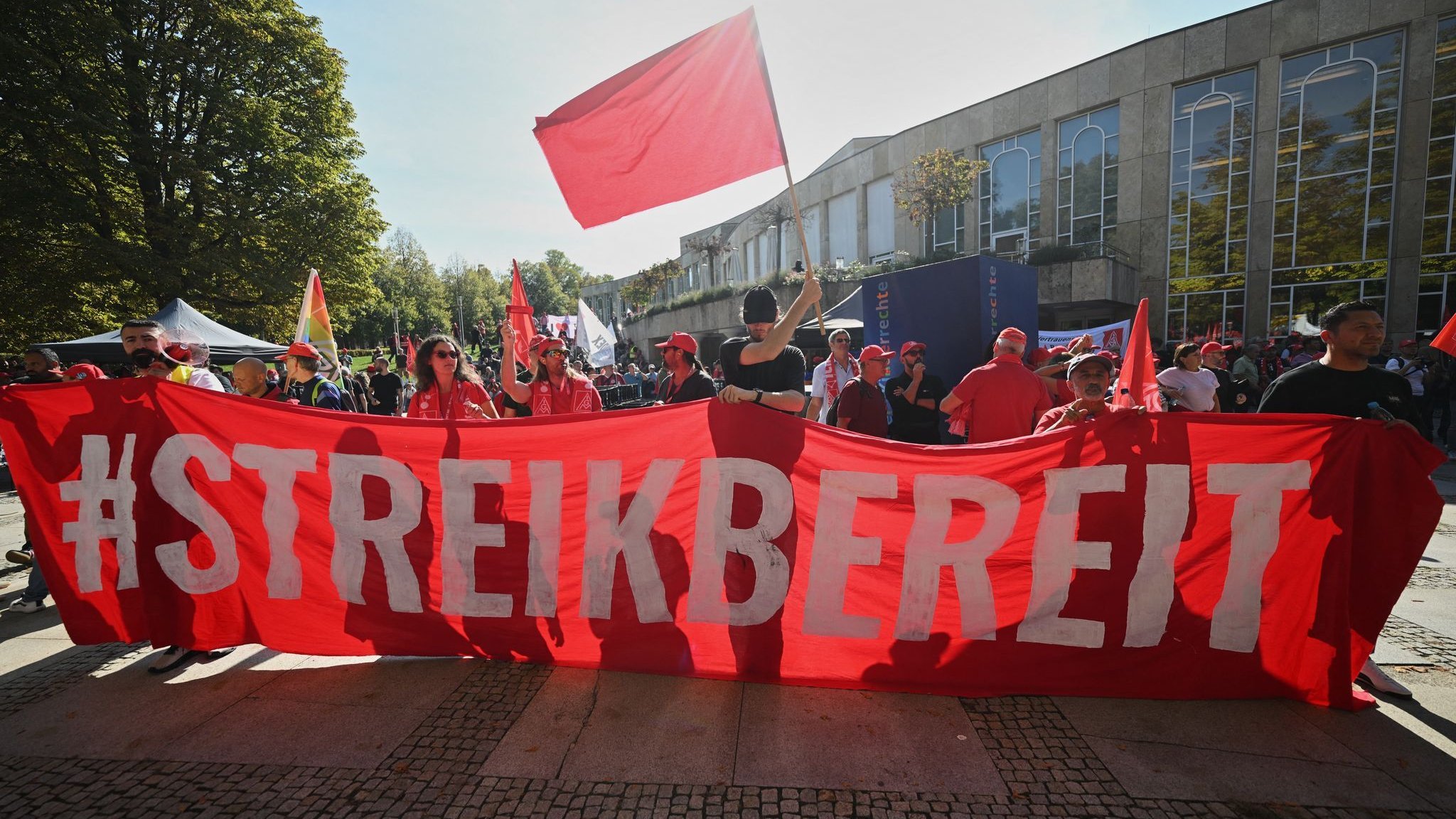
Germany’s IG Metall union rejected employers’ first pay offer for more than 3.7 million workers in the metal and electrical industries.
The union wants a 5% pay rise from November and a 12-month agreement, as well as talks on job security.
Employers propose a one-off payment in July 2027 and a permanent 1.3% increase in July 2028, with an agreement running until the end of 2028.
The one-off payment could be delayed or cancelled at some struggling companies, and employers also want talks on faster AI use and high sickness absence.
IG Metall says the offer is too small and too late, and objects to expanding exceptions that could weaken industry-wide pay agreements.
The dispute matters to workers’ wages and job conditions across a major German industry, while employers say the sector faces a severe crisis and further job losses.
Warning strikes may start on November 1 after the standstill period ends, but union committees still need to decide on action in some areas.

IG Metall has rejected employers’ first pay offer for Germany’s metal and electrical industry, which employs about 3.7 million people.
The union says warning strikes could begin on 1 November, after the peace obligation ends.
Employers offered a one-off payment of 1% of annual gross pay in July 2027 and a permanent 1.3% pay rise in July 2028.
The offer would run until the end of 2028 and could allow some struggling companies to delay or cancel the one-off payment.
IG Metall is seeking a 5% pay rise from November with a 12-month contract, as well as talks on job and business security.
- Who
- IG Metall and employers in Germany’s metal and electrical industry.
- What
- IG Metall rejected the employers’ first pay offer. Warning strikes could begin on 1 November.
- When
- The offer was rejected on 27 October 2026. Warning strikes are possible from 1 November.
- Where
- Germany, in regional negotiations for the metal and electrical industry.
- Why
- IG Metall says the offer is too low and takes too long to provide a pay rise; it also criticizes proposed conditions and exceptions for employers.
IG Metall
Employers
Pay offer
IG Metall
Seeks a 5% pay rise from November with a 12-month contract.
Employers
Offer a 1% one-off payment in July 2027 and a permanent 1.3% rise in July 2028, with a contract running to the end of 2028.
Conditions for struggling businesses
IG Metall
Opposes broader exceptions, saying they would weaken the industry-wide collective agreement.
Employers
Want more scope for struggling businesses to defer or cancel certain payments.
Industry priorities
IG Metall
Calls for talks on job and business security and says workers should not bear the costs of the crisis.
Employers
Seek talks on high sickness absence and faster AI adoption, and say the industry faces a serious crisis and job losses.
IG Metall rejected the employers’ first offer in regional negotiations.
Warning strikes become possible after the peace obligation ends.
The North Rhine-Westphalia tariff commission is due to decide on warning strikes.
- Employees affected
- About 3.7 million
- Union pay demand
- 5% from November; 12-month term
- Employers’ one-off payment
- 1% of annual gross pay in July 2027
- Employers’ permanent rise
- 1.3% in July 2028
- Proposed contract end
- End of 2028
- Possible strike date
- 1 November 2026
3 sources
What people are saying
This offer comes too late, is too low, the term is too long and it has little future in it.
We must stop the ongoing deindustrialization and the now dramatic loss of jobs.
The employers’ wish list is long, their offer is meagre.
The employers have to move. Otherwise, workers in the companies will make sure of it.