

Politics · Australia · 3 hrs ago
Albanese attacks Coalition over opposition to proposed EU trade deal
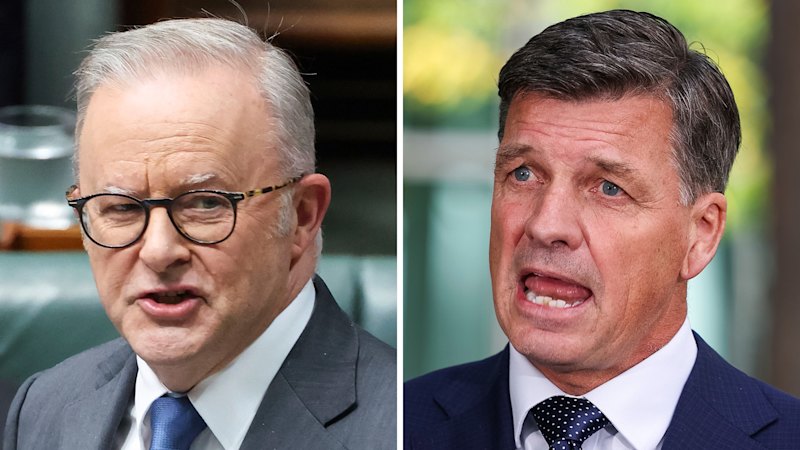
Prime Minister Anthony Albanese attacked the Coalition over its resistance to a proposed trade agreement between Australia and the European Union.
He called the opposition “nativist and protectionist” and said free trade serves Australia’s interests.
Nationals leader Matt Canavan disputed Labor’s $10 billion estimate of the agreement’s benefits, saying it relies on figures from 2020 and includes trade with the UK from before Brexit.
Canavan also argues the deal’s predicted export increases are unrealistic.
The proposed pact has divided the opposition, with Liberal backbencher Alex Hawke criticising Canavan for taking a firm position before the party had agreed on one.
Many Liberals also object to provisions they say could bind future governments to the Paris climate accord and disadvantage some producers.
The dispute is becoming a test of the Coalition’s position on trade as Albanese faces criticism over inflation and poor poll results.
Canavan was expected to set out his challenge to Labor’s estimate on Thursday, while the sources do not say when the trade agreement will be concluded.

Prime Minister Anthony Albanese called the Coalition “nativist and protectionist” over its opposition to a proposed European Union trade agreement.
Nationals leader Matt Canavan defended his opposition and disputed Labor’s claimed $10 billion benefit from the deal.
Canavan said the estimate used figures from 2020 that included projected exports to the UK when it was part of the EU.
Albanese said the agreement supported free trade and argued that protectionist politics were not in Australia’s national interest.
Liberal backbencher Alex Hawke criticised Canavan for moving too quickly to set the Coalition’s position.
- Who
- Prime Minister Anthony Albanese and Nationals leader Matt Canavan are at odds over the proposed EU trade agreement.
- What
- Albanese criticised the Coalition’s opposition, while Canavan challenged Labor’s estimate of the deal’s benefits.
- When
- The article was published on October 29, 2026; the dispute included events on Tuesday and Wednesday.
- Where
- The dispute was discussed in Canberra, including at Parliament House and a Liberal party room meeting.
- Why
- The sides disagree over the deal’s economic benefits and its effects on industries and future government policies.
Anthony Albanese and Labor
Matt Canavan and the Nationals
Trade policy
Anthony Albanese and Labor
Albanese says the agreement supports free and fair trade and that protectionist politics are not in Australia’s national interest.
Matt Canavan and the Nationals
Canavan opposes the deal and says its claimed benefits are based on outdated figures and unrealistic export projections.
Deal’s impact
Anthony Albanese and Labor
Albanese presents the agreement as a free trade pact worth supporting.
Matt Canavan and the Nationals
Canavan says the deal is the worst in Australia’s history; the article also reports concerns among most Liberals about climate, agricultural and labour provisions.
Alex Hawke criticised Canavan’s move to set the Liberal position at a Liberal-only party room meeting.
Labor used nearly all its set-piece speeches in question time to argue for the free trade agreement.
Albanese spoke to reporters in Canberra and Canavan said he would challenge Labor’s claimed $10 billion benefit.
- Proposed agreement
- European Union trade deal
- Labor’s claimed benefit
- $10 billion
- Canavan’s disputed estimate
- Based on figures from 2020, according to Canavan
- Canavan’s claimed beef and sheep meat export increase
- 528 per cent
- Canavan’s claimed dairy export increase
- 86 per cent
- Canavan’s claimed rice and sugar export increases
- 113 per cent for rice; 123 per cent for sugar
What people are saying
Nativist politics is not in Australia’s national interest. We are a trading nation.
Labor has misled the public and the Senate to declare a $10 billion so-called benefit, which never modelled the actual outcomes of the worst trade deal in Australia’s history.
The fake figures also include the benefits of increased exports to the UK, from when the UK was previously part of the EU, but now that is no longer the case.
If we don’t have our own identity on key economic issues, then the Nationals will dominate us and that will be at our expense electorally.