

Science & Tech · Science & Environment · 3 hrs ago
Erect-crested penguins are stable on Bounty Islands but declining on Antipodes
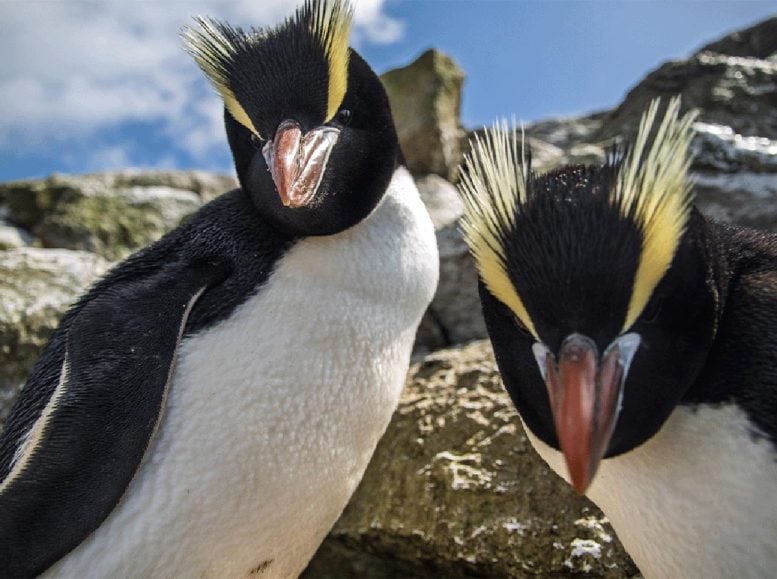
Researchers counted breeding colonies across both island groups in New Zealand’s remote subantarctic region for the first time.
Erect-crested penguins breed only on the Bounty and Antipodes islands, about 800 kilometres southeast of the South Island.
Counts from 2022 to 2024 showed the Bounty population has stayed steady for at least 25 years, while the Antipodes population has fallen by more than 40% since 1995.
The small Bounty Islands hold about 27,800 breeding pairs, nearly as many as the much larger Antipodes Islands, with about 29,800.
The findings challenge the belief that Antipodes is the species’ main stronghold and show that one global risk rating can hide different local trends.
On Antipodes, shrinking colonies may be harder to defend from skuas, which prey on eggs and chicks.
The study’s results could help guide conservation attention to the two populations’ different needs.

A survey found erect-crested penguins stable on the Bounty Islands but declining by more than 40 percent on the Antipodes Islands since 1995.
Researchers counted about 27,800 breeding pairs on the Bounty Islands and about 29,800 on the Antipodes Islands.
The Bounty Islands are only 50 hectares, while the Antipodes Islands are 40 times larger.
Researchers used drones to photograph and count every breeding colony across both island groups between 2022 and 2024.
The study suggests that shrinking Antipodes colonies may be less able to defend eggs and chicks from skuas.
- Who
- Researchers led by Dr. Thomas Mattern of the Tawaki Project, working with the Antarctic Research Trust and the Global Penguin Society.
- What
- A survey found the Bounty Islands population essentially unchanged for at least 25 years, while the Antipodes Islands population had declined by more than 40 percent since 1995.
- When
- The counts were made between 2022 and 2024. The study was published on October 21, 2026.
- Where
- The Bounty and Antipodes Islands, about 800 kilometers southeast of New Zealand’s South Island.
- Why
- Researchers said shrinking Antipodes colonies have weakened collective defense against skuas, allowing predation losses to increase.
This story does not have two clearly opposing sides.
The Antipodes Islands population declined by more than 40 percent, while the Bounty Islands population remained essentially unchanged for at least 25 years.
Researchers used drones to photograph and count every breeding colony on both island groups.
The study was published in PLOS ONE.
- Bounty Islands population
- About 27,800 breeding pairs
- Antipodes Islands population
- About 29,800 breeding pairs
- Antipodes decline
- More than 40 percent since 1995
- Bounty Islands area
- 50 hectares
- Distance from South Island
- About 800 kilometers
- Survey period
- 2022–2024
What people are saying
The Antipodes Islands population, by contrast, has declined by more than 40 percent since 1995.
The tiny Bounty Islands, at just 50 hectares, were found to hold almost as many breeding pairs (about 27,800) as the Antipodes Islands (about 29,800), even though the latter is 40 times larger and historically considered the species’ stronghold.
Once we actually opened the metaphorical box and looked, we found there wasn’t one state at all, but two: stable on the Bounty Islands, declining on the Antipodes Islands.
As Antipodes colonies have shrunk over recent decades, the collective defense they once provided against native subantarctic bird, the skua, a natural predator of eggs and chicks, has weakened, allowing predation losses to increase and colonies to fragment further.