

World · Africa · 2 hrs ago
Illegal gold mining costs Africa more than $30 billion a year
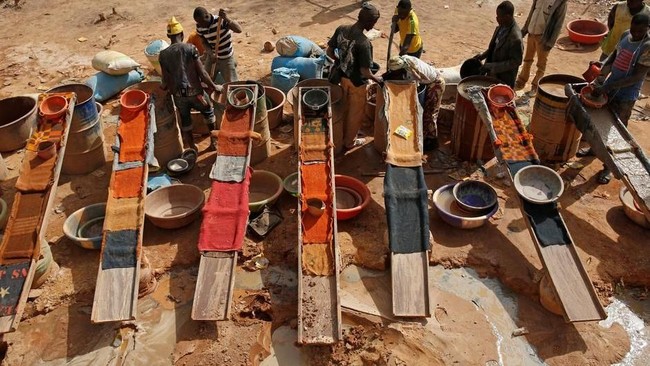
Illegal gold mining costs African countries more than $30 billion a year, according to the story.
It involves countries including Sudan, Mali, Burkina Faso, the Democratic Republic of the Congo and Mozambique, where weak oversight and insecurity leave mining areas vulnerable.
Armed groups use gold to fund operations and extend their influence, because it is valuable, easy to transport and can be sold through informal networks.
In Sudan, the Rapid Support Forces control gold deposits in Darfur amid the civil war, while groups in the Sahel and Mozambique have also targeted mining areas and miners.
Cameroon reported far more gold imports than its official exports could explain: it recorded 953 kilograms of production in 2023 and 22.3 kilograms of official exports, while importing countries reported receiving 15.2 tonnes from the country.
Cameroon is tightening controls on mining companies, requiring monthly production targets, closed-circuit processing within six months and an upfront environmental deposit of more than $112,000.
The stated aim is to curb illegal mining and improve state control and revenue, while ACLED has called for stronger oversight that supports small-scale miners.

Illegal gold mining costs Africa more than US$30 billion a year, according to the article.
Armed groups and other actors exploit weak governance, local grievances and limited security to steal gold and sustain conflict.
In Sudan, the Rapid Support Forces control much of the gold deposits in western Darfur amid the civil war.
Armed groups in parts of the Sahel and Mozambique also use mining areas and gold trading to raise money and extend their influence.
Cameroon has introduced new requirements for mining companies as it seeks to regain control of the gold sector.
- Who
- African authorities are trying to curb illegal gold mining. Armed groups and other actors are involved in exploiting the trade.
- What
- Illegal gold mining costs Africa more than US$30 billion annually and is linked to the funding of armed groups and conflict.
- When
- The article was published on November 26, 2026. It says Cameroon took major steps this year.
- Where
- Across Africa, with examples in Sudan, Mali, Burkina Faso, the Democratic Republic of the Congo, Mozambique and Cameroon.
- Why
- Gold is valuable, easy to carry and can be sold through informal networks. Armed groups also exploit mining areas and trade routes to raise funds and expand their influence.
This story does not have two clearly opposing sides.
Cameroon reported gold production of 953 kilograms and official exports of 22.3 kilograms.
Burkina Faso, Mali and Niger left ECOWAS to form their own bloc.
ACLED called for stronger oversight of Mozambique’s mining sector; the article does not specify the year.
Cameroon introduced new requirements for mining companies, including minimum monthly production targets and an upfront environmental guarantee.
- Annual cost
- More than US$30 billion
- Cameroon production
- 953 kilograms of gold reported in 2023
- Cameroon official exports
- 22.3 kilograms in 2023
- Reported imports from Cameroon
- 15.2 metric tons, according to importing countries
- Cameroon environmental guarantee
- More than US$112,000 upfront
- Regional bloc departure
- Burkina Faso, Mali and Niger left ECOWAS in January 2025
What people are saying
Gold is very suited to these needs because it is valuable, easy to carry, and can be sold through informal networks.
They do not need to control the mines permanently.
Artisanal mining areas, in particular, concentrate economic activity, mobile populations, transport routes, equipment, and commercial supply chains that can support militant operations.
Measures to improve oversight of the mining sector that supports artisanal and small-scale miners are urgently needed.