

Science & Tech · Science & Environment · 8 hrs ago
Evolutionary enzyme changes may help bacteria make proteins faster
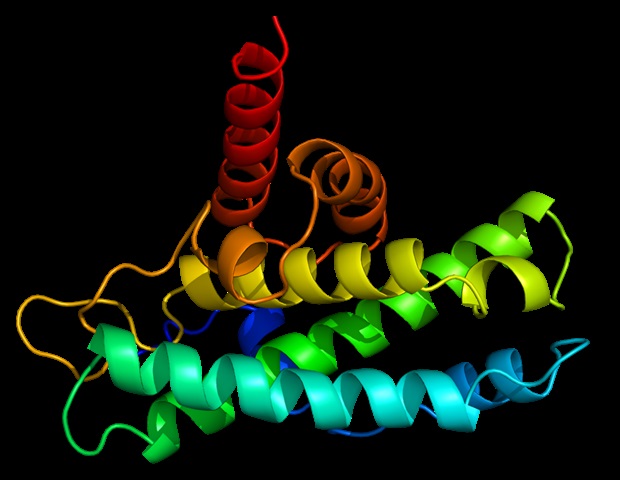
Researchers traced the evolution of IleRS, an enzyme found in cells that prepares tRNA to help build proteins.
The work involved teams from Japan, Croatia and Switzerland, and examined the enzyme across bacteria, archaea and eukaryotes.
Cells use tRNA to carry amino acids to ribosomes, where they are assembled into proteins using genetic instructions.
The researchers identified three evolutionary groups of IleRS, including a previously unrecognized group of archaeal enzymes.
They found that an enzyme region called INS has been lost independently in several groups of prokaryotes, which include bacteria and archaea.
Experiments on the enzyme’s structure and activity suggested that these changes may increase the rate of amino-acid attachment, potentially helping bacteria make proteins faster.
The study was published in Nature Communications on October 12, 2026; the researchers say further work will help clarify how these evolutionary changes affect protein synthesis.

Researchers report that evolutionary changes in the enzyme isoleucyl-tRNA synthetase may help bacteria fine-tune how quickly proteins are made.
The team identified three evolutionary groups of the enzyme: IleRS1, IleRS2 and a previously unrecognized group called IleRS-A.
Their analysis suggests that an approximately 80-amino-acid region called INS has been independently lost in multiple prokaryotic lineages.
The researchers say remodeling of the enzyme’s C-terminal region may have helped refine its activity and reaction speed.
The study was published in Nature Communications on October 12, 2026.
- Who
- Researchers from Institute of Science Tokyo, the University of Zagreb Faculty of Science and ETH Zürich.
- What
- The researchers traced the evolution of IleRS and studied how its changes relate to tRNA recognition, enzyme function and aminoacylation rate.
- When
- The study was published on October 12, 2026.
- Where
- The research involved teams in Japan, Croatia and Switzerland.
- Why
- To investigate how evolutionary changes in IleRS affect its function and the rate at which it attaches amino acids to tRNA.
This story does not have two clearly opposing sides.
This story does not have a timeline yet.
- Enzyme
- Isoleucyl-tRNA synthetase (IleRS)
- Evolutionary groups
- IleRS1, IleRS2 and IleRS-A
- INS region
- Approximately 80 amino acids
- Publication
- Nature Communications, October 12, 2026
- Study institutions
- Institute of Science Tokyo; University of Zagreb Faculty of Science; ETH Zürich
2 sources
What people are saying
Our findings suggest that bacteria have repeatedly streamlined parts of this enzyme, potentially enhancing aminoacylation rate and contributing to faster protein synthesis.