

Science & Tech · Science & Environment · 6 hrs ago
Aquanauts return after five-day underwater space mission
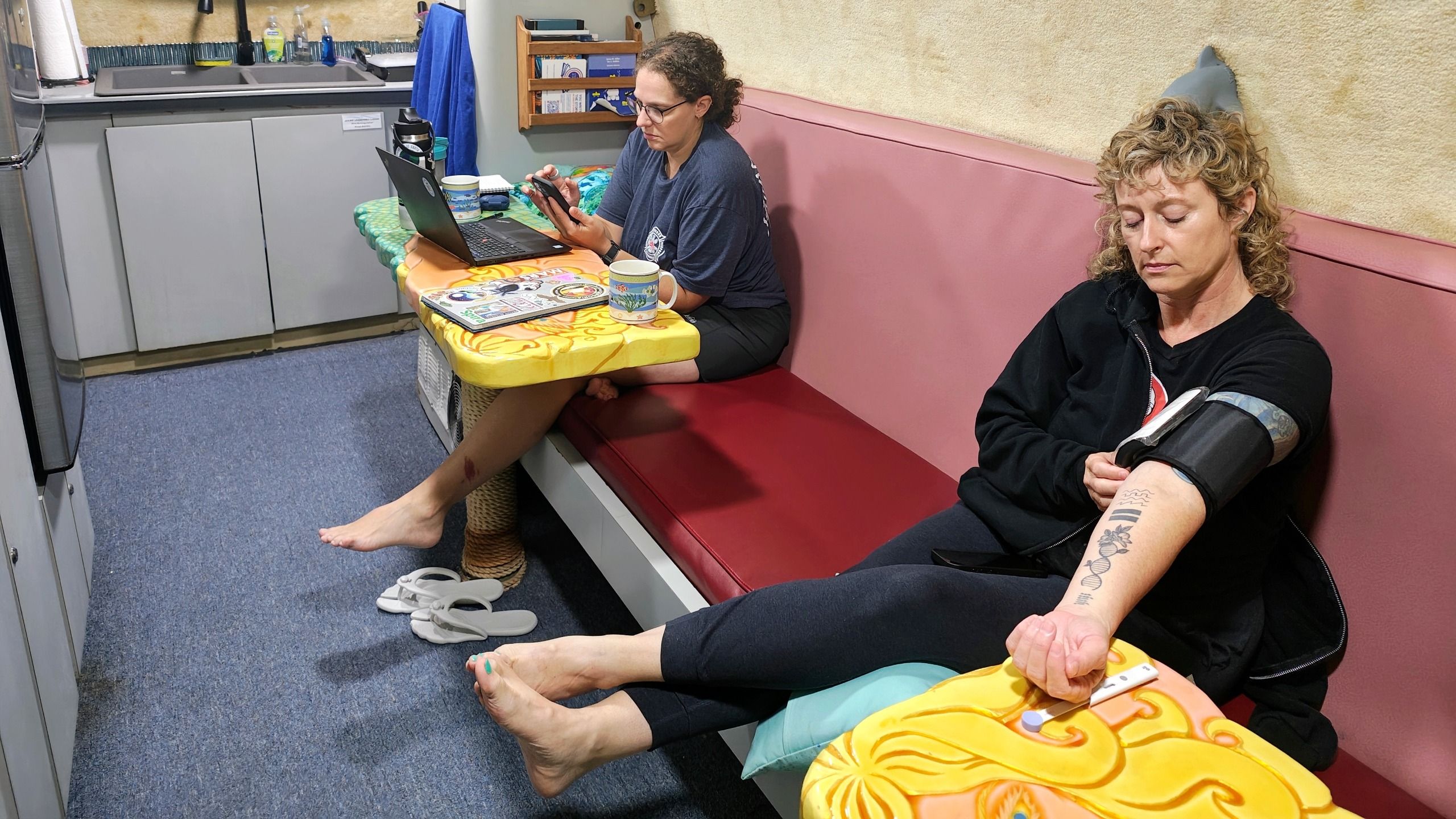
The SEA STAR crew completed a five-day underwater mission at the Jules' Undersea Lab near Key Largo, Florida.
The lab sits 22 feet underwater, where the crew lived and worked without returning to the surface.
Staying underwater for more than 24 hours in this condition makes someone an aquanaut.
The team carried out research designed to be relevant to long-duration space missions.
Underwater stations can help researchers test space-mission ideas because only a limited number of astronauts and research activities can go to the International Space Station.
The crew also faced the practical demands of underwater life, including noisy life-support systems and low visibility during dives.
After the mission, the crew was returning to the surface and normal life.

The SEA STAR crew returned after spending five days underwater at the Jules' Undersea Lab near Key Largo, Florida.
The mission aimed to simulate living and working like astronauts on the International Space Station.
The habitat was 22 feet (7 meters) underwater, and crew members became aquanauts by remaining submerged for more than 24 hours.
The crew completed planned scientific projects, including research relevant to long-duration space missions.
Commander Dr. Michaela Musilova said the experience strengthened her determination to care for Earth.
- Who
- The SEA STAR crew, led by Commander Dr. Michaela Musilova.
- What
- They completed a five-day underwater mission simulating aspects of life and work on a space station.
- When
- After five days underwater; the exact dates are not stated.
- Where
- The Jules' Undersea Lab near Key Largo, Florida, at 22 feet (7 meters) underwater.
- Why
- To conduct research relevant to long-duration space missions and use an underwater station as an analog for space missions.
This story does not have two clearly opposing sides.
The SEA STAR crew lived and worked underwater at the Jules' Undersea Lab.
The crew's underwater stay came to an end and they returned to the surface.
- Mission duration
- Five days
- Undersea habitat
- Jules' Undersea Lab
- Location
- Near Key Largo, Florida
- Depth
- 22 feet (7 meters)
- Commander
- Dr. Michaela Musilova
What people are saying
I felt like what I imagine an astronaut on the International Space Station (ISS) must feel before returning to Earth.
underwater stations provide us with a valuable way to conduct analog, or simulated, space missions instead.