

Business · Economy · 2 hrs ago
Saudi central bank governor warns Middle East conflict threatens global growth
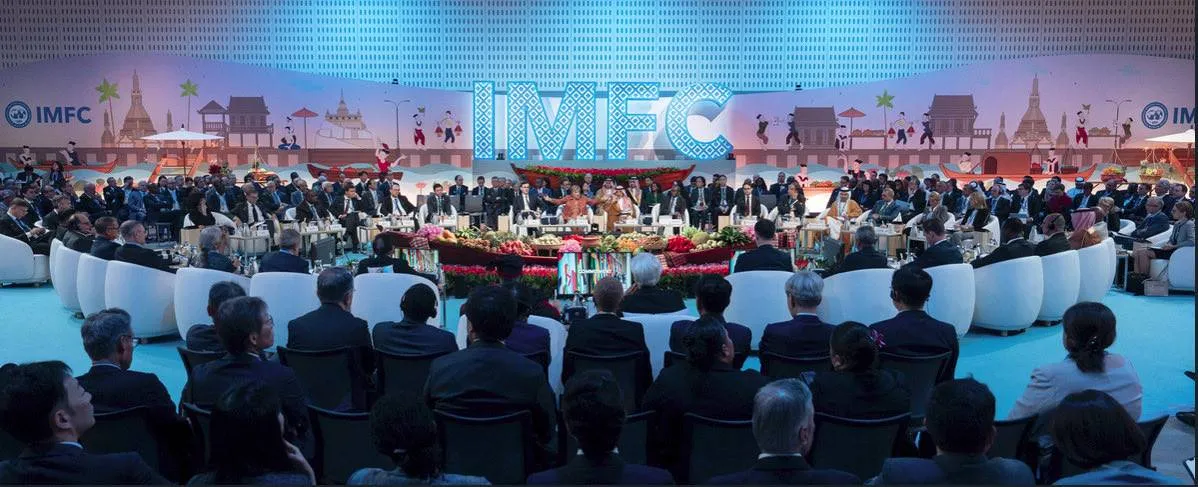
Saudi central bank governor Ayman al-Sayari warned that the continuing Middle East conflict is increasing risks to the world economy.
He spoke at an International Monetary Fund committee meeting in Bangkok, where he said the conflict has affected energy markets and shipping routes, with pressures spreading to trade, inflation, food and financing.
Saudi energy and logistics networks have helped keep oil supplies and regional trade moving, despite the disruption.
Al-Sayari said strong financial buffers and a well-capitalised, liquid banking sector have helped Saudi Arabia withstand shocks.
The conflict could weaken global growth over the medium term, as supply diversions and the use of reserves leave less room to handle further interruptions.
He said Saudi Vision 2030 is strengthening the economy through non-oil growth, private-sector participation and investment in infrastructure and skills.
He urged the IMF to tailor support and reforms to countries’ needs, and called for coordinated action on global economic imbalances and unsustainable debt.

Saudi central bank governor Ayman Al-Sayari said the country’s energy infrastructure and logistics networks helped sustain oil supplies and regional trade amid the Middle East conflict.
He said the conflict’s effects spread from energy markets and shipping routes to trade, inflation, food security and financing.
Al-Sayari said Saudi Arabia’s economy was adapting from a position of strength, supported by strong policy frameworks, financial buffers and a well-capitalised banking sector.
He called for continued investment across the energy supply chain and for reforms at the International Monetary Fund to reflect member countries’ circumstances.
The remarks were delivered at an IMF committee meeting in Bangkok during the annual meetings of the IMF and World Bank.
- Who
- Ayman Al-Sayari, governor of the Saudi Central Bank, known as SAMA.
- What
- He said Saudi Arabia’s energy infrastructure and logistics networks helped maintain oil supplies and regional trade during the Middle East conflict.
- When
- At a meeting reported on October 18, 2026. The exact date of the remarks is not stated.
- Where
- Bangkok, at a meeting of the IMF’s International Monetary and Financial Committee.
- Why
- The remarks addressed the economic effects of the Middle East conflict and Saudi Arabia’s resilience and response.
This story does not have two clearly opposing sides.
Initial effects were concentrated in energy markets and major shipping routes before spreading to trade, transport, inflation, financing conditions and investor confidence.
Rerouting supplies and drawing on stocks helped reduce the immediate impact of disruptions, but reduced the capacity to withstand further interruptions.
Al-Sayari’s remarks at an IMF committee meeting in Bangkok were reported by Al Eqtisadiah and Asharq Al-Awsat.
- Speaker
- Ayman Al-Sayari, governor of the Saudi Central Bank
- Meeting location
- Bangkok
- Saudi pledge to IMF technical assistance
- $279 million
- Saudi reform programme
- Vision 2030
- Banking sector
- Strong capital and liquidity levels, according to Al-Sayari
3 sources
What people are saying
Energy security is not limited to the availability of supplies, but also includes the ability to deliver them to markets reliably and at an appropriate cost.
The initial effects of the conflict were concentrated in energy markets and major shipping routes, before spreading to broader sectors.
The continuation of the conflict exacerbates economic challenges, with its effects varying among countries in the Middle East and North Africa.