

Science & Tech · Science & Environment · 3 hrs ago
Huei Tzompantli skulls raise possibility of women warriors
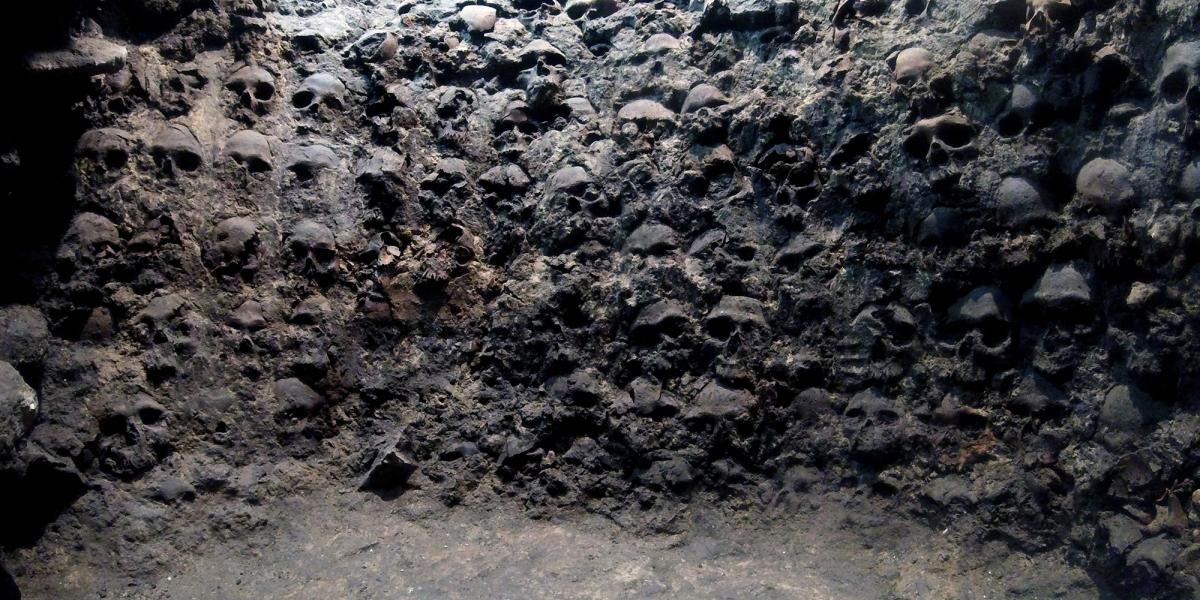
Researchers in Mexico are studying skulls from the Huei Tzompantli, a tower of skulls at the sacred center of the Mexica city of Tenochtitlan.
The altar was dedicated to Huitzilopochtli, the god of war, and was long thought to hold mostly male warriors captured in battle, along with enslaved people and others.
Among 214 skulls examined, 99 were identified as male and 80 as female; the rest could not be identified because of their condition.
The small gap between the numbers has led researchers to consider whether some women were captured in combat and later sacrificed.
Women’s remains have also been explained as those of enslaved people, prisoners or people who represented deities in rituals, so the findings do not prove they were fighters.
The ongoing study could broaden understanding of women’s roles in Mexica warfare and ritual, but no further findings or next steps are specified.

Analysis of skulls from the Huei Tzompantli in Tenochtitlan has raised the possibility that some women were captured in combat and ritually sacrificed.
A sample of 214 skulls included 99 identified as male and 80 as female; the sex of the rest could not be determined.
Archaeologist Lorena Vázquez Vallín said the small difference between the male and female counts warrants considering women as possible combatants.
The skulls were found between 2015 and 2017 at the site on República de Guatemala No. 24.
Researchers also reported a separate ritual deposit with the remains of a woman who may have been decapitated.
- Who
- Researchers from Mexico’s National Institute of Anthropology and History, including archaeologist Lorena Vázquez Vallín.
- What
- Analysis of skulls has raised the possibility that some women were combatants captured in war and sacrificed.
- When
- The skulls were found between 2015 and 2017. The research was discussed at a recent presentation; its date is not stated.
- Where
- The Huei Tzompantli at the sacred precinct of Tenochtitlan, at República de Guatemala No. 24.
- Why
- The researchers are investigating the notable presence of female skulls and the near-parity in the identified male and female remains.
This story does not have two clearly opposing sides.
Women were buried with projectile points in contexts linked to state representations of warfare at Teotihuacan, according to Vázquez Vallín’s historical review.
The Huei Tzompantli and its skull tower were found at República de Guatemala No. 24.
Researchers presented findings from excavations near Tenochtitlan’s sacred precinct at a discussion at El Colegio Nacional.
- Skull sample
- 214 skulls analyzed
- Identified as male
- 99 (46.3%)
- Identified as female
- 80 (37.4%)
- Discovery site
- República de Guatemala No. 24, Tenochtitlan
- Discovery period
- 2015–2017
What people are saying
The difference is only 8.9 percentage points between the male and female individuals. That is, there are only 8.9 more males than females.
Some of these women may have been combatants captured during armed conflicts.