

Science & Tech · Space · 6 hrs ago
Webb Reveals More Than 130 Young Stars in NGC 7129
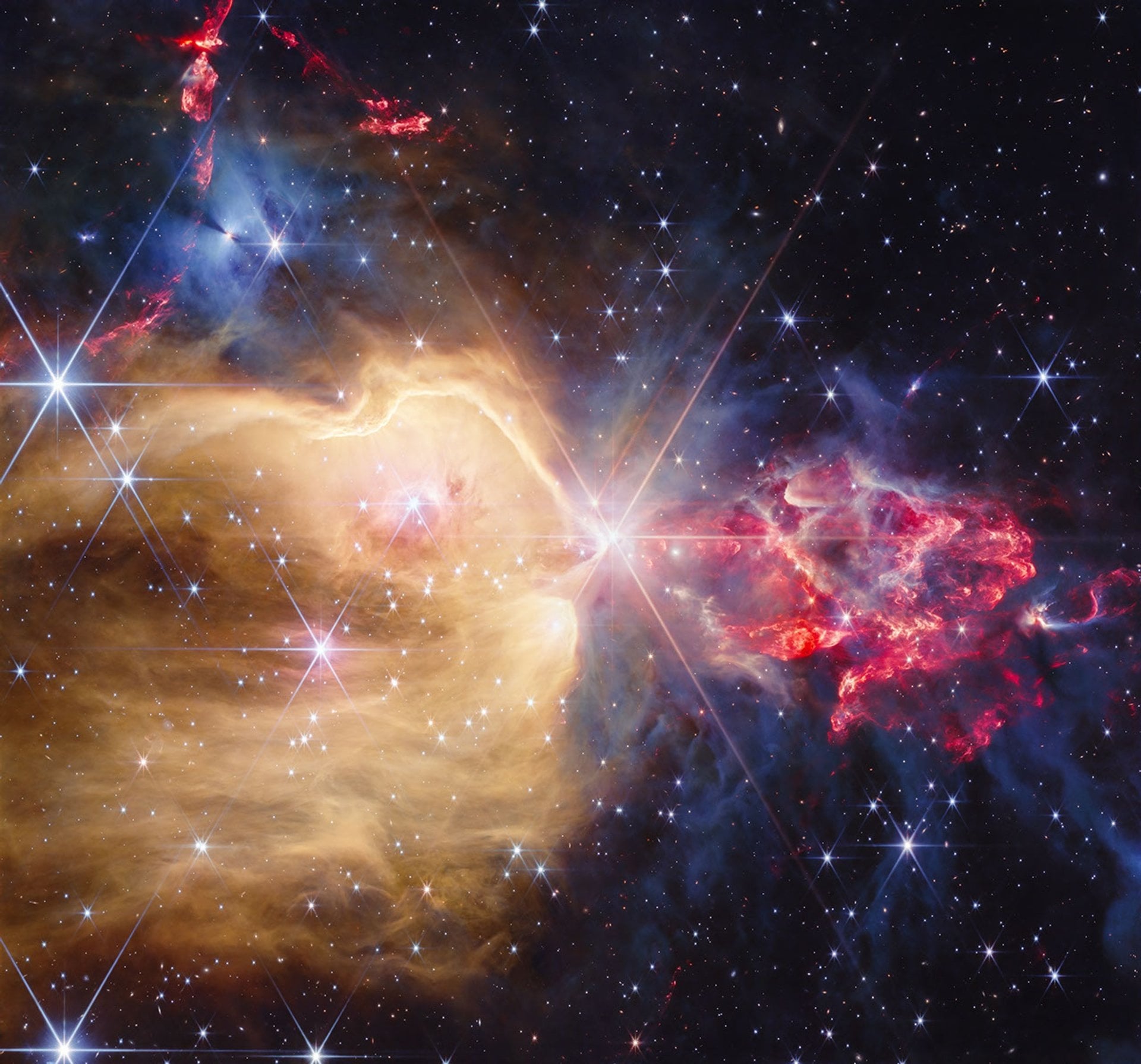
The James Webb Space Telescope revealed stars hidden by dust in the stellar nursery NGC 7129.
The region is about 3,300 light-years from Earth, in the constellation Cepheus, and more than 130 stars have been identified there.
Many are less than one million years old and are at different stages of development.
Young stars form as gas and dust gather inside cold clouds, which can hide them from telescopes that do not capture infrared light.
Webb’s detailed view shows how outflows from young stars shape the surrounding gas and dust, creating cavities and helping compress material where more stars can form.
Continued study of NGC 7129 will help explain how stars alter their surroundings as they grow and the clouds gradually erode.

The James Webb Space Telescope has revealed more than 130 young stars in the stellar nursery NGC 7129.
The nursery is about 3,300 light-years from Earth in the constellation Cepheus.
The identified stars are less than 1 million years old and are at different stages of development.
Webb’s infrared instruments detected stars hidden by dust and showed detailed structures in the surrounding gas and dust.
The region’s central star, LkH(alpha) 234, has an estimated mass of about five to eight times the Sun’s.
- Who
- Astronomers using the James Webb Space Telescope identified the stars.
- What
- Webb revealed more than 130 young stars in NGC 7129.
- When
- The image was newly released; a more specific date is not stated.
- Where
- NGC 7129, about 3,300 light-years from Earth in the constellation Cepheus.
- Why
- Webb’s infrared sensitivity allowed astronomers to see stars hidden by dust and study how stars form and evolve.
This story does not have two clearly opposing sides.
This story does not have a timeline yet.
- Stars identified
- More than 130
- Distance from Earth
- About 3,300 light-years
- Location
- Constellation Cepheus
- Age of identified stars
- Less than 1 million years
- Central star
- LkH(alpha) 234, about 5 to 8 solar masses