

Business · Companies · 4 hrs ago
Huang’s Return Brings NVIDIA Leadership Certainty, Not Easier Chip Access
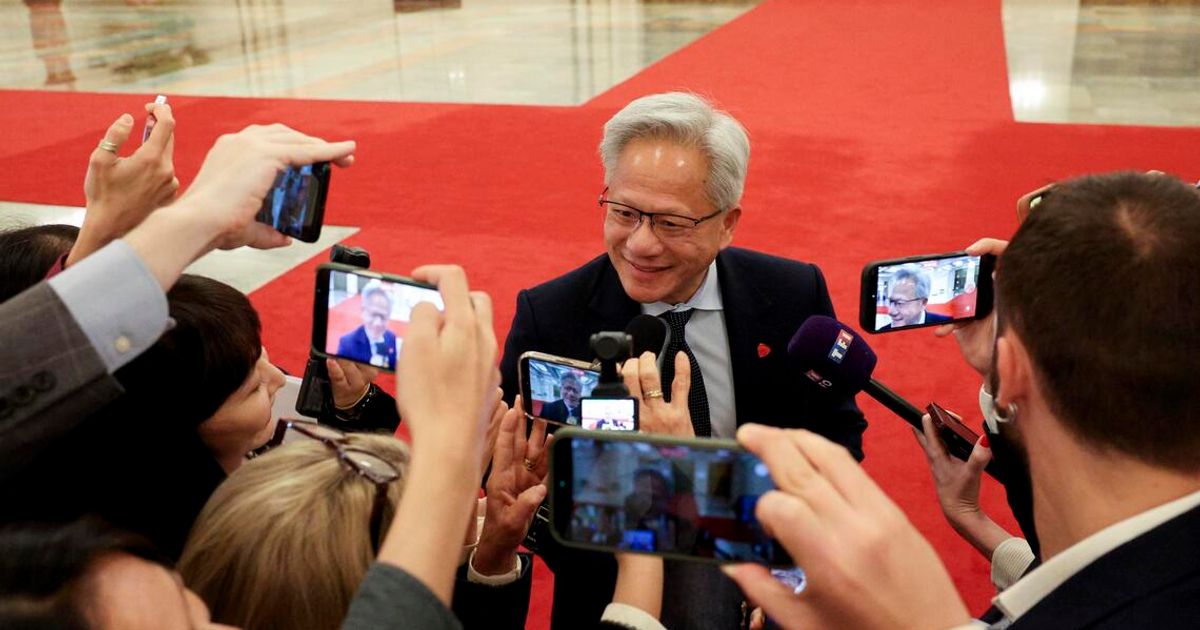
Jensen Huang returned as NVIDIA’s CEO on November 23, after resigning on November 12.
His return gives companies that depend on NVIDIA more certainty about the supplier’s leadership, but it does not remove barriers to buying or using its advanced chips.
In India, NVIDIA accounts for 81.6% of compute units listed on the IndiaAI Compute Portal, and firms also rely on its software, making it difficult to switch suppliers.
Analysts say global demand, manufacturing limits and US export rules mean GPU access and costs are unlikely to improve soon.
In China, US rules that took effect on November 19 restrict overseas data centres from serving Chinese clients with significant computing power unless they are licensed.
Overseas data centres provide about 30% of the computing power available to Chinese firms, so the restrictions could slow AI development and push up demand for domestic alternatives.
Analysts advise reducing reliance on a single supplier by diversifying hardware and improving the use of existing infrastructure.

Jensen Huang’s reinstatement as NVIDIA chief executive has brought greater certainty about the company’s leadership.
Analysts say his return is unlikely to improve access to advanced chips or lower procurement costs for Indian and Chinese AI firms.
They attribute supply constraints to global demand, manufacturing capacity, advanced packaging, memory availability and US export policies.
NVIDIA accounts for 81.6% of the compute units listed on India’s AI Compute Portal, according to an analysis cited by Inc42.
New US rules restrict overseas data centres from serving Chinese clients with significant computing power unless they obtain a licence.
- Who
- Jensen Huang and NVIDIA; Indian and Chinese AI firms are affected by the company’s chip supply and US export rules.
- What
- Huang returned as NVIDIA chief executive, but analysts say this does not ease access to advanced chips.
- When
- Huang was reinstated on November 23, 2026. New US rules took effect on November 19.
- Where
- The story concerns NVIDIA’s global chip supply, with impacts discussed in India and China.
- Why
- Chip access remains constrained by global demand, production limits and US export policies.
This story does not have two clearly opposing sides.
Huang resigned as NVIDIA chief executive, according to Inc42.
The US Commerce Department’s Bureau of Industry and Security announced rules restricting overseas data centres from serving Chinese clients with significant computing power without a licence.
The new US rules took effect.
NVIDIA announced Huang’s reinstatement as chief executive.
- Huang’s reinstatement
- November 23, 2026
- NVIDIA’s share of IndiaAI Compute Portal units
- 81.6% of 44,077 listed compute units
- China’s overseas computing-power share
- Roughly 30% of the AI computing power available to Chinese firms
- US restrictions
- Overseas data centres need a US licence to serve Chinese clients with significant computing power
3 sources
What people are saying
That said, NVIDIA is not a one-person company, but Jensen’s return does bring more certainty, and AI trade is perceiving this to be a good sign.
The constraints are largely structural, driven by global demand, manufacturing capacity, advanced packaging, high-bandwidth memory availability and US export policies. These cannot be resolved through a leadership decision alone.
The most important lesson for China is that it cannot depend on the goodwill of individual American corporate leaders, regardless of their commercial influence or willingness to engage with China.
It sets everyone back in China