

Science & Tech · Science & Environment · 2 hrs ago
Divers capture record 312 invasive lionfish in Fernando de Noronha
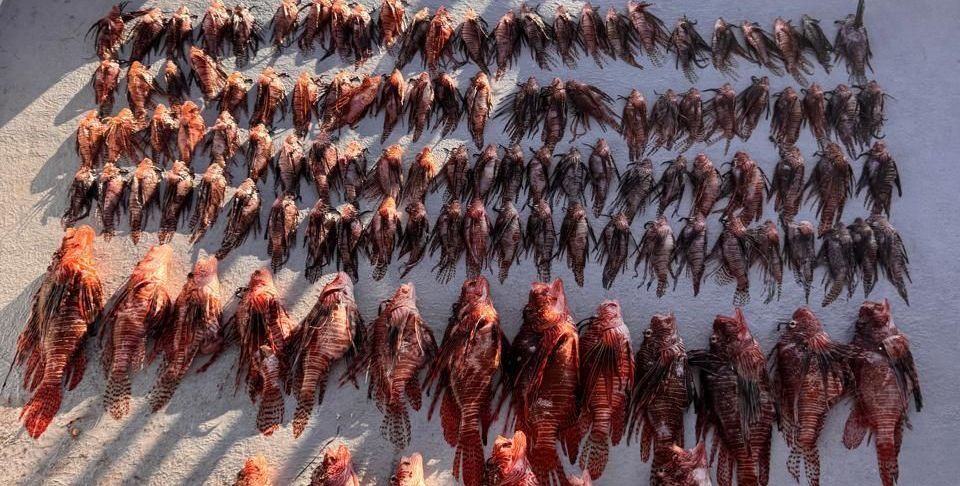
A Sea Paradise dive team captured 312 lionfish in one expedition near the port of Fernando de Noronha, Brazil.
The catch set a record for the team, which carries out daily marine management operations along the coast.
Lionfish were first identified in the area six years ago, and the team says they are reproducing quickly.
Early expeditions usually considered 30 to 40 fish an unusually large catch, while recent trips commonly collect 100 to 150.
The invasive fish could seriously harm the local ecosystem if their numbers keep growing.
The team says it needs to maintain its capture efforts to stop the fish from spreading further.
Captured fish are sent to Brazilian universities for study.

Sea Paradise divers captured 312 invasive lionfish in one expedition in Fernando de Noronha, a record for the team.
The operation took place in the region near the island’s port on Wednesday, October 28.
The team said it is increasing its capture efforts as the fish reproduce rapidly.
Recent expeditions usually catch between 100 and 150 lionfish, compared with 30 to 40 being considered unusual early in the work.
The fish are distributed to universities in Brazil for research.
- Who
- Sea Paradise’s dive team captured the fish.
- What
- The team caught a record 312 invasive lionfish in one expedition.
- When
- Wednesday, October 28; the article was published on October 30, 2026.
- Where
- Near the port in Fernando de Noronha, Brazil.
- Why
- The team is trying to contain the invasive species’ spread and reduce harm to the local ecosystem.
This story does not have two clearly opposing sides.
The first lionfish was identified in Fernando de Noronha.
Sea Paradise’s team captured 312 lionfish in one expedition near the port.
- Record catch
- 312 lionfish in one expedition
- Location
- Fernando de Noronha, near the port
- Team
- Sea Paradise dive team
- Typical recent catch
- 100 to 150 lionfish per expedition
- Research distribution
- Several universities in Brazil
What people are saying
they are reproducing very quickly, and if we reduce our effort they will take over, they will dominate completely, so it is necessary to maintain the effort to capture this species, because it can seriously harm the environment.