

Science & Tech · Space · 3 hrs ago
Cape Cod meteor traced to a Jupiter-perturbed asteroid orbit
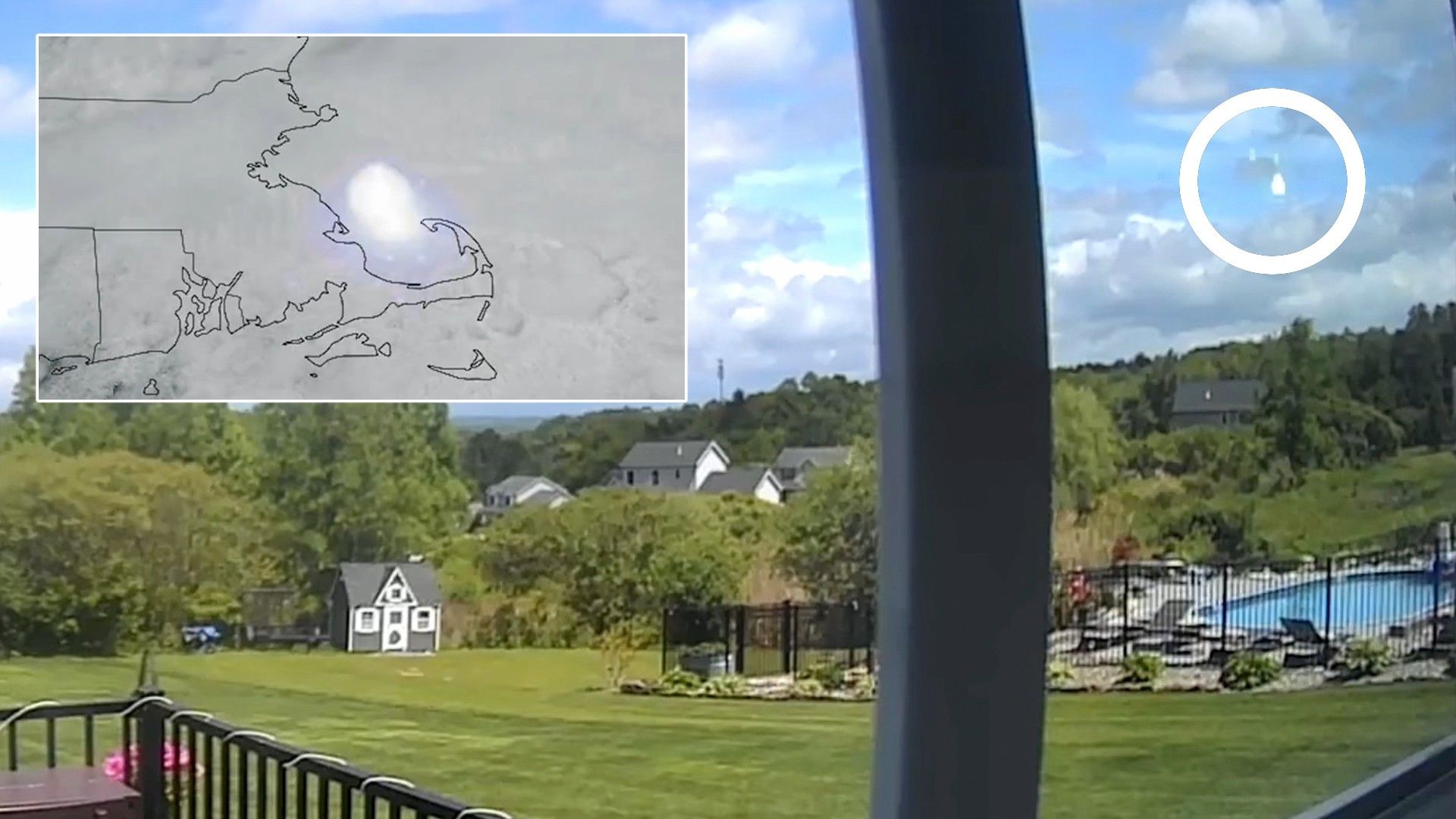
On May 30, 2026, a bright meteor broke apart over Cape Cod Bay in coastal Massachusetts, producing a sonic boom and sending pieces of rock toward the water.
A team led by space physicist Juha Vierinen used radar, sound recordings and camera footage to reconstruct its path.
They found that the object was a small asteroid pushed by Jupiter onto a comet-like orbit toward Earth.
The rock fragmented about 20 miles above the ground with energy equal to 500 tons of TNT; the meteor’s total impact energy was about 1.1 kilotons of TNT.
Only three recorded bolides worldwide had greater impact energy in 2025, making this a rare and powerful event.
Radar observations from a meteor network near Massachusetts helped researchers track the object, though the available information does not say whether any fragments were recovered.

A daytime meteor over Cape Cod Bay on May 30, 2026, was traced to a small asteroid whose orbit had been altered by Jupiter.
The asteroid was sent onto a comet-like orbit toward Earth, according to a team of scientists from Europe and the United States.
The team used meteor and weather radar, infrasound readings and camera footage to study the fall and reconstruct the object’s orbit.
The meteoroid fragmented at an altitude of 20 miles (32 kilometers), with an explosive force equivalent to 500 tons of TNT.
Its total impact energy was estimated at about 1.1 kilotons of TNT.
- Who
- A team of scientists from Europe and the United States, led by Juha Vierinen of the Arctic University of Norway.
- What
- Scientists traced the Cape Cod meteor to a small asteroid perturbed by Jupiter and sent onto a comet-like orbit toward Earth.
- When
- May 30, 2026, at 1:06 p.m. local time (18:06 UTC).
- Where
- Over Cape Cod Bay and coastal Massachusetts.
- Why
- The asteroid was perturbed by Jupiter, which sent it onto a comet-like orbit toward Earth.
This story does not have two clearly opposing sides.
A bolide was widely seen falling over coastal Massachusetts, and people reported an associated sonic boom.
The meteoroid fragmented at an altitude of 20 miles (32 kilometers).
Four NEXRAD weather radars recorded debris as rock fragments fell as meteorites into Cape Cod Bay.
- Event date
- May 30, 2026
- Event time
- 1:06 p.m. local time (18:06 UTC)
- Fragmentation altitude
- 20 miles (32 kilometers)
- Fragmentation force
- Equivalent to 500 tons of TNT
- Total impact energy
- About 1.1 kilotons of TNT
- Lead researcher
- Juha Vierinen, Arctic University of Norway
1 source
What people are saying
We were fortunate that the event occurred within the coverage of SIMONe
We got pretty lucky to observe this one
The head echoes give the best constraints on the meteoroid's trajectory