

Politics · Other · 5 hrs ago
High energy costs and domestic problems weigh on the Philippines’ growth
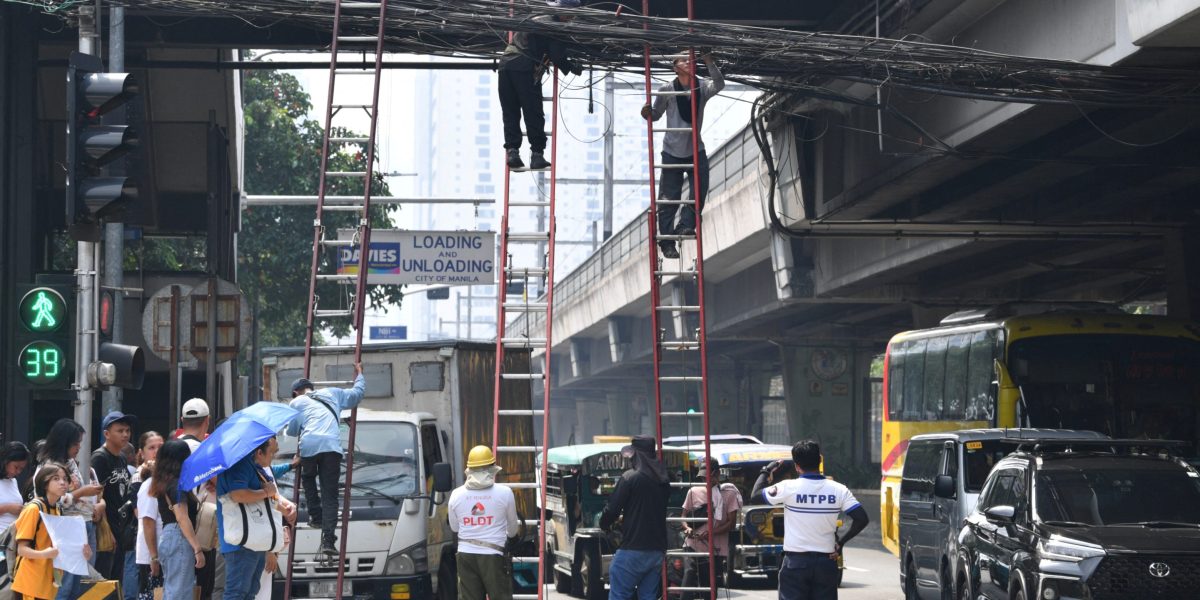
The Philippines began 2026 hoping to attract investment and strengthen its economy while chairing the Association of Southeast Asian Nations.
High energy prices and cuts to public spending have weakened growth, and a university forecast now puts it at 3.7% this year.
The spending cuts followed a billion-dollar flood-control infrastructure scandal last year.
The World Bank reclassified the Philippines as an upper-middle-income economy, but economists say the country still needs to improve productivity and make growth last.
High electricity costs, bureaucracy and corruption also make it harder to attract investors.
The Philippines has lagged behind Vietnam, which is forecast to grow 7.8% this year, compared with the Philippines’ reduced outlook.
The World Bank expects growth to rebound to 5.2% in 2027, helped by higher public spending and easing inflation, though energy prices may remain high for now.

High energy prices and domestic problems have weakened the Philippines’ growth prospects in 2026.
The country has been Southeast Asia’s worst-hit by high energy prices since the U.S.-Iran war began in February.
High oil prices and cuts in public spending have dragged a university forecast for GDP growth down to 3.7%.
Corruption, bureaucracy, institutional dysfunction and energy insecurity are also identified as obstacles to investment and growth.
The World Bank expects growth to rebound to 5.2% in 2027 as public spending rises and inflation eases.
- Who
- The Philippines and its economy.
- What
- High energy costs and domestic problems have weighed on growth prospects.
- When
- In 2026; the U.S.-Iran war began in February.
- Where
- The Philippines.
- Why
- High oil prices and public spending cuts have slowed momentum. Corruption, bureaucracy and energy insecurity also weigh on investment and business costs.
This story does not have two clearly opposing sides.
The U.S.-Iran war began, after which high energy prices hit the Philippines particularly hard.
Expectations called for strong growth supported by easing inflation, lower interest rates, household spending and infrastructure investment.
High oil prices and public spending cuts dragged Peter L. U’s university forecast for GDP growth down to 3.7%.
The World Bank expects the Philippines’ growth to rebound to 5.2%.
- GDP growth forecast
- 3.7% in 2026, according to Peter L. U’s university
- World Bank growth forecast
- 5.2% in 2027
- Income classification
- Reclassified as an upper-middle-income economy in 2026
- Energy prices
- The Philippines has been Southeast Asia’s worst-hit since the U.S.-Iran war began in February
- Export comparison
- The Philippines exported $64 billion; Vietnam exported about $375 billion in the first eight months of 2026
What people are saying
Yet it has often struggled to convert these advantages into sustained gains in investment, productivity, and competitiveness.
The more important question is whether the country can finally break free from its recurring cycle of underachievement.
It’s like a child who turned 13, yet is still the same person with the same maturity they had yesterday.