

Science & Tech · Science & Environment · 4 hrs ago
New spectrometer measures uranium and plutonium isotopes at once
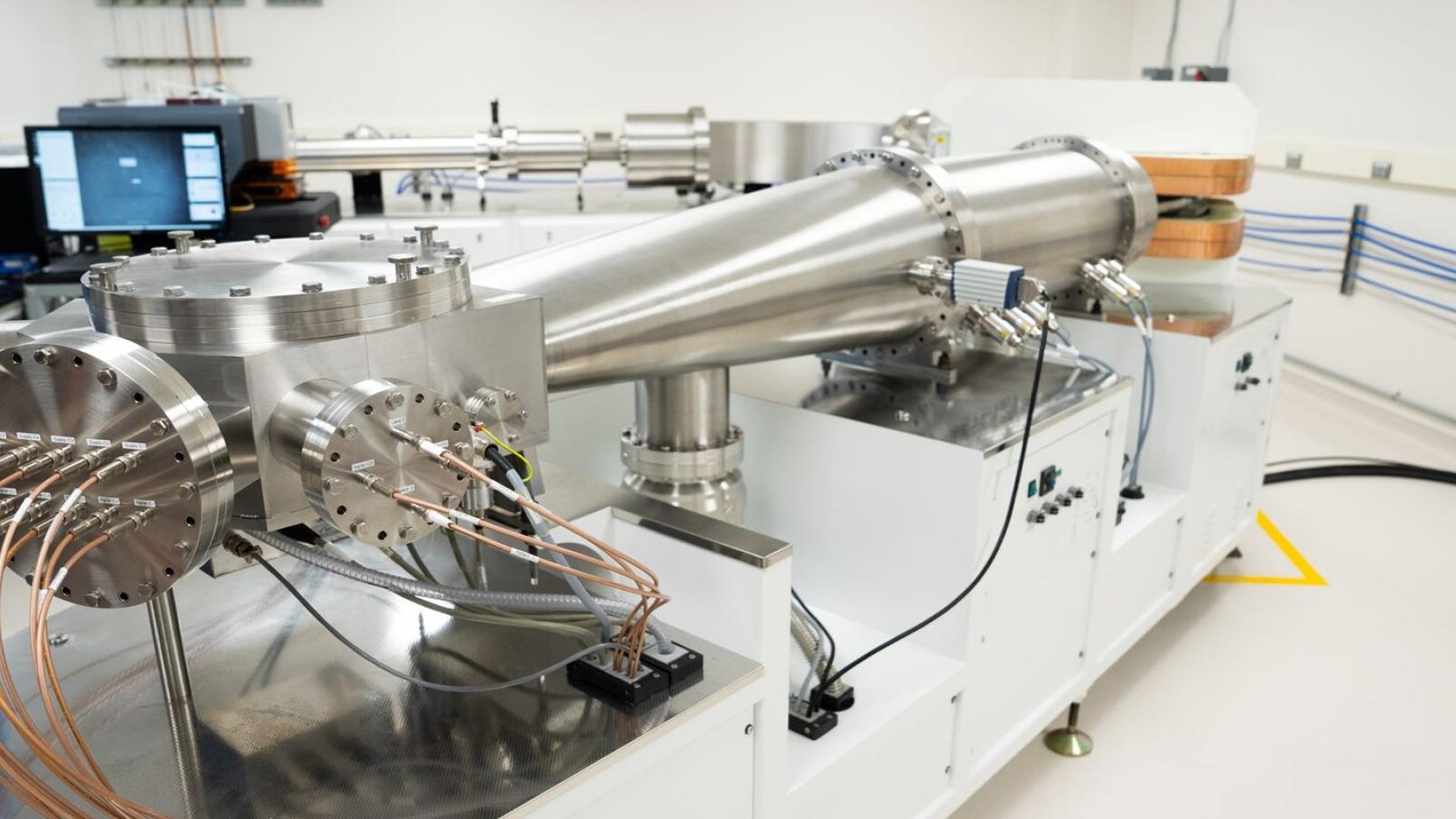
US researchers developed a spectrometer that measures uranium and plutonium isotopes at once at Pacific Northwest National Laboratory in Washington state.
Called the Sapphire 1700, it has 22 detectors and can measure the isotopes at extremely low levels.
Mass spectrometers identify substances by measuring the mass and electrical charge of tiny particles, but nuclear materials can be difficult to detect in small amounts.
The instrument nearly halves analysis time without sacrificing accuracy, according to the research team.
Pacific Northwest National Laboratory is part of a network of 17 labs that test environmental samples for the International Atomic Energy Agency, which looks for signs of secret nuclear activity.
Finding traces could help identify misuse of nuclear materials and support global nuclear safeguards.
The team plans to explore more uses and develop methods that other labs could adopt.

US researchers have developed the Sapphire 1700, a mass spectrometer that measures all uranium and plutonium isotopes simultaneously.
Installed at Pacific Northwest National Laboratory in 2025, it is described as the only instrument of its kind.
The instrument has 22 detectors, including 12 ion-counting detectors, and nearly halves analysis time while maintaining accuracy.
It could help identify traces of nuclear materials and signs of potential misuse.
The project was backed by the National Nuclear Security Administration, while the US Department of State funded the instrument’s acquisition.
- Who
- Researchers at Pacific Northwest National Laboratory developed the instrument with Nu Instruments, a manufacturer based in Wales.
- What
- The Sapphire 1700 measures all uranium and plutonium isotopes at once.
- When
- It was installed in 2025. Tyler Schlieder presented it in July 2026.
- Where
- Pacific Northwest National Laboratory. The laboratory’s location is not stated.
- Why
- To measure nuclear materials faster and support detection of signs of potential misuse.
This story does not have two clearly opposing sides.
The Sapphire 1700 was installed at Pacific Northwest National Laboratory.
Tyler Schlieder presented the instrument at the Goldschmidt Conference, where it was selected for a keynote presentation.
Interesting Engineering published an article about the instrument.
- Instrument
- Sapphire 1700
- Detectors
- 22, including 12 ion-counting detectors
- Analysis time
- Nearly halved without sacrificing accuracy
- Validated measurements
- 110 in just over three months
- Installed
- Pacific Northwest National Laboratory, 2025
- Development partner
- Nu Instruments, based in Wales
What people are saying
We’ve only scratched the surface of what we can really do with this instrument
Since it’s been in operation, we’ve completed validation of 110 measurements in just over three months.
It’s even more amazing when you realize there’s no instrument in the world that can do this
we’re ideally developing something that could be implemented elsewhere, making the benefit more widespread.