

Business · Economy · 7 hrs ago
Tourist spending supports South Korea's retail sector as local demand weakens
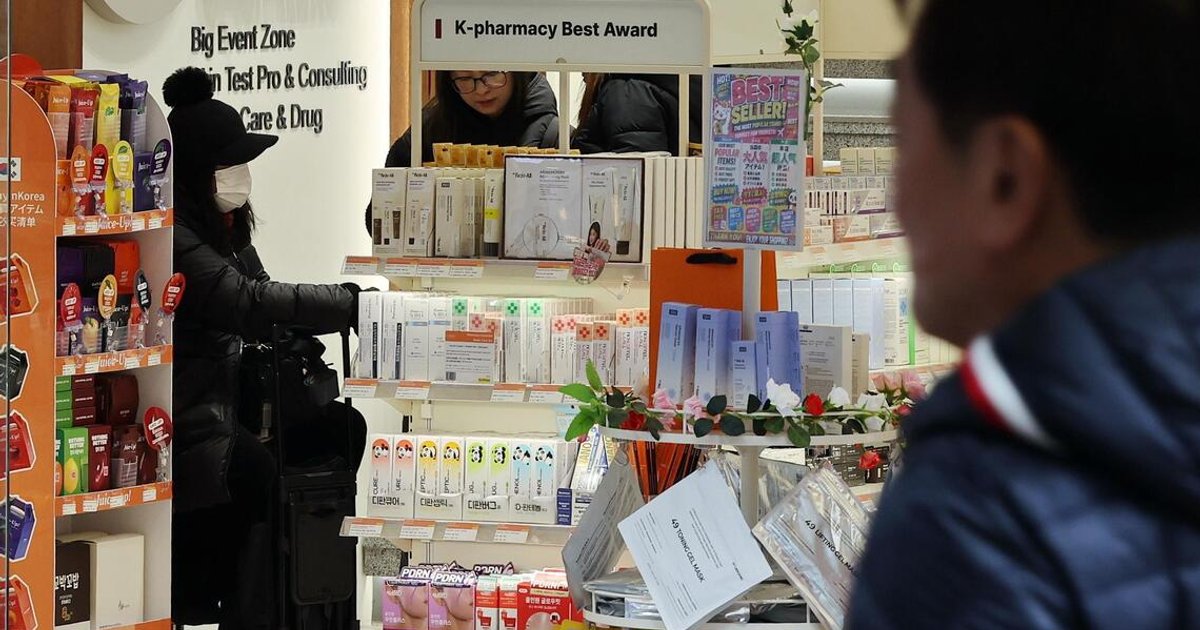
South Korea is seeing record numbers of foreign tourists, with more than 17 million arrivals in the first nine months of 2026.
In Seoul, visitors are spending on beauty products, shopping, meals and services such as hair and facial treatments.
Foreign shoppers made up 33% of Olive Young's in-store sales in August, up more than 30 percentage points from 2022.
This matters because South Korean households are spending less, and private consumption fell 0.2% in the third quarter.
Tourist spending is counted as a service export and is expected to add about 0.2 percentage point to economic growth in 2026.
Unlike the benefits of the semiconductor boom, tourist spending reaches a wider range of businesses, including hotels, restaurants, retailers and medical providers.
But tourism has not reversed the wider services slowdown: growth in wholesale, retail, accommodation and food services slowed in the third quarter, while some other services contracted.

A record surge in overseas visitors is supporting South Korea’s retail sector as domestic consumption weakens.
The country received more than 17 million tourists in the first nine months of 2026, an all-time high.
Foreign customers accounted for 33% of Olive Young’s offline sales in August, up more than 30 percentage points from 2022.
Tourist spending is on track to add about 0.2 percentage point to South Korea’s economic growth in 2026, according to State Street Bank strategist Jiuk Choi.
Despite tourist spending, private consumption contracted 0.2% in the third quarter and growth in several service sectors slowed.
- Who
- Overseas tourists and South Korean retailers. Local consumers are spending less.
- What
- Tourist spending is helping support retail and other businesses as domestic consumption weakens.
- When
- The figures cover 2026, including the first nine months and the third quarter.
- Where
- South Korea, including Seoul.
- Why
- Tourism spending is supporting sectors that have not benefited directly from the semiconductor boom.
This story does not have two clearly opposing sides.
Foreign customers accounted for a much smaller share of Olive Young’s offline sales than the 33% recorded in August 2026.
Incheon airport was the world’s busiest airport for international passenger traffic, according to preliminary Airports Council International data.
South Korea received more than 17 million tourists, an all-time high.
International customers accounted for 33% of Olive Young’s offline sales.
Private consumption contracted 0.2%, while wholesale, retail, accommodation and food-service output grew 1.5% from a year earlier.
- Tourist arrivals
- More than 17 million in the first nine months of 2026
- Olive Young foreign-customer sales
- 33% of offline sales in August
- Tourism contribution to growth
- About 0.2 percentage point in 2026, according to State Street Bank strategist Jiuk Choi
- Seoul tourist spending
- More than 8.8 trillion won in overseas visitors’ credit-card spending in the first nine months of 2026
- Private consumption
- Contracted 0.2% in the third quarter
What people are saying
She’s just buying everything she can, as much as she can bring back
Stronger inbound tourism provides some support to sectors that do not directly benefit from the chip boom
We wouldn’t go out shopping like this in Australia