

Politics · Other · 4 hrs ago
European countries tighten rules on face veils and headscarves
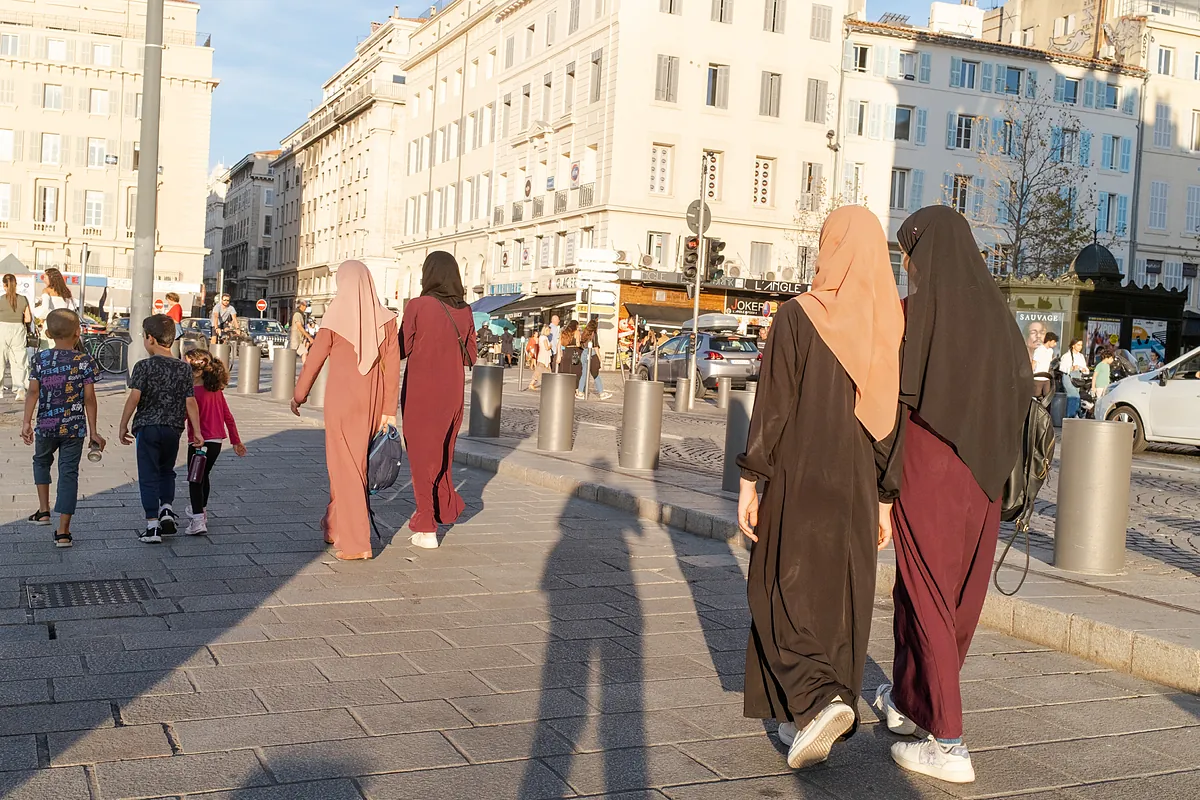
Restrictions on face veils in Portugal and Italian schools, alongside a rule removing headscarves from girls in Austria, have brought European clothing rules back into debate.
France has banned covering the face in public since 2011, and the European Court of Human Rights upheld that law in 2014.
The laws on face veils concern covering the face, while Iran’s rules that sparked protests required women to cover their hair.
Mahsa Amini died in Iranian custody in 2022 after being detained over her head covering, and her death became a focus of protest.
The debate asks how to balance religious freedom with equality and shared rules.
It also raises the question of who has the final say over a woman’s body: the woman herself, her family, religious authorities or the state.
The latest restrictions show that European countries are still drawing those boundaries, though the details of what happens next are not given.

Several European countries are tightening restrictions on face veils and headscarves, renewing debate over religious freedom, equality and women’s autonomy.
Portugal and Italian schools have recently introduced restrictions on the burka, while Austria is removing the hijab from girls, according to the article’s headline.
France has prohibited covering the face in public since 2011, after passing a law in 2010.
Supporters of restrictions describe face coverings as barriers to equality and shared public life; critics argue that women’s rights and personal choice must also be protected.
The article distinguishes Europe’s restrictions on covering the face from Iran’s compulsory rules on covering women’s hair.
- Who
- European governments and lawmakers imposing restrictions, and women affected by them.
- What
- Several countries are tightening rules on face veils and headscarves.
- When
- The article was published on 27 October 2026; France’s law took effect in April 2011.
- Where
- European countries, including France, Portugal, Italy and Austria.
- Why
- The debate concerns how to balance religious freedom and personal choice with equality and rules for shared public life.
Supporters of restrictions
Critics of restrictions
Women’s autonomy and equality
Supporters of restrictions
Restrictions can be justified as protection against practices seen as signs of subordination.
Critics of restrictions
Women who choose to wear a veil should not have their rights limited on the basis of assumptions about their choices.
Shared public life
Supporters of restrictions
A covered face can obstruct recognition, communication and relations between people as equals.
Critics of restrictions
Religious freedom and individual rights should be respected, and a ban is not the only democratic response.
Nicolas Sarkozy argued before Parliament that the burka raised a problem of freedom and dignity for women.
France approved a law banning the concealment of the face in public spaces.
France began applying the face-covering ban.
The European Court of Human Rights accepted France’s ban on grounds of protecting conditions for social coexistence.
- France’s law approved
- October 2010
- France’s ban took effect
- April 2011
- European Court of Human Rights ruling
- 2014
- Portugal
- Recent restrictions on the burka are mentioned
- Italy
- Recent burka restrictions in schools are mentioned
- Austria
- The headline says the country is removing the hijab from girls
What people are saying
a problem of freedom and dignity for women