

Business · Trade · 4 hrs ago
China's top court upholds penalty over stolen Spanish blueberry variety
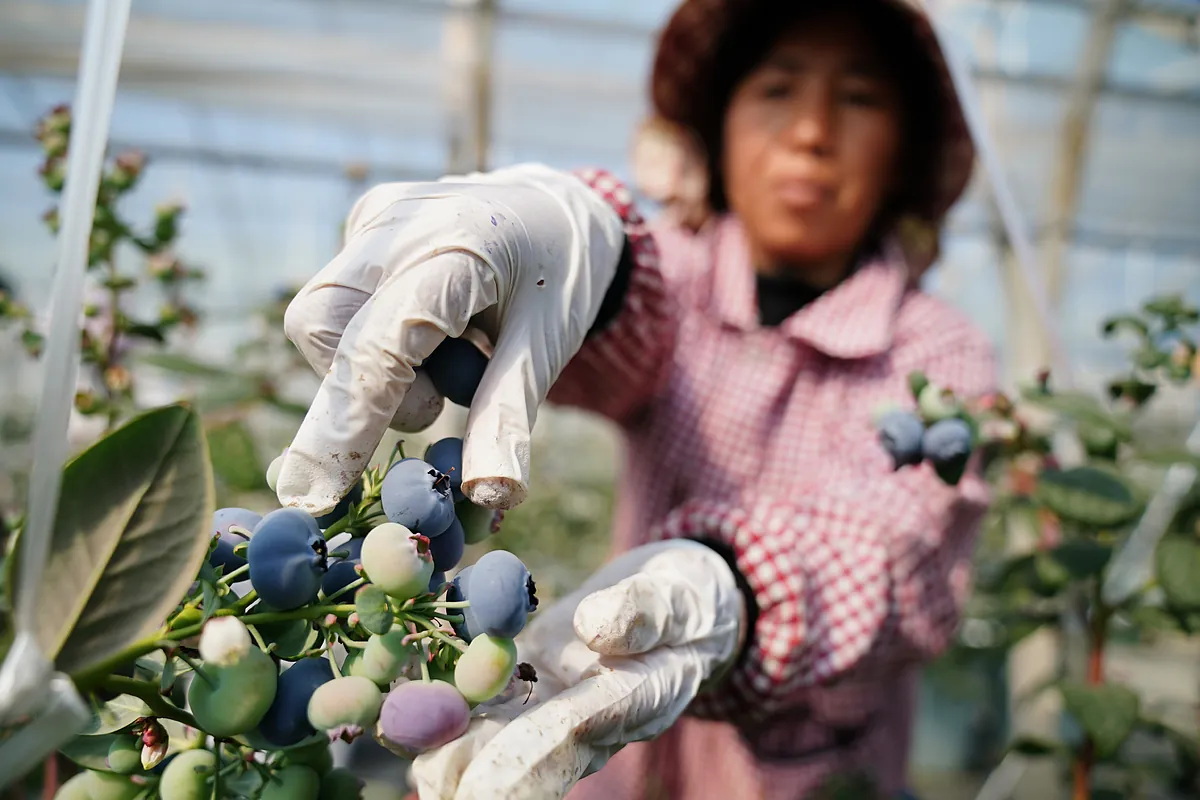
China's Supreme People's Court upheld a penalty against a nursery in Yunnan province for selling plants grown from stolen cuttings.
The plants came from Blue Maldiva, a blueberry variety developed by Spain's Planasa and marketed under the name “España 42.”
The dispute emerged in July 2024, when a company operating legally in China found the variety being sold by the nursery.
A court ordered the nursery to pay 144,000 yuan in compensation, plus 10,000 yuan in court costs, and the Supreme People's Court confirmed the ruling after an appeal.
The nursery could produce about 120,000 plants per batch, including around 20,000 of the protected Spanish variety.
Plant varieties can be copied from cuttings, potentially allowing sellers to produce many plants without paying the company that developed them.
The case highlights the challenge of protecting years of agricultural research, but no further legal steps are stated.

China’s Supreme People’s Court upheld a penalty against a Yunnan nursery for selling plants of a protected Spanish blueberry variety.
The variety, developed by Spanish company Planasa and marketed as Blue Maldiva, was sold under the name “España 42.”
A court in Kunming ordered the nursery to pay 144,000 yuan in compensation and 10,000 yuan in court costs.
The Supreme People’s Court said the nursery had made infringement of plant-variety rights practically part of its business model.
The case came to light in July 2024, after an agricultural company operating legally in China found the nursery selling the protected variety.
- Who
- Planasa, a Spanish agricultural company, and a nursery in China were involved.
- What
- China’s Supreme People’s Court upheld a penalty against the nursery for selling plants of Planasa’s protected blueberry variety.
- When
- The case was uncovered in July 2024. The ruling was reported as circulated on October 14, 2026.
- Where
- The nursery was in Yunnan province, China; the initial ruling was issued by the Intermediate Court in Kunming.
- Why
- The nursery sold plants of a protected variety, which the article says had been obtained through clandestinely sourced branches.
This story does not have two clearly opposing sides.
An agricultural company operating legally in China discovered that a nursery was selling the protected variety as “España 42.
The nursery was established.
The nursery began promoting the plants on major Chinese social media platforms.
The Supreme People’s Court ruling was reported as having been released.
- Protected variety
- Plablue 1542, marketed as Blue Maldiva
- Seller’s name for variety
- España 42
- Compensation
- 144,000 yuan
- Court costs
- 10,000 yuan
- Production capacity
- About 120,000 plants per batch, including about 20,000 of the Spanish variety