

Business · Companies · 1 hr ago
Oyster Therapeutics raises $60 million for tau-targeting brain drugs
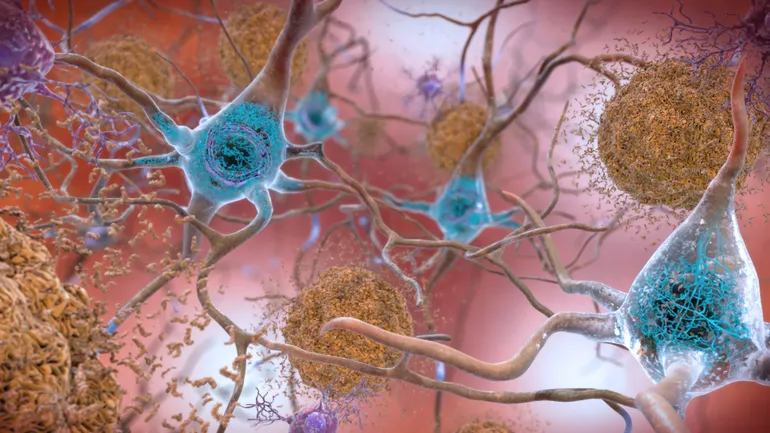
London biotech Oyster Therapeutics raised $60 million to develop drugs targeting tau, a protein linked to Alzheimer’s disease.
Tau can form clumps in the brain, much like amyloid, another protein targeted by Alzheimer’s drugs.
Existing amyloid treatments have only modest effects on cognition and do not stop or reverse the disease, prompting interest in other approaches.
Oyster says its lead drug is designed to direct disease-causing tau for breakdown while sparing healthy tau.
Its approach uses smaller molecules intended to enter cells and reach the brain, but several other tau programs have struggled to show meaningful effects.
Oyster has not said when its lead drug will enter clinical testing; it will also study tau with Massachusetts General Hospital.

London-based Oyster Therapeutics raised $60 million to develop drugs targeting disease-causing forms of tau, a brain protein linked to Alzheimer’s disease.
The funding is an extension of the company’s Series A round and was led by British venture fund 4BIO Capital.
Oyster’s lead program is designed to direct tau for destruction while sparing healthy forms, the company said.
The company says its drug separates into two smaller molecules in the body that can more easily enter cells and the brain.
Oyster has not disclosed when its leading drug program will enter clinical testing.
- Who
- Oyster Therapeutics, a London-based biotech company.
- What
- It raised $60 million in an extension of its Series A round to develop tau-targeting drugs.
- When
- Nov. 10, 2026.
- Where
- London, United Kingdom. The funding announcement was reported on Nov. 10.
- Why
- To support development of drugs designed to break down disease-causing forms of tau.
This story does not have two clearly opposing sides.
Oyster announced that it had raised $60 million in an extension of its Series A round.
Oyster said it was entering a research collaboration with Massachusetts General Hospital to study a form of tau it describes as the most neurotoxic.
- Funding
- $60 million
- Round
- Series A-2 extension
- Lead investor
- 4BIO Capital
- Research partner
- Massachusetts General Hospital
- Drug focus
- Disease-causing forms of tau
2 sources
What people are saying
Big pharma investors are very interested in tau
the next obesity opportunity