

Politics · Spain · 6 hrs ago
Spain’s corruption reforms remain largely unimplemented as scandals persist
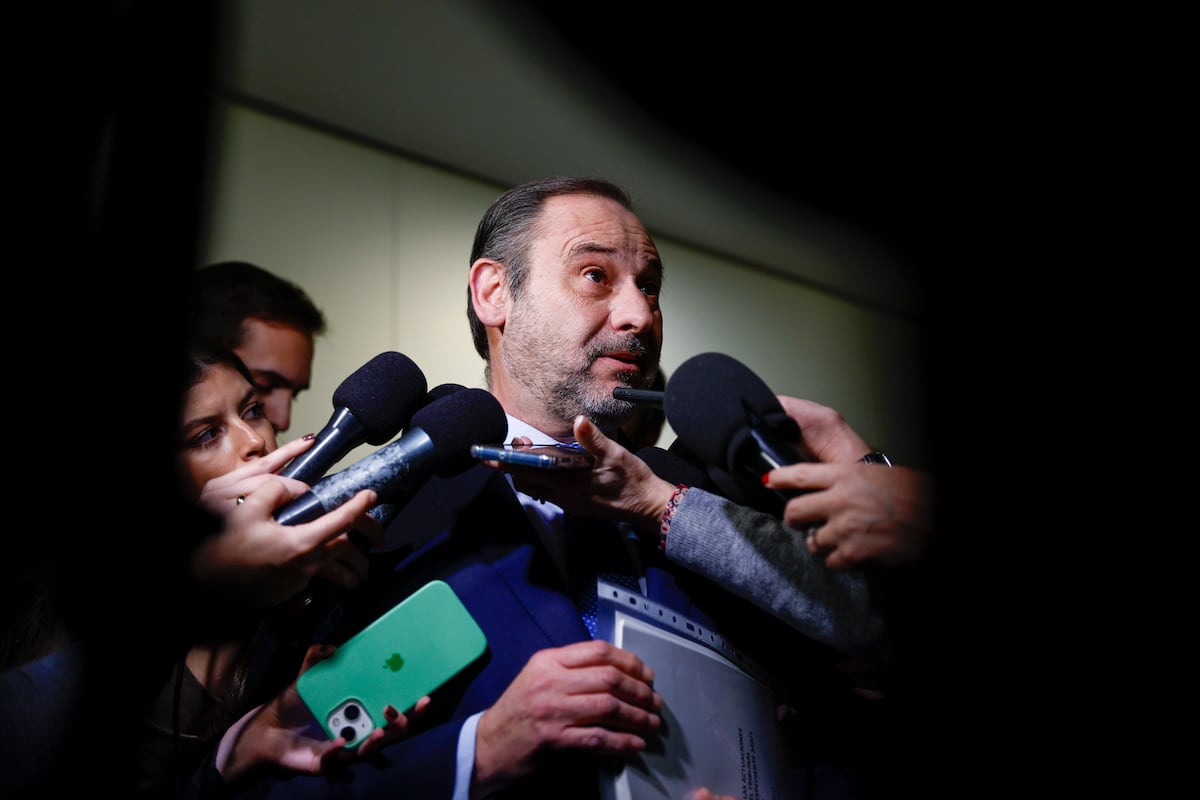
A new book by magistrate Joaquim Bosch and political science professor Fernando Jiménez examines why corruption remains entrenched in Spain.
The issue has affected both the conservative People’s Party and the Socialists, and repeated scandals have weakened public trust in democratic institutions.
Former socialist minister José Luis Ábalos was sentenced to 24 years in prison, and his former aide Koldo García to 19 years, for corruption-related offences.
García says he agreed with a lawyer linked to the People’s Party that his legal costs would be paid and he would receive one million euros in return for information to help bring down Prime Minister Pedro Sánchez.
García’s former lawyer submitted invoices to Spain’s National Court saying her services were paid for by the Okdiario website, and the Socialists filed a complaint with the state prosecutor.
Most of the government’s 15 planned anti-corruption measures are not in place; 12 depend mainly on a public integrity bill introduced in parliament in September that has not yet been approved.
The authors argue that corruption can be tackled if the proposed reforms address the system’s weaknesses and are actually implemented.
No overview available yet.
- Who
- Spain’s government and political parties, including the PSOE and PP, are central to the story.
- What
- Anti-corruption measures announced by the government remain largely unimplemented, while corruption scandals continue.
- When
- The article was published on 15 November 2026 and describes events spanning 2018 to 2026.
- Where
- Spain, including the Congress and the National High Court.
- Why
- The article says proposed reforms have stalled in parliamentary processes, leaving structural weaknesses unaddressed.
This story does not have two clearly opposing sides.
José Luis Ábalos presented a motion of no confidence against Mariano Rajoy after the Gürtel case ruling.
Sánchez appeared in Congress to answer questions about investigations involving José Luis Rodríguez Zapatero and Leire Díez.
The Public Integrity Organic Law was presented to the lower house and had not yet been approved.
- Announced anti-corruption measures
- 15
- Measures not fully implemented
- None of the 15
- Initiatives mainly dependent on the proposed law
- 12 of 15
- Proposed law
- Public Integrity Organic Law (LOIP)
- Motion of no confidence
- Presented in May 2018 against Mariano Rajoy
What people are saying
Spaniards cannot tolerate corruption and indecency as if they were normal; we cannot normalize corruption in our lives or in our institutions.
Entrenched is not synonymous with irresolvable.
The gap between announcement and implementation is, in itself, a public integrity problem.