

Science & Tech · Science & Environment · 4 hrs ago
Neanderthal DNA Variant Linked to Brain Size and Lower Schizophrenia Risk
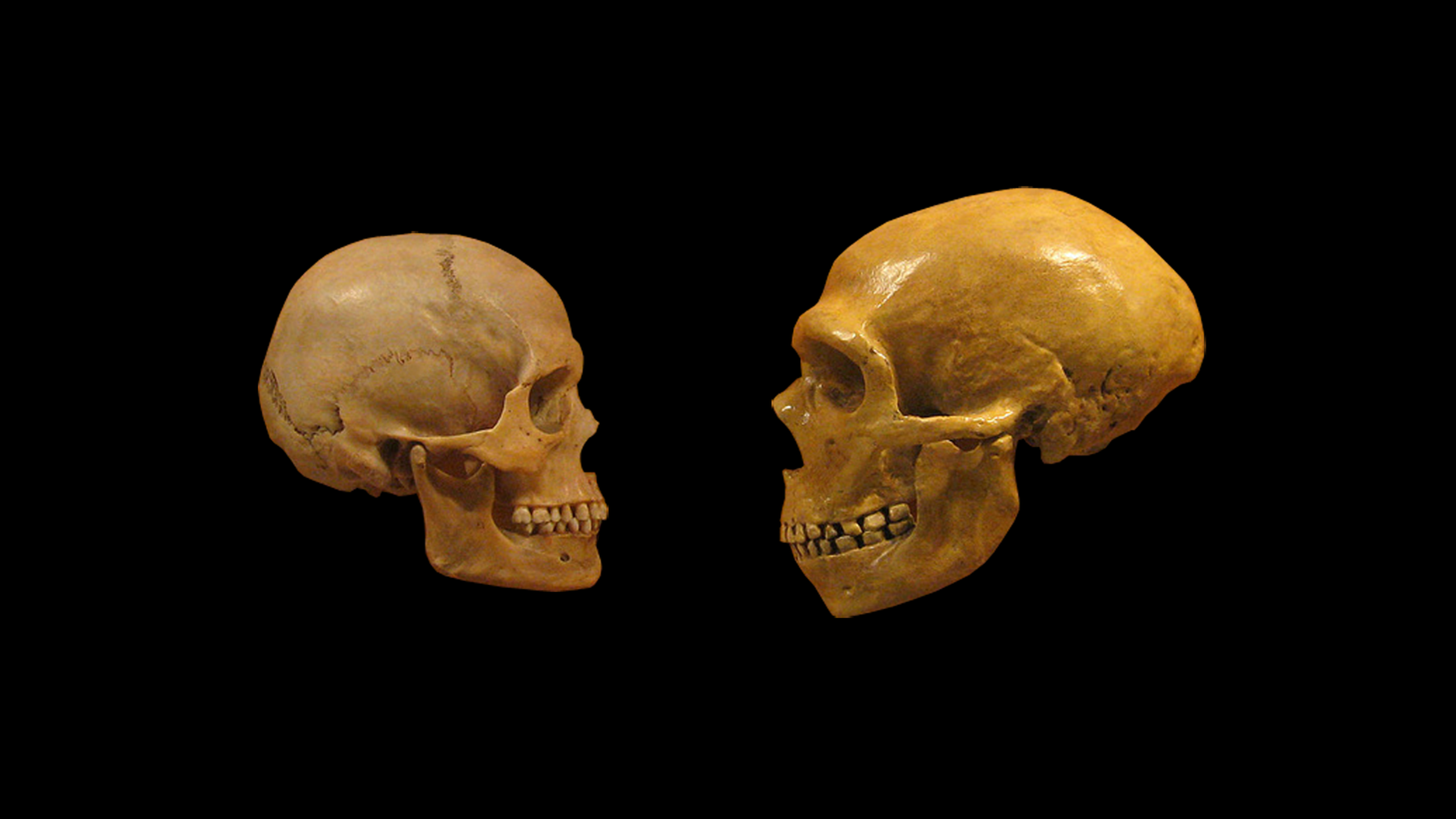
Researchers identified a Neanderthal DNA variant associated with differences in the brains of people today.
The study by Hugo Zeberg and Svante Pääbo examined a small DNA deletion near DAAM1, a gene involved in brain development.
The variant is linked to a smaller occipital lobe, the area at the back of the brain that processes visual information.
In UK Biobank data, people with two copies of the variant had nearly 10 percent lower risk of schizophrenia; the study found no link to general intelligence.
The findings connect ancient ancestry with brain structure and health, but they do not show that the variant causes schizophrenia or prevents it.
The researchers plan to look for more Neanderthal DNA variants that may affect people today.

Researchers identified a Neanderthal-inherited DNA variant associated with smaller occipital lobes and lower schizophrenia risk in modern humans.
The variant is a deletion of four DNA letters on chromosome 14, near the brain-development gene DAAM1.
In UK Biobank data, each copy of the variant was associated with an occipital lobe volume about 0.85 cubic centimeter smaller.
People with two copies had a nearly 10 percent lower risk of developing schizophrenia, according to the study.
The variant was not associated with intelligence or, in the Scientific American report, depression, bipolar disorder or ADHD.
- Who
- Researchers Hugo Zeberg and Svante Pääbo studied the variant in modern humans.
- What
- They found a Neanderthal-inherited DNA variant associated with smaller occipital lobes and lower schizophrenia risk.
- When
- The study was published on November 16, 2026.
- Where
- The variant was found in human populations outside sub-Saharan Africa; the brain-volume figures came from UK Biobank data.
- Why
- The researchers investigated whether inherited Neanderthal genetic variants are associated with occipital lobe size.
This story does not have two clearly opposing sides.
Neanderthals interbred with the ancestors of modern humans, leaving traces of their DNA in people today.
Pääbo said most Neanderthal DNA carried by people today appears to stem from a large interbreeding event.
The study was published in Proceedings of the National Academy of Sciences.
- Variant
- Four-letter DNA deletion on chromosome 14
- Nearby gene
- DAAM1
- Brain-volume difference
- About 0.85 cubic centimeter smaller per copy
- Two copies
- 1.7 cubic centimeters smaller occipital lobe and nearly 10 percent lower schizophrenia risk
- Study publication
- Proceedings of the National Academy of Sciences
3 sources
What people are saying
I find it fascinating that a genetic variant inherited from Neandertals is associated with differences in brain anatomy in people today, particularly reduced occipital lobe volume
If you look at the [Neanderthal] contributions that exist in people today, it really seems to come from what looks like one event
You might hear from us again