

Science & Tech · Space · 10 hrs ago
Jupiter and Mars will appear close together in the sky on Nov. 15
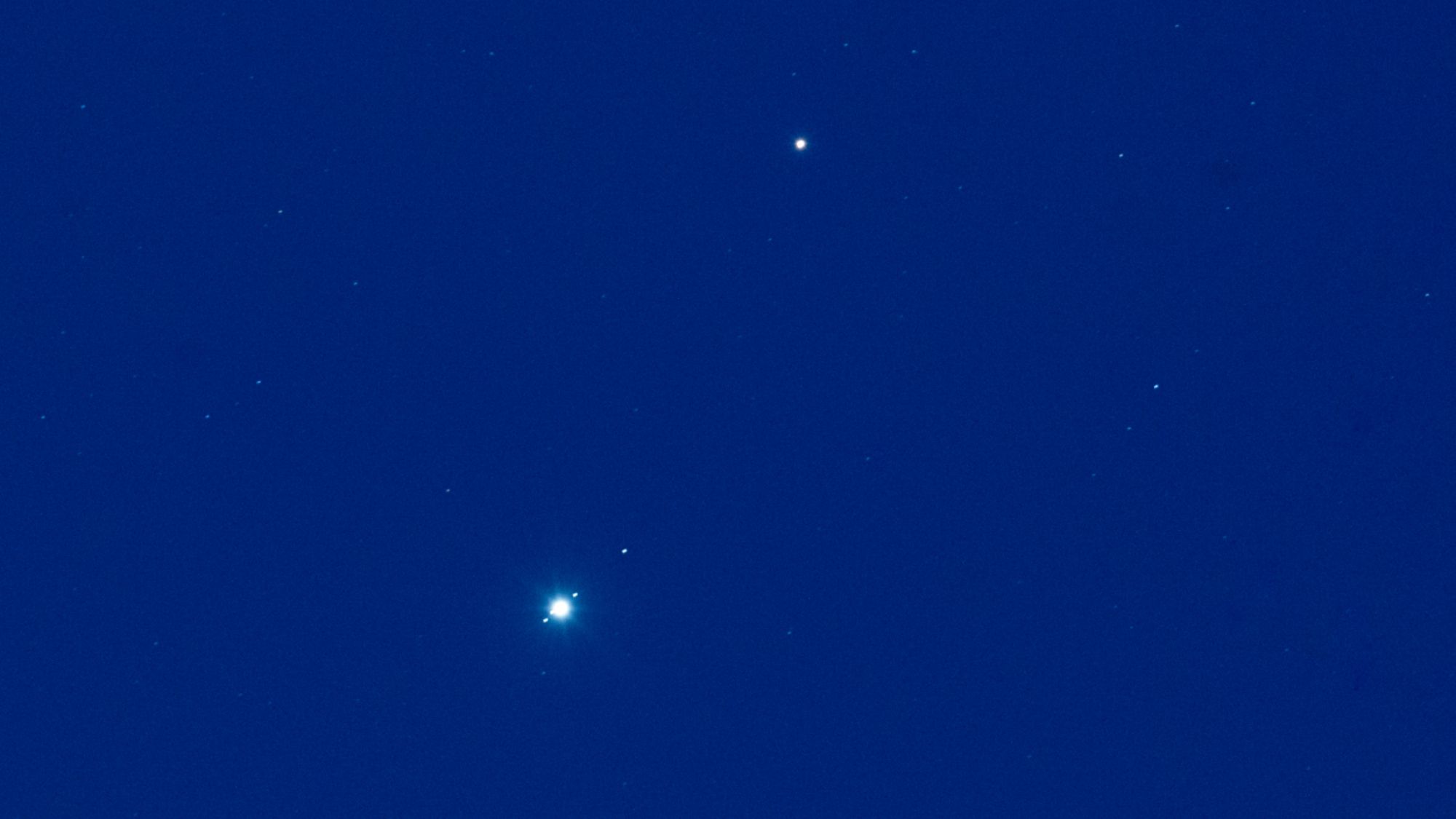
Jupiter and Mars will appear close together in the sky on Nov.
15, in the constellation Leo.
Their closest apparent separation, as seen from Earth, is due at 9:04 p.m.
EST, but the planets will be below the horizon for US observers then.
US stargazers can look for them rising in the east around midnight local time, a few hours later.
Jupiter will be brighter, and the planets will appear a little more than one degree apart, close enough to fit in the view of 10x50 binoculars.
The pair can also be viewed through a telescope, and Jupiter's Great Red Spot is expected to come into view before dawn on Nov.
16.
They will not appear this close again for about 2.5 years, when they meet in the sky near Virgo in July 2029.
Viewers can check local rise and set times with a night-sky tracker.

Jupiter and Mars will reach their closest apparent separation in Earth’s sky on Nov. 15.
They will appear a little over 1 degree apart in the constellation Leo, with Jupiter brighter than Mars.
The planets will be below the horizon for U.S. observers at the moment of closest approach, but will rise in the east around midnight local time.
The pair will fit within the view of 10x50 binoculars.
The planets will gradually appear farther apart over the following weeks and will not appear as close again until July 2029.
- Who
- The planets Jupiter and Mars.
- What
- They will reach their closest apparent separation in Earth’s sky.
- When
- Nov. 15, at 9:04 p.m. EST (0204 GMT on Nov. 16).
- Where
- In the constellation Leo. U.S. observers can see them rise above the eastern horizon around midnight local time.
- Why
- Not stated.
This story does not have two clearly opposing sides.
Jupiter and Mars reach their closest apparent separation at 9:04 p.m. EST.
Jupiter’s Great Red Spot rotates into view in the predawn hours.
Jupiter and Mars gradually appear to drift apart.
The planets are expected to appear close together again, this time in Virgo.
- Closest approach
- 9:04 p.m. EST on Nov. 15
- Apparent separation
- A little over 1 degree
- Constellation
- Leo
- Viewing aid
- 10x50 binoculars
- Next close appearance
- July 2029, in Virgo