

Science & Tech · Science & Environment · 7 hrs ago
Heavy rains bring the Atacama Desert’s biggest flower display in decades
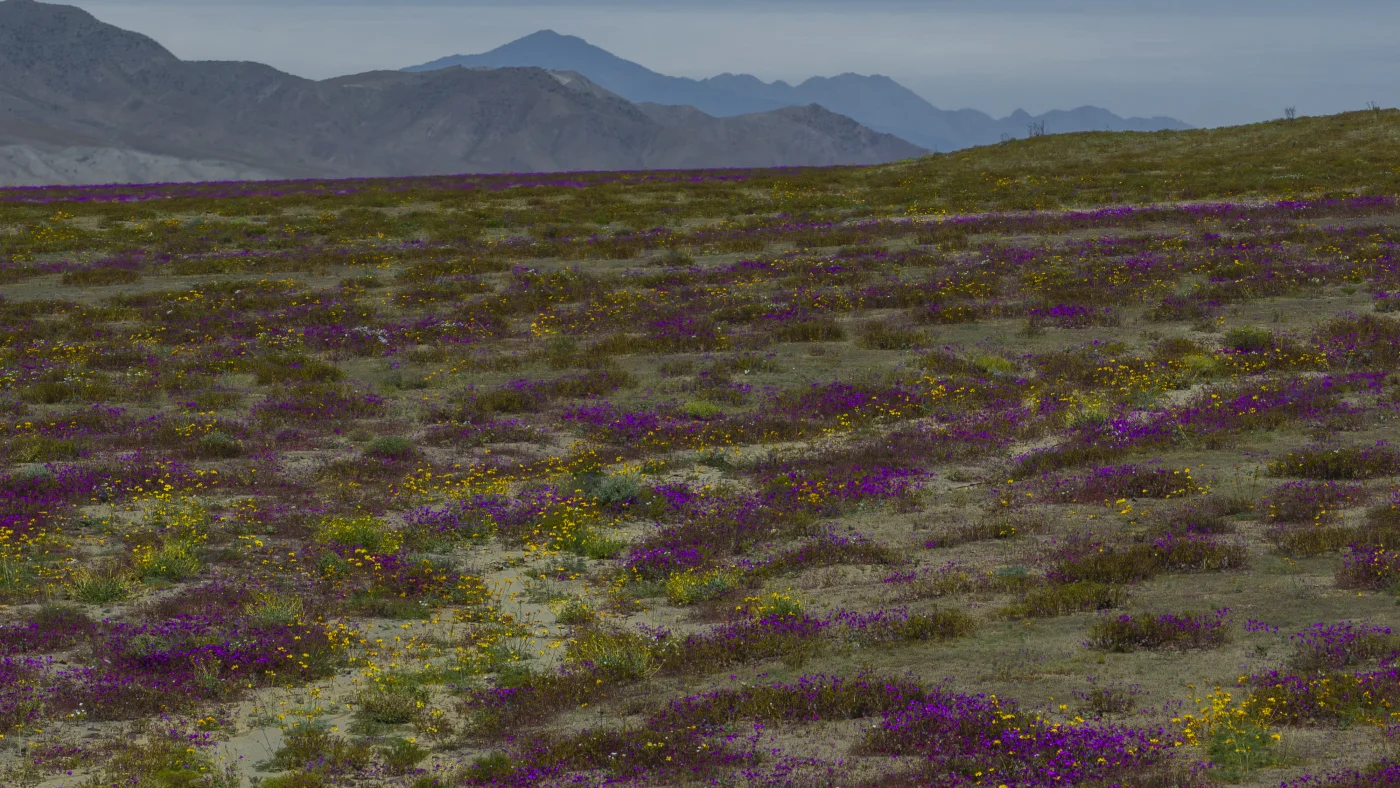
Chile’s Atacama Desert is covered in wildflowers after unusually heavy winter rains.
The rare flowering, known as the Desert Bloom, happens when water awakens seeds and bulbs that can lie dormant underground for decades.
The rains were linked to an El Niño super cycle and also caused flash floods in July and August, damaging or destroying dozens of homes and forcing hundreds of people to evacuate.
This bloom is the largest and most colorful in 30 years, and perhaps ever, with more than 200 plant species flowering.
Scientists have found blooms in places where flowers had not previously been recorded, suggesting seeds and bulbs had remained dormant there for many years.
The event briefly transforms the world’s driest nonpolar desert and draws tourists, while park staff work to protect its fragile ecosystems.
The flowers last only a few weeks, then dry out and release seeds that stay in the soil until future rains.

Heavy winter rains have triggered the Atacama Desert’s largest and most colorful wildflower display in 30 years, and possibly ever.
The desert in northern Chile is covered with flowers in shades including pink, yellow, lilac and purple.
More than 200 species are in flower after rainwater reached seeds, bulbs and tubers that had lain dormant beneath the sand.
The rains also caused flash floods in July and August, damaging or destroying dozens of homes and forcing hundreds of people to evacuate.
The blooms last only a few weeks before the flowers dry out and release their seeds.
- Who
- Wildflowers across Chile’s Atacama Desert, with scientists studying the display.
- What
- Unusually heavy rains have triggered the desert’s largest floral display in 30 years, and perhaps ever.
- When
- The blooms followed heavy winter rains; the first plants emerged about a month before the article was published on November 8, 2026.
- Where
- The Atacama Desert in northern Chile.
- Why
- Rainwater penetrated the parched ground and awakened dormant seeds, bulbs and tubers.
This story does not have two clearly opposing sides.
Heavy rains caused flash floods in the Atacama Desert, damaging or destroying dozens of homes and forcing hundreds of people to evacuate.
The first plants emerged, creating a pale-yellow haze.
Wildflowers were photographed in bloom near Huasco.
NPR reported that the bloom was the largest and most colorful in 30 years, and perhaps ever.
- Rainfall
- Some areas received their heaviest rainfall since records began in the 1950s.
- Flood damage
- Dozens of homes were damaged or destroyed; hundreds of people evacuated.
- Flowering species
- More than 200 species are in flower.
- Bloom duration
- A few weeks.
- First detailed study
- 1997