

Science & Tech · Science & Environment · 6 hrs ago
Ancient rock chemistry points to a shift in Earth’s crust around 2.5 billion years ago
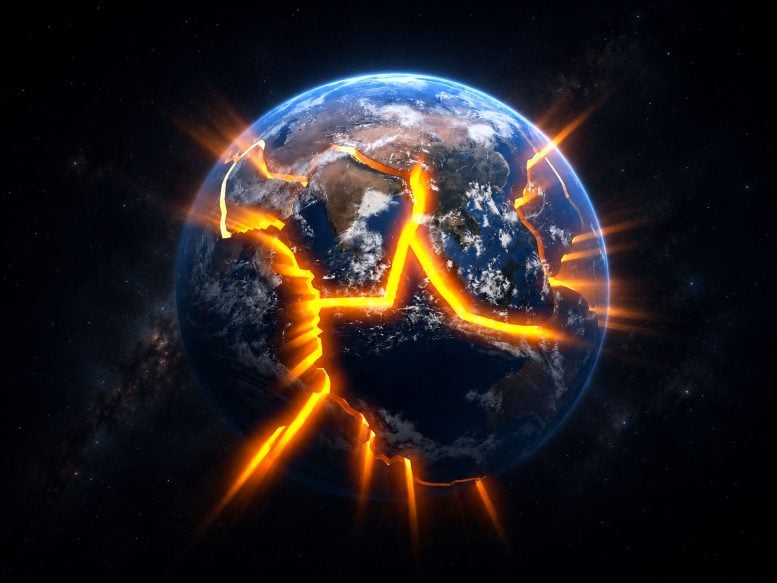
Curtin University researchers traced a chemical fingerprint across thousands of rocks from around the world.
The fingerprint appears in rocks older than 2.5 billion years, but is absent from younger rocks.
It shows that much of the older rock formed from ancient crust dating back about four billion years.
Its disappearance suggests Earth’s crust began forming and changing in a new way around 2.5 billion years ago.
Instead of mostly melting and reworking old crust in place, Earth began moving and recycling crust over larger distances.
This points to a transition towards the active tectonic system that shapes Earth today, which also affects continents, oceans and climate.
The findings mark a major shift in Earth’s history, but do not prove modern plate tectonics began all at once.

Researchers at Curtin University found that a chemical fingerprint in ancient rocks disappears from the geological record around 2.5 billion years ago.
The fingerprint appears in rocks older than 2.5 billion years and indicates they came from ancient crust formed about four billion years ago.
The researchers say its disappearance points to a major change in how Earth’s crust formed and was recycled.
Their findings suggest Earth was moving towards a tectonic system like the one operating today, but do not establish that modern plate tectonics began suddenly.
- Who
- Researchers at Curtin University, including lead author Dr. Janne Liebmann and co-author Professor Chris Kirkland.
- What
- They found that a chemical fingerprint in ancient rocks disappears from the geological record. They say this marks a major change in crust formation and recycling.
- When
- Around 2.5 billion years ago.
- Where
- The study examined thousands of rocks from around the world.
- Why
- The disappearance suggests that the processes forming and transforming Earth’s crust changed, with crust increasingly transported and recycled over larger distances.
This story does not have two clearly opposing sides.
The ancient crustal pool that later left a chemical fingerprint in younger rocks formed.
The fingerprint appeared consistently in rocks, indicating they were derived from the ancient crustal pool.
The fingerprint disappeared from the geological record, marking a change in crust formation and recycling.
- Study institution
- Curtin University
- Lead author
- Dr. Janne Liebmann
- Fingerprint present
- In rocks older than 2.5 billion years
- Ancient crust formed
- About four billion years ago
- Fingerprint disappeared
- Around 2.5 billion years ago
- Samples examined
- Thousands of rocks from around the world
1 source
What people are saying
We searched for this fingerprint in thousands of rocks from around the world, spanning almost four billion years of Earth’s history.
That tells us something fundamental changed in the way Earth’s crust was being formed and transformed, marking a transition towards the dynamic tectonic system we see today.
Plate tectonics is fundamental to the way Earth has evolved over billions of years, continually reshaping the continents and oceans and influencing the planet’s atmosphere and climate.
It marks the transition from an early Earth where ancient crust could be repeatedly melted and reworked in place, to a system capable of moving and recycling crust on a much larger scale.