

Health · Pharma & Biotech · 2 hrs ago
Drugmakers to present early data on three-target cancer therapies
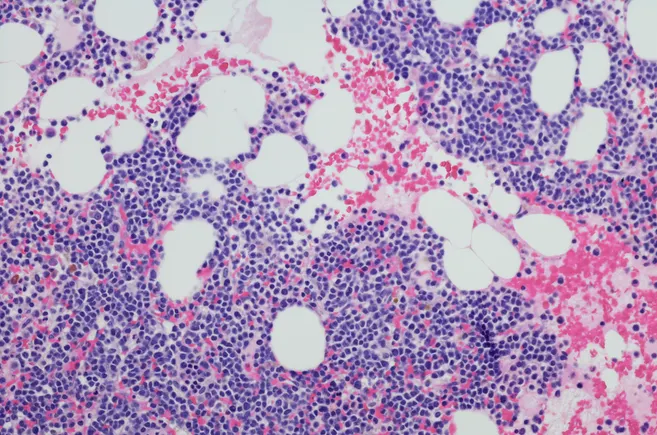
Drugmakers will present early data on trispecific antibodies at the American Society of Hematology meeting, known as ASH.
These medicines are being developed for multiple myeloma, a blood cancer.
Earlier cancer treatments called bispecific antibodies bind to two targets; trispecifics bind to three, with the aim of helping the immune system fight cancer and overcoming tumor resistance.
In a J&J trial, all 20 evaluable patients had no detectable cancer cells after three treatment cycles, but the study tested the drug with two other medicines.
AbbVie’s experimental drug produced responses in 75% to 85% of patients in an early trial involving people whose disease had returned or resisted treatment.
Drugmakers from China also reported promising early response rates, but the results come from early-stage testing, and the meeting will feature further presentations.

Drugmakers will present early data on trispecific antibodies for multiple myeloma at the upcoming American Society of Hematology meeting.
These medicines bind to three targets rather than two, and developers hope they can better counter tumor resistance and produce longer-lasting effects.
Johnson & Johnson will present mid-stage data on ramantamig, while AbbVie will report early results for ABBV-2001.
Companies based in China will also present early trial data, and California startup Kali Therapeutics will spotlight preclinical research.
The reported results include response rates of 75% to 85% for ABBV-2001 and 77% for Innovent’s IBI3003 at the dose selected for Phase 2.
- Who
- Johnson & Johnson, AbbVie, Innovent Biologics, Shanghai Xianxiang Medical Technology and Kali Therapeutics.
- What
- They will present early data on trispecific cancer therapies, including treatments for multiple myeloma.
- When
- At the upcoming American Society of Hematology meeting. The meeting date is not stated.
- Where
- The American Society of Hematology meeting. Its location is not stated.
- Why
- Developers hope trispecific medicines can counter tumors’ resistance to treatment and have longer-lasting effects.
This story does not have two clearly opposing sides.
Amgen’s Blincyto received clearance, starting a wider research push into bispecific cancer treatments.
Abstracted data for the upcoming American Society of Hematology meeting was published.
BioPharma Dive reported on the planned presentations and early data.
Drugmakers are set to present early data on trispecific antibodies at the American Society of Hematology meeting.
- J&J candidate
- Ramantamig; Phase 2 testing
- J&J trial
- All 20 evaluable patients had minimal residual disease negativity after three cycles
- AbbVie candidate
- ABBV-2001; Phase 1 response rates of 75% to 85%
- Innovent candidate
- IBI3003; 77% response rate at the dose selected for Phase 2
- Shanghai Xianxiang candidate
- SIM0500; overall response rate as high as 86% at the highest doses tested
What people are saying
strong early data
could add another important asset