

Politics · Indonesia · 12 hrs ago
Indonesia sets four priorities to improve free meals program
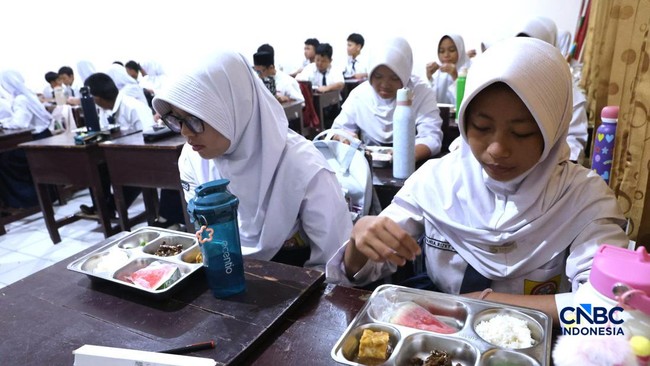
Indonesia’s government has set four priorities for improving its free meals program: reaching remote areas, improving service management, strengthening food safety and nutrition, and cleaning up beneficiary data and tackling irregularities.
The National Nutrition Agency activated 480 new service units in 16 eastern provinces on October 2, 2026, then 980 more in Sumatra, Kalimantan and Bali on October 14.
Wisnu Aji Nugroho, an audit expert, says the program should first target remote areas with extreme poverty and communities at high risk of stunting.
He argues it should also build local protein supply chains, including farms, animal feed and cold storage, rather than depend on food shipped from other regions.
By October 2026, the program had reached about 57.5 million people through 26,385 units; a separate September budget figure recorded spending of Rp149.79 trillion and 53.9 million recipients.
Local farmers, cooperatives, small businesses and village-owned firms could gain customers by supplying the program, while the government’s planned reforms aim to improve its reach, management and nutrition quality.

Indonesia has set four priorities to improve its free meals program, known as MBG.
The priorities are to expand access in remote regions, improve service-unit governance, strengthen food safety and nutritional quality, and clean up beneficiary data and address irregularities.
The National Nutrition Agency activated 480 new nutrition service units in 16 eastern provinces on October 2, 2026, followed by 980 units in Sumatra, Kalimantan and Bali on October 14.
By October 2026, the program had reached 57.49 million beneficiaries through 26,385 nutrition service units, according to a quoted program figure.
Audit expert Wisnu Aji Nugroho said the program should build local protein supply chains and focus first on areas with extreme poverty and high stunting risk.
- Who
- Indonesia’s government and National Nutrition Agency are improving the MBG free meals program. Audit expert Wisnu Aji Nugroho also offered recommendations.
- What
- The government set four priorities: expand coverage in remote areas, improve service-unit governance, raise food safety and nutritional quality, and strengthen beneficiary-data controls and enforcement against irregularities.
- When
- The priorities and program updates were reported on November 13, 2026. New service units were activated on October 2 and October 14, 2026.
- Where
- Indonesia, including remote and frontier regions and parts of eastern Indonesia, Sumatra, Kalimantan and Bali.
- Why
- The program aims to improve children’s nutrition, and shortcomings in its implementation have drawn government attention.
This story does not have two clearly opposing sides.
The agency recorded 1,027,998 active program employees and volunteers and a budget realization of Rp149.79 trillion, with 53,906,576 beneficiaries.
The National Nutrition Agency activated 480 new nutrition service units in 16 eastern provinces.
The agency activated 980 new units in Sumatra, Kalimantan and Bali.
The program had reached 57.49 million beneficiaries through 26,385 service units, according to the article.
CNBC Indonesia reported the four government priorities and Nugroho’s recommendations.
- Priorities
- Expand access in remote regions; improve service-unit governance; strengthen food safety and nutrition; improve beneficiary data and address irregularities
- October 2 activation
- 480 new service units in 16 eastern provinces
- October 14 activation
- 980 new service units in Sumatra, Kalimantan and Bali
- Program reach
- 57,491,334 beneficiaries and 26,385 service units, as of October 9, 2026
- Active workforce
- 1,027,998 employees and volunteers, as of September 2026
- Budget realization
- Rp149.79 trillion, as of September 2026
What people are saying
Ia harus menjadi katalis untuk membangun ekosistem protein di daerah: kandang, pakan, dan rantai dingin yang dibangun di wilayah sendiri. Tanpa itu, MBG hanya akan memperkuat ketergantungan antar-daerah yang selama ini menjadi akar defisit protein