

Politics · South Korea · 23 mins ago
New crime agency chief attends Cabinet meeting amid neutrality concerns
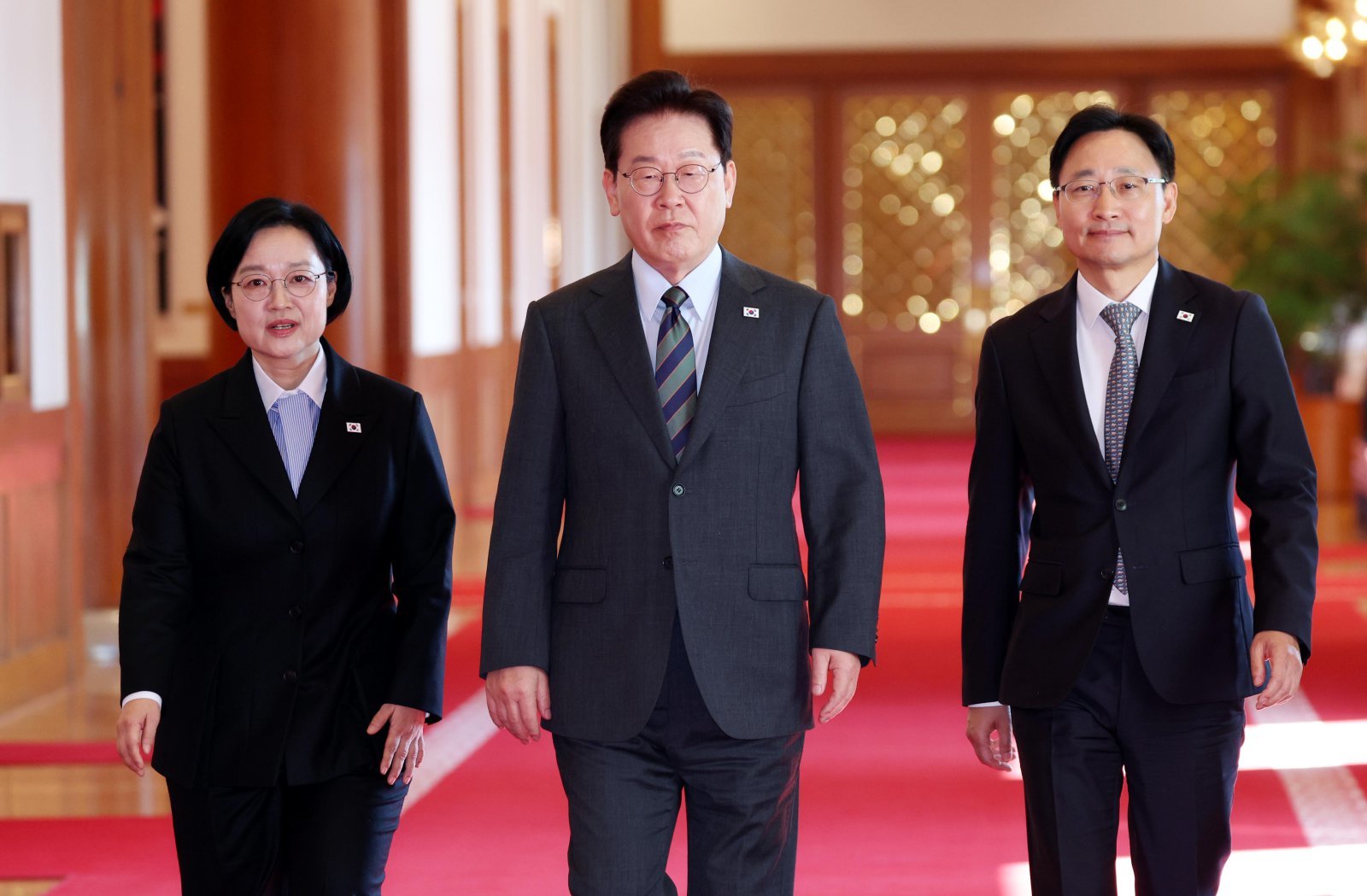
Kim Ji-yong attended his first Cabinet meeting as head of South Korea’s Serious Crime Investigation Agency on Tuesday.
President Lee Jae Myung urged the agency to investigate serious crimes, including corruption, without favouring any side.
The agency began work on October 2 as part of a justice system overhaul that removed prosecutors’ independent investigative powers.
Kim had said before his appointment that he would consider the law and consult relevant agencies before deciding whether to attend.
Critics say Cabinet attendance could weaken independence because officials at the presidential office can also be investigated, and regular meetings with the president may create pressure.
Prosecutors and police leaders have also begun attending meetings under a policy introduced this year, although they did not usually attend before.
Kim is due to hold his inauguration ceremony Tuesday afternoon, and he has said he aims to establish the agency and protect the public’s rights.

Kim Ji-yong, the new chief of South Korea’s Serious Crime Investigation Agency, attended a Cabinet meeting for the first time on Oct. 20.
His attendance prompted concerns that regular meetings with the president could undermine the political neutrality and independence of investigative and prosecutorial agencies.
President Lee Jae Myung urged the agency to investigate serious crimes without favoring either side and to prove its purpose to the public.
Kim said he would work to establish the agency, complete prosecutorial reform and protect the public’s rights.
The agency was launched on Oct. 2 as part of a criminal justice overhaul that removed prosecutors’ independent investigative powers.
- Who
- Kim Ji-yong, the inaugural chief of South Korea’s Serious Crime Investigation Agency, attended the meeting chaired by President Lee Jae Myung.
- What
- Kim attended a Cabinet meeting for the first time, prompting debate over the agency’s political neutrality.
- When
- Oct. 20, 2026.
- Where
- Cheong Wa Dae in Seoul.
- Why
- The agency was launched as part of a criminal justice overhaul, and its chief attended the Cabinet meeting. Critics say such attendance could put political pressure on investigative and prosecutorial bodies.
Critics of regular Cabinet attendance
President Lee Jae Myung and the government
Political neutrality
Critics of regular Cabinet attendance
Regular attendance by investigative and prosecutorial chiefs could create political pressure, even without instructions on specific cases.
President Lee Jae Myung and the government
Lee said agency chiefs’ attendance was constitutionally required and urged the new agency to investigate serious crimes without favor or exception.
Cabinet participation
Critics of regular Cabinet attendance
The heads of agencies connected to investigations and prosecutions should not be routinely included in Cabinet meetings.
President Lee Jae Myung and the government
The government expanded Cabinet participation to include heads of government agencies.
The Serious Crime Investigation Agency was launched as part of a criminal justice overhaul.
Kim received his letter of appointment from President Lee.
Kim attended a Cabinet meeting for the first time and was scheduled to hold his inauguration ceremony that afternoon.
- Agency
- Serious Crime Investigation Agency (SCIA)
- Chief
- Kim Ji-yong
- Cabinet meeting
- Oct. 20, 2026, at Cheong Wa Dae in Seoul
- Agency launch
- Oct. 2, 2026
- Appointment
- Kim received his letter of appointment on Oct. 19, 2026
6 sources
What people are saying
Investigate serious crimes, including white-collar crime and power-related corruption, without distinguishing between your side and the other side, mobilize all investigative resources to punish them without exception, and prove to the people the significance and necessity of the Serious Crime Investigation Agency.
I will do my best to successfully establish the Serious Crime Investigation Agency, complete prosecutorial reform and protect the public’s rights.
the political neutrality of investigative and prosecutorial authorities must be guaranteed