

Sports · Motorsport · 39 mins ago
Lawson faces possible disqualification from Mexico qualifying
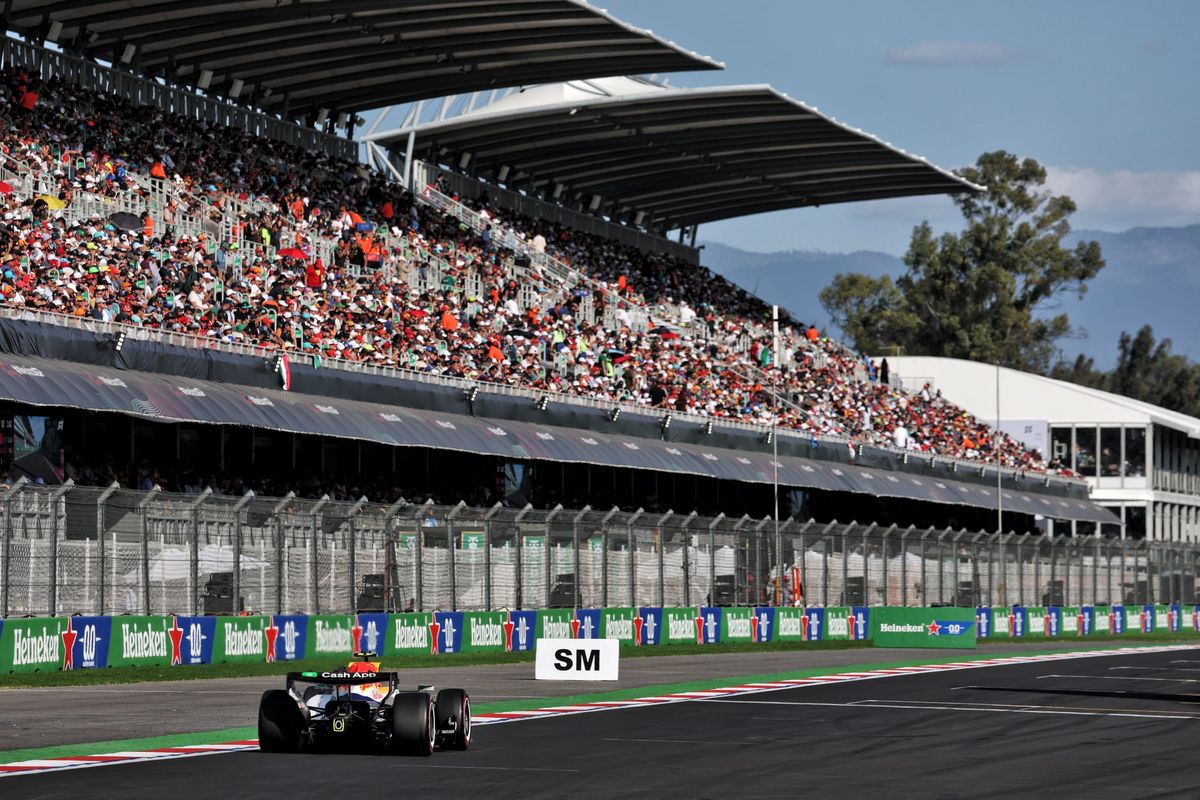
Liam Lawson and Racing Bulls were summoned to the stewards after qualifying for the Mexico City Formula 1 race.
Lawson was eighth-fastest, but a one-place penalty from a clash in practice meant he was due to start ninth.
A technical breach could disqualify him from qualifying, putting his place near the front of the grid at risk.
The FIA says the car’s electric power and the power available to the driver fell faster than the rules allow.
The rules require the battery-powered MGU-K boost to fade gradually rather than switch off at once.
Lawson stayed on the throttle near the end of his lap, unlike his team-mate, which may help explain the suspected breach.
The stewards must decide whether to disqualify him; no decision is stated.

Liam Lawson was disqualified from qualifying for the Mexico City Grand Prix after a technical breach involving his car’s MGU-K power.
He had qualified eighth-fastest, but a separate one-place grid penalty meant he had been due to start ninth.
The stewards found that electrical power was reduced faster than the regulations allow after his fastest Q2 lap.
Racing Bulls said the breach brought no performance advantage and disclosed it to officials, but the stewards said that did not remove the requirement to comply with the rules.
Lawson now faces starting from the back of the field and needs the stewards’ permission to take part in the race.
- Who
- Liam Lawson of Racing Bulls was disqualified by the FIA stewards.
- What
- He was excluded from Mexico City Grand Prix qualifying for a technical infringement involving MGU-K power reduction.
- When
- Saturday, 31 October 2026, after qualifying.
- Where
- Autódromo Hermanos Rodríguez, Mexico City.
- Why
- His car’s power demand and electrical power were reduced faster than permitted after his fastest Q2 lap.
Racing Bulls
FIA stewards
Performance advantage
Racing Bulls
Racing Bulls argued that the breach provided no performance advantage.
FIA stewards
The stewards said the absence of a performance advantage did not excuse non-compliance with the technical regulations.
Penalty
Racing Bulls
Racing Bulls disclosed the breach to officials.
FIA stewards
The stewards said precedents required disqualification despite mitigating circumstances.
Lawson and Max Verstappen collided, and Lawson received a one-place grid penalty.
Lawson reached Q3 and qualified eighth-fastest, which would have put him ninth after the grid penalty.
The stewards investigated Lawson’s MGU-K power reduction and disqualified him.
Lawson was due to start from the back of the field, subject to permission from the stewards to race.
- Driver
- Liam Lawson
- Team
- Racing Bulls
- Qualifying result before disqualification
- Eighth-fastest
- Original expected starting position
- Ninth, after a one-place grid penalty
- Technical rules cited
- Articles C5.12.6 and C5.12.7
- Championship gap
- Racing Bulls held a 33-point advantage over Alpine in the standings
4 sources
What people are saying
The team argued that this did not provide any performance advantage however it is clear that non-compliance with the Technical Regulations is not excused if no performance advantage is gained,
Further, these regulations require that a car must comply with them at all times during an event.
The Stewards note in particular that the team self-disclosed the breach however there are a multitude of precedents that require us, despite all mitigating circumstances, to impose a penalty of Disqualfication where a car does not comply with the Technical Regulations,