

Science & Tech · Space · 5 hrs ago
Caltech robot builds part of a structure autonomously in orbit
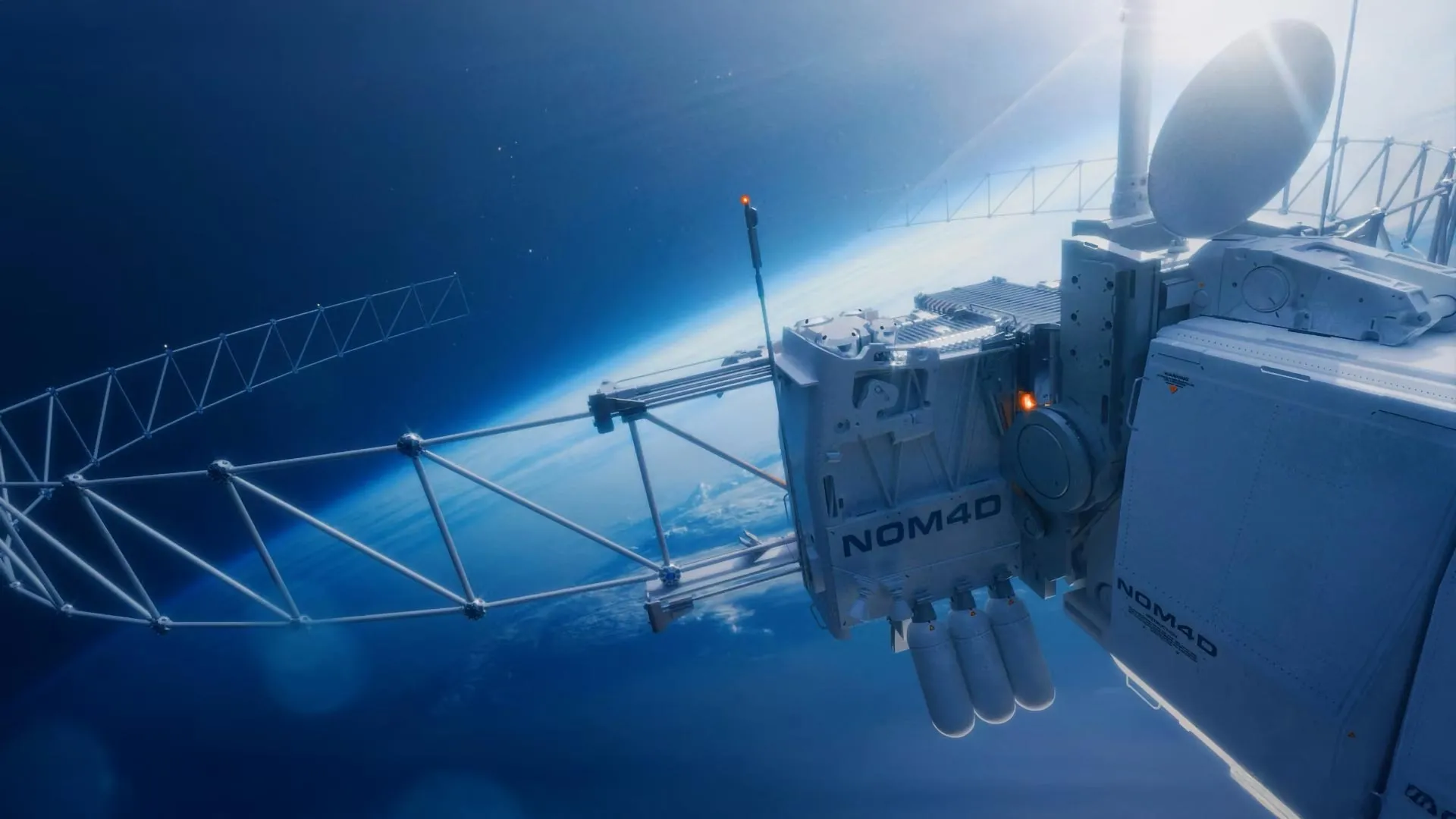
A robot built part of a structure in orbit without astronauts controlling it directly.
The Caltech team’s ASTRA project used an automated arm to join tubes and aluminum connectors into a supporting frame for a reflective antenna.
The antenna was designed to measure 1.4 meters across, with a surface made from Kapton film.
The project was funded by the US Defense Advanced Research Projects Agency and is part of a program exploring how to build large structures in space.
Rockets limit the size of objects they can carry, while construction in orbit could allow much larger antennas, telescopes and solar arrays.
The robot completed only an initial section, because technical problems and time limits prevented the team from finishing the antenna.
The demonstration provides evidence that robotic construction can work in orbit, but building structures hundreds of meters or kilometers wide remains a future goal.

A Caltech-developed robot assembled part of a structure in orbit without astronauts, marking a first for autonomous construction in space.
The ASTRA demonstration built an initial section of a reflector antenna measuring 1.4 meters across.
The structure uses composite fiber tubes, aluminum connectors and a reflective Kapton film.
Technical difficulties and time limits prevented the team from completing the entire antenna.
The project is part of DARPA’s NOM4D program, which aims to enable construction of very large structures in space.
- Who
- Researchers at Caltech developed the robotic system with funding from DARPA.
- What
- The robot autonomously assembled part of a reflector antenna in orbit.
- When
- The ASTRA payload launched on March 30; the sources do not state when the assembly took place.
- Where
- In orbit. The payload flew aboard Momentus’s Vigoride 7 space tug.
- Why
- The demonstration tested a way to build structures in space, which could support future astronomy, communications and space-based energy systems.
This story does not have two clearly opposing sides.
Caltech researchers developed the construction concept and engineering design, then tested the system in a laboratory on Earth.
ASTRA launched aboard Momentus’s Vigoride 7 on SpaceX’s Transporter-16 rideshare mission.
The robotic system attempted to construct the 1.4-meter reflector antenna and assembled an initial section.
Sergio Pellegrino described the work as the first autonomous construction of a structure in space.
- Project
- Autonomous In-Space Tensioned Reflector Assembly (ASTRA)
- Structure width
- 1.4 meters
- Main components
- Composite fiber tubes, aluminum connectors and Kapton film
- Launch vehicle
- Momentus Vigoride 7
- Launch date
- March 30
- Program
- DARPA’s Novel Orbital and Moon Manufacturing, Materials, and Mass-efficient Design (NOM4D)
3 sources
What people are saying
This is the first time that a structure has been autonomously constructed in space
Developing a payload of this complexity on such a short timeline was an enormous undertaking for our small team
As we wrap up the mission, we are finally able to start thinking about the new avenues of research opened by this demonstration
NOM4D's objective is to enable efficient, scalable construction of very large structures in space