

Science & Tech · Science & Environment · 6 hrs ago
Wild cockroaches help pollinate a shrub in the Brazilian Amazon
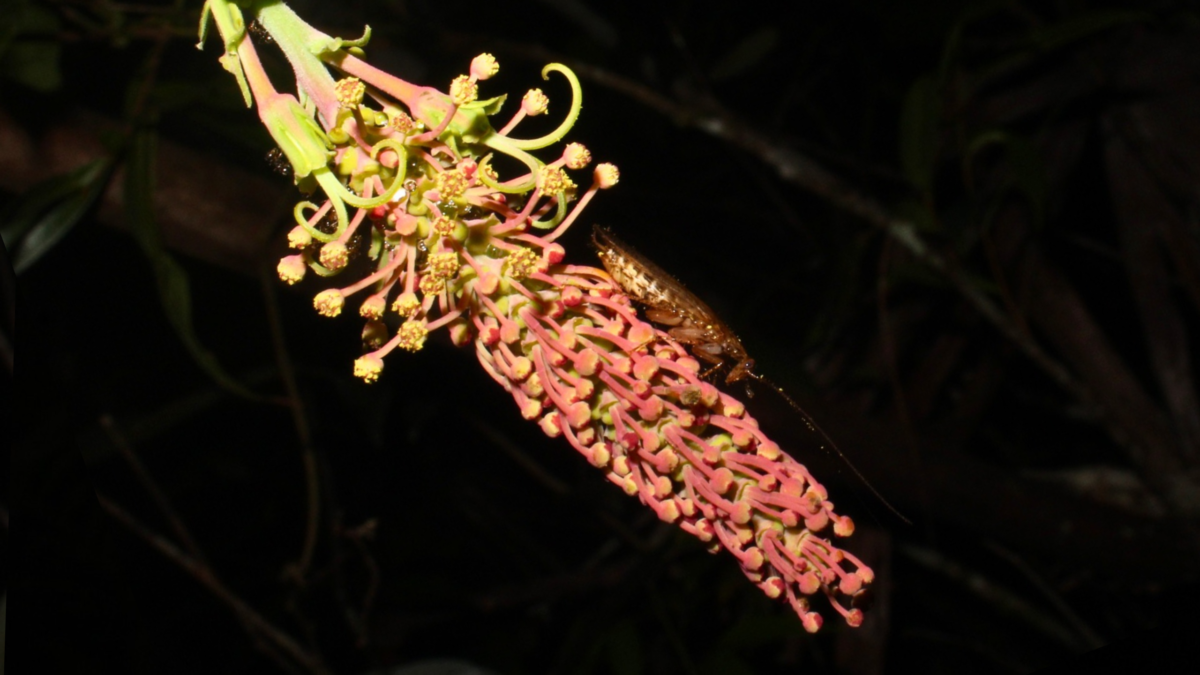
Mabea uleana grows only in Brazil’s Amazonas state, in patches of vegetation on nutrient-poor white sand.
The shrub’s flowers open around dusk and release nectar, but researchers recorded no bat visits during their observations.
Cockroaches were among the shrub’s most important pollinators, visiting after dark and carrying sticky pollen on their legs and bodies.
As they move through a flower cluster to reach nectar and climb back out, they can transfer pollen between the shrub’s male and female flowers.
About 93 percent of flowers given pollen from another shrub formed fruit, compared with 15 percent of those given pollen from their own cluster.
Flowers left open to visitors had a 73 percent fruit rate, suggesting that pollen from a different shrub can make a major difference to fruit production.

Wild cockroaches appear to be important pollinators of Mabea uleana, a shrub found in Brazil’s Amazonas state.
Researchers recorded cockroaches visiting the shrub’s flowers after dark but no bat visits.
About 93 percent of flowers given pollen from another shrub formed fruit, compared with 15 percent given pollen from their own flower cluster.
About 73 percent of flowers left open to visitors produced fruit.
The researchers watched flower clusters on six shrubs north of Manaus for 252 hours between June 2024 and January 2025.
- Who
- Researchers Tulio Alex Martins-Silva and Layon Oreste Demarchi studied the shrub and its visitors.
- What
- The study found that wild cockroaches visit Mabea uleana flowers after dark and may help pollinate them.
- When
- The researchers observed the shrubs between June 2024 and January 2025.
- Where
- On six shrubs north of Manaus, in Brazil’s Amazonas state.
- Why
- The researchers investigated which animals might carry pollen between shrubs and how pollen from another plant affected fruit production.
This story does not have two clearly opposing sides.
Researchers spent 252 hours observing flower clusters on six shrubs, dividing their observation time evenly between day and night.
ScienceAlert published its report on the study.
- Shrub
- Mabea uleana
- Range
- Amazonas state, Brazil
- Observation period
- June 2024–January 2025
- Observation effort
- 252 hours across six shrubs north of Manaus
- Fruit from pollen from another shrub
- About 93 percent
- Fruit from pollen from the same cluster
- 15 percent
1 source
What people are saying
It was never imagined that this type of interaction could occur in the Amazon, let alone contribute to reproduction, as the vast majority of attention goes to bees and bats
has to bend its head down to reach the nectar, getting dusted with pollen all over again
Euphorbiaceae pollen is very sticky