

Science & Tech · Science & Environment · 11 hrs ago
Chinese study finds Kizilcaoren rare earth mineralisation is small in scale
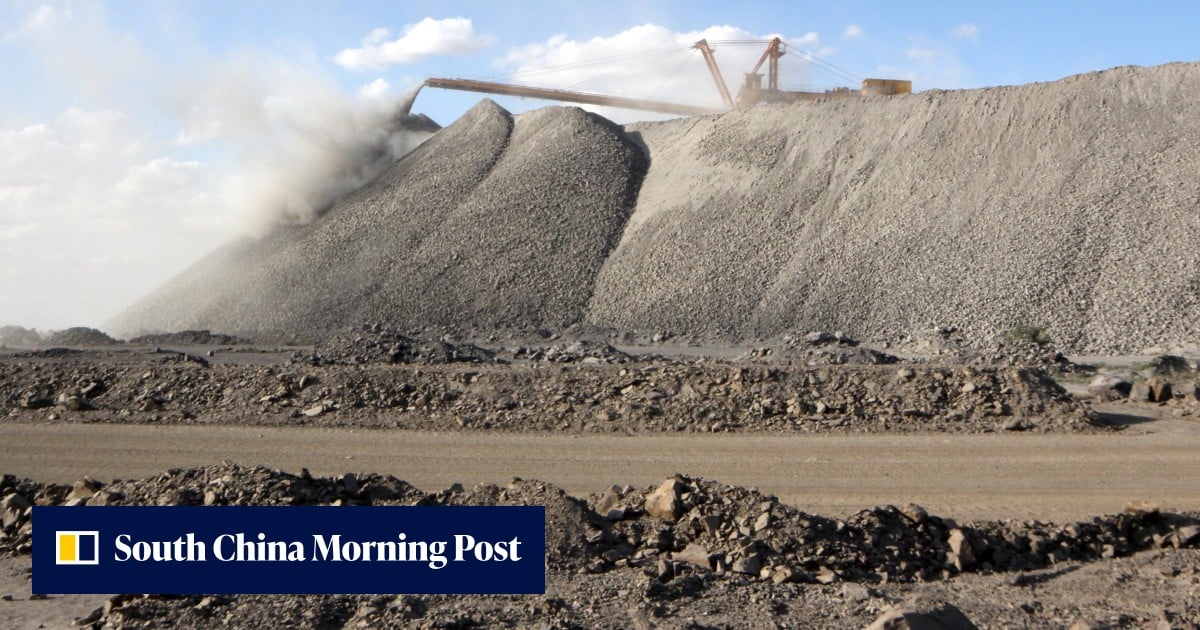
A Chinese research team mapped Turkey’s Kizilcaoren site in Eskişehir to study how rare earth elements formed there.
Led by Professor Yang Xiaoyong, the team examined mineral-bearing rocks and concluded that the mineralisation studied is small compared with major deposits.
That finding does not match the much larger figure often cited for the wider area: Turkey’s energy ministry puts resources between Beylikova and Sivrihisar at about 694 million tonnes.
The sources describe these as different measures and do not say that the Kizilcaoren study confirmed that full amount.
Rare earth elements are used in products including electric vehicles, wind turbines, electronics and defence equipment, while China handles about 90% of global processing.
Turkey wants to develop local processing and production, but the study suggests that geological and economic barriers could limit how quickly the site becomes a major supplier.
The sources give no timetable for further development.

Chinese researchers mapped the geology of Turkey’s Kizilcaoren rare earth deposit in Eskişehir.
The team concluded that the deposit’s mineralisation is small in scale compared with large rare earth deposits.
The study examined how rare earth elements accumulate in carbonatite-related rocks.
The researchers said the findings provide scientific insight but do not indicate that the site will soon become a major global supply source.
Separately, Turkish ministry data cited in the articles put the rare earth resource between Beylikova and Sivrihisar at about 694 million tonnes.
- Who
- Chinese researchers led by Professor Yang Xiaoyong.
- What
- They studied Kizilcaoren’s geology and how rare earth elements accumulated in its rocks. They found its mineralisation was small in scale compared with large deposits.
- When
- The study was reported on October 24, 2026.
- Where
- Kizilcaoren, in Eskişehir province, Turkey.
- Why
- To investigate the deposit’s geological development and how rare earth elements form and accumulate.
This story does not have two clearly opposing sides.
Chinese researchers mapped Kizilcaoren’s geological evolution and analysed rare earth element accumulation in carbonatite-related formations.
SCMP reported the researchers’ conclusion that the site’s mineralisation was small in scale.
- Study location
- Kizilcaoren, Eskişehir province, Turkey
- Lead researcher
- Professor Yang Xiaoyong
- Mineralisation finding
- Small in scale compared with large rare earth deposits
- Separate resource figure
- About 694 million tonnes between Beylikova and Sivrihisar, according to Turkish ministry data
- Comparison cited by Turkish officials
- Bayan Obo in China, about 800 million tonnes
3 sources
What people are saying
small in scale
still far from reaching the large scale of rare earth deposits
So far, there is no evidence that Turkey or other countries in the Middle East have substantial rare earth deposits,