

Health · Medical Research · 7 hrs ago
Study links heart muscle contraction to limited ability to regenerate
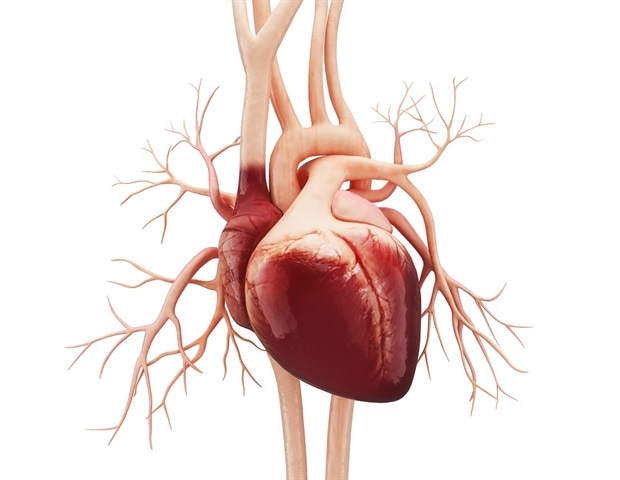
Researchers at Spain’s CNIC studied why adult hearts rarely repair damage.
Heart muscle cells, called cardiomyocytes, lose much of their ability to divide soon after birth, as the heart takes on more work.
The team found that contraction helps keep these cells from dividing.
When contraction was temporarily stopped in experiments, the cells’ internal structures changed and they became more able to divide.
Their energy use also shifted toward a less demanding metabolic state, while restoring contraction reversed the changes.
This reveals a trade-off between heart function and repair: the activity that keeps the heart pumping also limits the replacement of damaged cells.
The findings do not provide an immediate treatment, but they point to mechanisms that could guide future repair strategies.

A study led by researchers at Spain’s CNIC found that the contraction of heart muscle cells limits their ability to divide and regenerate.
The researchers found that temporarily stopping contraction allowed the cells to re-enter the cell cycle, while restoring contraction reversed the changes.
The findings link contraction, cell structure and energy metabolism to the limited regenerative capacity of the adult heart.
The study was published in Nature Cardiovascular Research.
The researchers said the findings identify possible mechanisms for future cardiac repair research, but do not immediately translate into clinical therapies.
- Who
- Researchers at the Centro Nacional de Investigaciones Cardiovasculares Carlos III (CNIC), led by senior author Dr. Florian Weinberger.
- What
- The study found that heart muscle cell contraction suppresses the cells’ ability to divide and regenerate.
- When
- Published on November 27, 2026.
- Where
- The research was led at CNIC. The study examined human stem cell-derived heart cells, engineered heart tissue, living myocardial slices and animal models.
- Why
- The researchers investigated why the adult heart has limited ability to repair itself. They found that the structural and metabolic demands of contraction help keep heart muscle cells from dividing.
This story does not have two clearly opposing sides.
The heart’s ability to regenerate is rapidly lost as it adapts to increased workload outside the womb.
Researchers found that temporarily inhibiting contraction led heart muscle cells to disassemble their sarcomeres and re-enter the cell cycle.
Sarcomeres reassembled and the cells exited the cell cycle, losing their ability to proliferate.
The study was published in Nature Cardiovascular Research.
- Lead institution
- Centro Nacional de Investigaciones Cardiovasculares Carlos III (CNIC)
- Senior author
- Dr. Florian Weinberger
- Journal
- Nature Cardiovascular Research
- Publication date
- November 27, 2026
- Experimental finding
- Temporarily inhibiting contraction increased heart muscle cells’ ability to divide
What people are saying
Our findings show that cardiomyocytes face a fundamental biological trade-off: the very machinery that enables them to contract and sustain life also prevents them from dividing and replacing damaged tissue.
We provide evidence that contraction is not simply incompatible with cell division but actively suppresses the regenerative potential of heart muscle cells.