

Business · Companies · 2 hrs ago
South Korea weighs tax credits for locally made electric cars
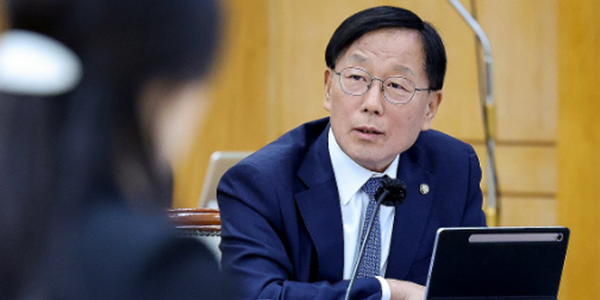
South Korean Finance Minister Lee Hyeong-il met Hyundai Motor Group Chair Chung Eui-sun on November 2 in Hwaseong to discuss electric-car industry competitiveness.
The meeting came as South Korean automakers face stronger global competition, including from Chinese-made electric cars.
The government’s proposed domestic production tax credit excludes finished electric cars, although it covers several other industries.
Automakers want the credit extended to electric cars, and lawmakers have introduced bills to add them.
The debate matters for Hyundai, Kia and KG Mobility, which could benefit if locally made cars qualify.
Lawmakers are now reviewing the tax-credit plan, including who qualifies and how large the credits should be.
The government says it will announce an electric-car industry support package this month, covering areas such as self-driving technology and research into key components.

South Korea is considering whether to extend a new domestic production tax credit to electric vehicles made in the country.
The government’s original plan excluded finished electric cars, while lawmakers have proposed adding them to the eligible products.
Industry representatives have urged the government to provide the credit, citing stronger global competition and rising imports of China-made electric cars.
Deputy Prime Minister Lee Hyoung-il said the government would take part in parliamentary discussions and announce an electric vehicle competitiveness plan this month.
The credit’s eligibility rules, limits and treatment of exports remain under discussion.
- Who
- South Korea’s government and lawmakers are considering the credit; automakers and industry representatives are seeking support.
- What
- Whether to extend a domestic production tax credit to locally made electric cars.
- When
- The issue was discussed on November 2, 2026; the government plans to announce a related policy package this month.
- Where
- At the Hyundai Motor Group research facility in Hwaseong, and in South Korea’s National Assembly.
- Why
- The government and industry are seeking to strengthen the competitiveness of South Korea’s electric vehicle sector amid global competition.
South Korean government
Electric vehicle industry representatives
Eligibility
South Korean government
The government’s original tax credit plan excluded finished electric cars.
Electric vehicle industry representatives
Industry representatives want electric vehicles included in the credit.
Policy rationale
South Korean government
The original exclusion was linked to concerns about overlap with existing electric vehicle purchase subsidies and support for batteries.
Electric vehicle industry representatives
The industry says production-linked tax support is needed to compete with China-made electric cars and maintain domestic production and supply chains.
Lawmaker Lee Eon-ju proposed a bill offering a tax credit of 4 million won per electric car produced and sold or exported domestically.
Lawmakers Yoon Hoo-duk and Yoon Han-hong proposed a bill to add electric cars to the production tax credit.
Deputy Prime Minister Lee Hyoung-il met Hyundai Motor Group chair Chung Eui-sun and held an industry meeting on electric vehicle competitiveness.
The government plans to announce an electric vehicle competitiveness package.
- Original government plan
- Excluded finished electric cars from the domestic production tax credit
- Industry request
- Include electric vehicle production in the credit
- China-made EV share
- 35.0% of South Korea’s new electric vehicle registrations in the first half of 2026
- Proposed individual credit
- 4 million won per eligible electric car under Lee Eon-ju’s bill
- Planned announcement
- Government policy package due in November 2026
3 sources
What people are saying
앞으로 2∼3년 이내에 글로벌 선도국 수준의 기술력을 갖춰야 살아남을 수 있는 만큼 우리 기업들의 발 빠른 변화와 기술 혁신이 그 어느 때보다 절실하다
전기차 생산세액 공제 지원과 관련해서는 국회 논의 과정에 정부도 적극적으로 참여하고 심도 있게 논의해나가겠다