

Science & Tech · Space · 3 hrs ago
Webb maps the uneven, scorching atmosphere of exoplanet WASP-17b
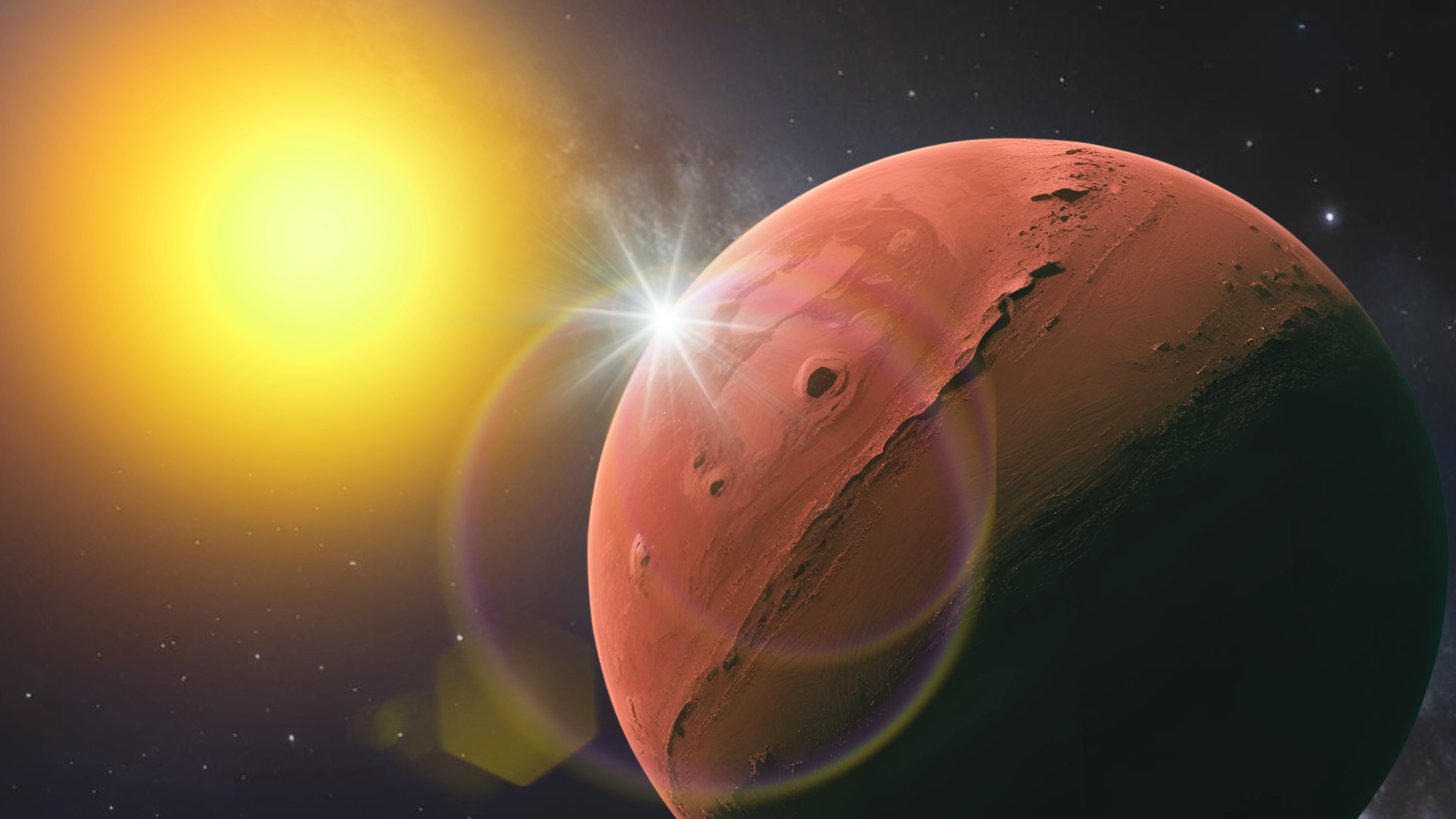
Astronomers used Webb to map WASP-17b’s uneven atmosphere as the planet crossed in front of its star.
WASP-17b is a huge, unusually puffed-up gas planet more than 1,000 light-years away, and it orbits its star every 3.7 days.
Because it is tidally locked, the same side always faces its star, leaving the planet with a permanent day side and night side.
By tracking starlight through different parts of the atmosphere’s edge, the team measured conditions around the planet instead of treating that edge as one uniform ring.
The evening side is about 1,200°F hotter than the morning side, and its atmosphere reaches about 1.8 times farther out.
The findings show that Webb can reveal local weather on distant planets and test predictions about how their atmospheres behave.

JWST observations show that WASP-17b’s atmosphere varies in shape and temperature around the planet.
The evening side is about 1,200°F (660°C) hotter than the morning side and extends farther into space.
Researchers used a method that measures the atmosphere at different angles instead of averaging it as a circle.
WASP-17b is a very large, low-density gas giant that orbits its star in about 3.7 days.
The findings demonstrate that researchers can map differences across an exoplanet’s atmosphere in three dimensions.
- Who
- A team led by Lili Alderson of Cornell University, working with Hannah Wakeford and David Grant of the University of Bristol.
- What
- The team mapped differences in WASP-17b’s atmospheric shape and temperature using JWST data.
- When
- JWST observed the planet crossing its star in March 2023. The study was published on October 14, according to Space.com.
- Where
- WASP-17b, more than 1,000 light-years from Earth, orbiting its star.
- Why
- To measure how the planet’s atmosphere varies around its edge rather than treating it as a uniform circle.
This story does not have two clearly opposing sides.
JWST observed WASP-17b as it crossed in front of its star, using three instruments.
The team’s research was published in Nature Astronomy, according to Space.com.
- Planet
- WASP-17b
- Orbital period
- 3.7 days
- Morning-side temperature
- About 1,100°F (590°C)
- Evening-side temperature
- About 2,280°F (1,250°C)
- Atmospheric extent difference
- Evening side extends about 1.8 times as far as the morning side
- Observation
- March 2023, using the James Webb Space Telescope
2 sources
What people are saying
This is proof of concept that planets are in fact 3D objects, and that consistently, as they go around their star, what we predict should be happening is happening
Rather than assuming your atmosphere is a circle with the same radius all the way around, our technique allows you to pull out different distances from the center to the edge of the planet
This allows us to actually track the local weather around the planet
Planets are temperamental, their atmospheres complex and chaotic