

Health · Healthcare & Policy · 3 hrs ago
Psychiatric medicine shortages put South African patients at risk of relapse
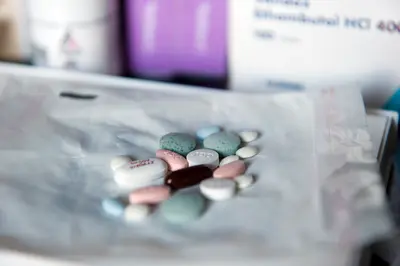
Shortages of psychiatric medicines are affecting public health facilities across South Africa.
People with schizophrenia, bipolar disorder and major depression may relapse if treatment is interrupted.
The shortages have been reported particularly in four provinces: Gauteng, KwaZulu-Natal, the Western Cape and the Eastern Cape.
Switching medicines can be difficult because patients respond differently, and shortages are also putting pressure on emergency departments and psychiatric wards.
The health department reports 83.4% overall medicine availability, but that figure covers all medicines and does not show the availability of psychiatric drugs specifically.
Officials cite manufacturing and supplier problems, distribution delays and congestion at Durban port; the health minister said he was working with Transnet to address port delays.
The government also wants to expand local medicine manufacturing, while the shortages and their effects on patients remain a concern.

Shortages of essential psychiatric medicines in South African public healthcare facilities put people with schizophrenia, bipolar disorder and major depressive disorder at risk of relapse.
Psychiatrists warn that interrupted treatment can lead to relapse and hospitalisation.
The South African Society of Psychiatrists has received reports of shortages in recent months, particularly in four provinces.
Health officials cite manufacturing, supply, regulatory and distribution problems, while clinicians say facilities have little room to respond.
The health department reported overall medicine availability of 83.4%, a figure that does not show the availability of psychiatric medicines specifically.
- Who
- Patients with mental health conditions who rely on psychiatric medicines, including people with schizophrenia, bipolar disorder and major depressive disorder.
- What
- Shortages of psychiatric medicines are putting patients at risk of relapse and hospitalisation.
- When
- Reports of shortages have come in during recent months.
- Where
- Public healthcare facilities across South Africa, with reports particularly from Gauteng, KwaZulu-Natal, the Western Cape and the Eastern Cape.
- Why
- The health department cited manufacturing constraints, supplier delays, regulatory requirements, poor distribution and congestion at the Port of Durban. Clinicians also pointed to wider supply problems and limited staffing and resources.
This story does not have two clearly opposing sides.
The South African Society of Psychiatrists received reports of psychiatric medicine shortages, particularly in Gauteng, KwaZulu-Natal, the Western Cape and the Eastern Cape.
The Stop Stockouts Project received more than 500 reports of medicines being out of stock across the country.
The national medicine shortage hotlist had risen to 184 products.
The Mail & Guardian published its report on psychiatric medicine shortages and their risks to patients.
- Reported medicines
- Risperidone, aripiprazole, quetiapine, chlorpromazine, fluoxetine, amitriptyline and injectable lorazepam
- Provinces highlighted
- Gauteng, KwaZulu-Natal, the Western Cape and the Eastern Cape
- Overall medicine availability
- 83.4% across the public health system; not specific to psychiatric medicines
- Out-of-stock reports
- More than 500 reports received by the Stop Stockouts Project between October and the interview
- Shortage hotlist
- 184 products by 16 November
- Health facilities monitored
- About 3,485 primary healthcare facilities and 385 public hospitals
What people are saying
When a patient relapses, it is not always as simple as putting them back on the medication they were taking before.
There’s always medicine shortages, something or the other. It’s never a constant or reliable supply in the public sector.
When the system is under so much strain as a baseline, any additional strain is just going to create a crisis because we actually have no room to adapt.