

Science & Tech · Science & Environment · 2 hrs ago
Nearby Insulators Can Drain Energy From Sensitive Nanomechanical Sensors
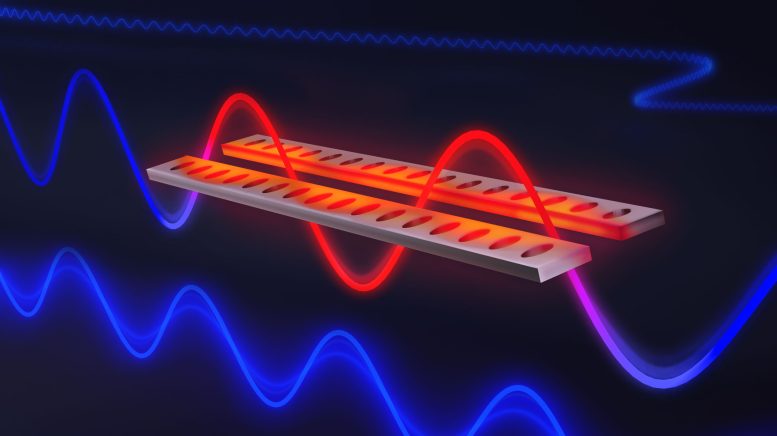
EPFL researchers found a hidden source of energy loss in tiny vibrating devices called nanomechanical resonators.
Trapped electric charges in a resonator create changing fields that interact with nearby insulating materials, draining energy across a gap without contact.
In tests, the lowest-frequency vibrations lost the most energy, and bringing insulators close sometimes cut a resonator’s quality factor by tenfold.
That factor measures how well a device stores vibrational energy rather than losing it.
These resonators can detect tiny changes in mass, force, temperature and pressure, and they are also used in quantum technology.
Designers must account for this effect when placing resonators close to other components, or their performance may suffer.
The researchers say the interaction could also help measure electrical losses in thin films or create controlled links between resonators and electrical systems.

EPFL researchers found that nearby insulating materials can sharply increase energy loss in nanomechanical resonators without touching them.
The effect can reduce a resonator’s mechanical quality factor by as much as tenfold.
The researchers linked the damping to trapped electric charges interacting with electrical losses in nearby insulating materials.
The findings highlight a potential design challenge for precision sensors and quantum technologies that place resonators close to other structures.
- Who
- Researchers in the group of Tobias J. Kippenberg at EPFL.
- What
- They found that nearby insulating materials can increase energy loss in nanomechanical resonators without physical contact.
- When
- The study was published on 7 July 2026; SciTechDaily published its article on 3 November 2026.
- Where
- EPFL; the experiments used silicon nitride strings and dielectric materials.
- Why
- Trapped charges in a vibrating resonator create changing electric fields that interact with electrical losses in nearby insulating materials.
This story does not have two clearly opposing sides.
The study was published in Nature Physics.
SciTechDaily published an article about the findings.
- Maximum quality-factor reduction
- As much as tenfold
- Test-string gap above dielectric layer
- Approximately 500 nanometers
- Nearby resonator separations
- A few hundred nanometers
- Study journal
- Nature Physics
- Lead researcher
- Tobias J. Kippenberg
What people are saying
Not stated