

Politics · Other · 1 hr ago
New Zealand election pits incumbent Christopher Luxon against Chris Hipkins
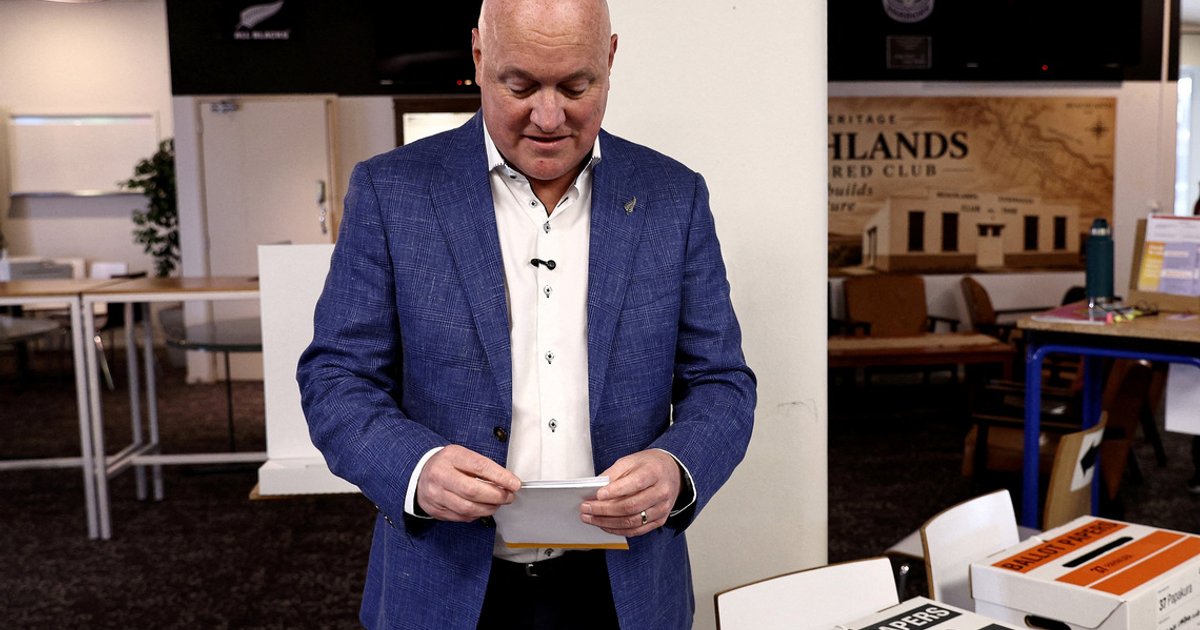
New Zealand votes on 7 November to choose its next government, in a close contest between the governing National Party and opposition Labour Party.
National is led by Prime Minister Christopher Luxon, who is seeking a second term after taking office in 2023.
Labour leader Chris Hipkins became prime minister in 2023 after Jacinda Ardern resigned, then lost power in that year's election.
The contest is focused on cost of living and the economy, as households face high everyday costs and rising unemployment.
New Zealand's proportional voting system makes it difficult for one party to win a majority, so smaller parties could decide who governs.
National currently governs with New Zealand First and ACT, while Labour is seeking to lead a new government.
Polls show no clear winner, and forming a government could take weeks after voting ends.

New Zealanders will vote on November 7 to choose a government, with incumbent Prime Minister Christopher Luxon facing Labour leader Chris Hipkins.
Opinion polls show the governing centre-right National Party and opposition centre-left Labour Party running close, with neither bloc clearly set to win a majority.
Smaller parties could determine who forms the next government under New Zealand’s proportional electoral system.
The campaign has focused heavily on the economy, including the cost of living, unemployment and healthcare.
Luxon is seeking a second term, while Hipkins is seeking to return to the top job after Labour lost power in 2023.
- Who
- Incumbent Prime Minister Christopher Luxon and Labour leader Chris Hipkins are the main candidates.
- What
- New Zealand is holding a general election to choose its government.
- When
- November 7, 2026.
- Where
- New Zealand.
- Why
- Voters are choosing a government amid concerns including the economy, cost of living, unemployment and healthcare.
National Party
Labour Party
Economic policy
National Party
National says it will use fiscal discipline to return the budget to surplus while expanding the national pension scheme.
Labour Party
Labour says it will focus on the cost of living, cheaper healthcare and transport, and investment in jobs, housing and infrastructure.
Government
National Party
Luxon is urging voters to give National another three years to complete its work.
Labour Party
Hipkins says Labour wants a change of government and hopes to form a Labour-led government.
Luxon led National to power, ending six years of Labour-led government.
Early voting began.
Party leaders made final appeals to voters as polls showed the election was close.
New Zealanders are due to vote in the general election.
- Election date
- November 7, 2026
- Main candidates
- Christopher Luxon and Chris Hipkins
- Parliament size
- 120 seats
- Majority threshold
- Usually 61 seats
- Unemployment
- 5.7% in the third quarter
6 sources
New Zealand's next prime minister will be Christopher Luxon or Chris Hipkins
Chris vs Chris: Who's running and what's at stake this New Zealand election
New Zealand braces for knife-edge election: What you need to know
New Zealand leaders make final appeals as election remains tight
What people are saying
The message is pretty simple -- it's going to be tight and close
The best way to ensure there is a change in government, and most New Zealanders are indicating to us they want a change in government, is to give your party vote to Labour so we are the biggest party
This was very much an election about the economy, so mostly cost of living