

Science & Tech · Science & Environment · 7 hrs ago
South Korean researchers exceed a key quantum-computing target early
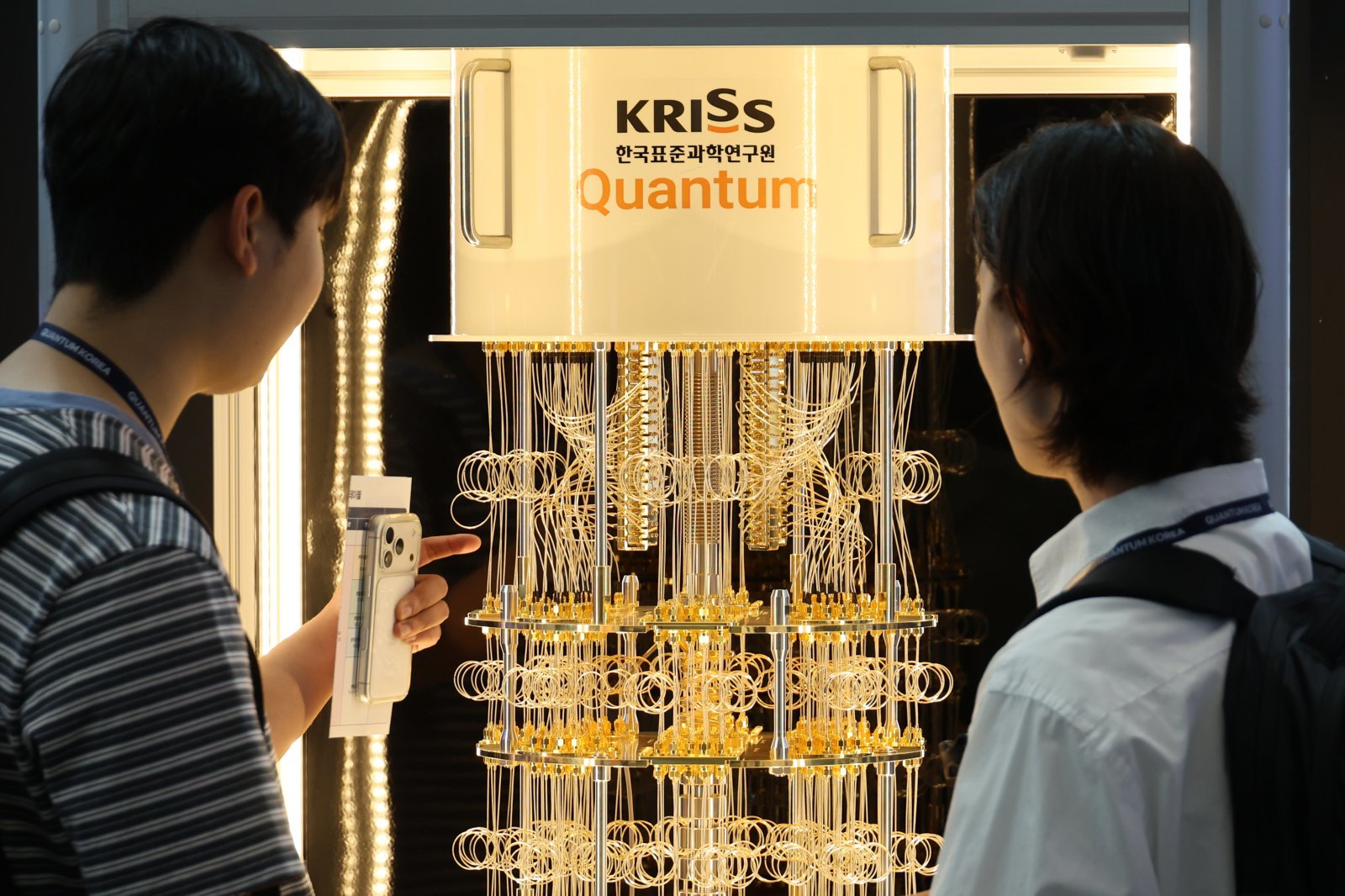
South Korean researchers have improved a key quantum-computing measure, extending how long superconducting qubits can hold information to more than 100 microseconds.
That is twice the government’s target for 2027, reached just one year into the research programme.
The work is part of a government-backed project covering quantum computing, communications and sensing, with about 360.4 billion won planned for its first stage from 2025 to 2029.
Researchers also reported about 99% accuracy in operations that link the states of two qubits, a factor that affects computing errors.
The results support a goal of developing a 100-qubit processor with error correction by 2029, while other teams presented technologies including long-distance quantum relays and a room-temperature sensor intended to help detect heart conditions.
Project researchers will assess which technologies have strong potential for practical use and explore ways to bring them to market sooner.

South Korean researchers reported that superconducting qubits can retain information for more than 100 microseconds.
That is twice the government’s 50-microsecond target for 2027, reached one year after the project began.
Researchers also reported about 99% accuracy in entangling operations between two qubits.
The results were shared at an annual meeting of the government’s Quantum Science and Technology Flagship Project in Daejeon.
The project also presented progress on quantum repeaters for long-distance communications and a compact, room-temperature heart-sensing device.
- Who
- South Korean researchers working on the government’s Quantum Science and Technology Flagship Project.
- What
- They reported superconducting-qubit information-retention time above 100 microseconds and about 99% accuracy in two-qubit entangling operations.
- When
- The results were shared on November 10, 2026.
- Where
- Hotel Onoma in Daejeon, South Korea.
- Why
- The project aims to develop key quantum technologies and support South Korea’s quantum industry.
This story does not have two clearly opposing sides.
The first phase of the flagship project is scheduled to run, with a total budget of about 360.4 billion won.
Researchers achieved superconducting-qubit information-retention time above 100 microseconds, ahead of the 2027 target.
The Quantum Science and Technology and Industry Promotion Act took effect.
The project held its annual meeting in Daejeon and shared research results from the past year.
- Qubit information-retention time
- More than 100 microseconds
- 2027 target
- 50 microseconds
- Two-qubit entangling-operation accuracy
- About 99%
- Flagship project first-phase budget
- About 3,604 billion won
- Project research tasks
- 26 across quantum computing, communications and sensing
1 source
What people are saying
The Quantum Science and Technology Flagship Project is a key research and development project for securing an edge in our country’s quantum technology competitiveness