

Science & Tech · Space · 12 hrs ago
Solar panel readings could help spacecraft navigate lunar orbit
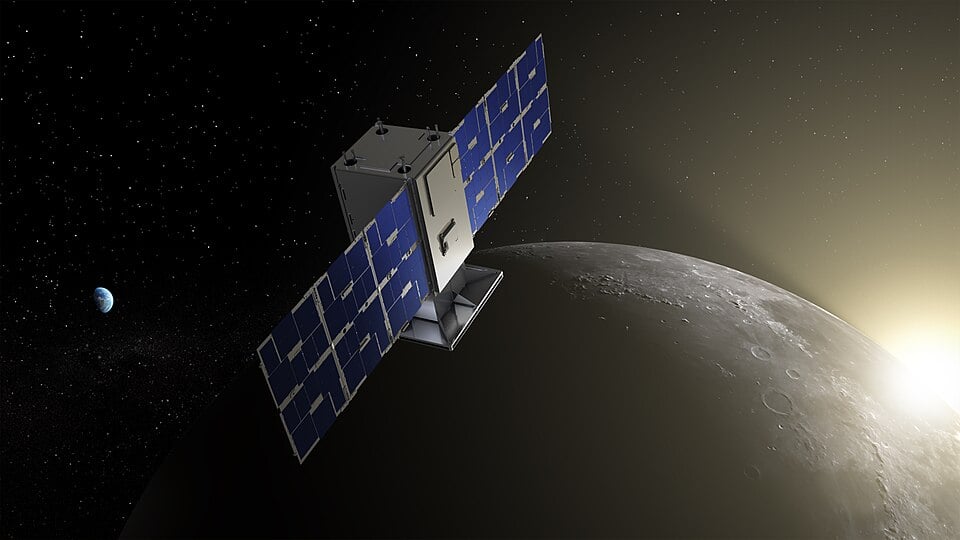
Researchers propose using solar panel data to locate spacecraft as they pass through shadows in lunar orbit.
The method uses the drop and return of a craft’s electrical output as it enters and leaves an eclipse.
The approach could reduce reliance on NASA’s Deep Space Network, which faces growing demand tracking missions in deep space.
A spacecraft could estimate its position without radio signals or cameras by matching eclipse timing to the known positions and shadows of the Sun, Earth and Moon.
But the Moon’s uneven surface and Earth’s atmosphere can make shadow boundaries difficult to measure precisely.
The researchers tested their method using more than 22,000 historical observations of lunar craters covered by Earth’s shadow, gathered from 1842 to 2011.
The work describes a proposed navigation method; the available information does not say when it might be used on a mission.

Researchers propose using changes in spacecraft solar-panel output during eclipses to help determine a spacecraft’s position in lunar orbit.
The method uses the timing of voltage drops and recoveries as a spacecraft enters and leaves a shadow.
The researchers say the approach could work without cameras, star trackers or radio signals.
They tested an algorithm using more than 22,000 historical observations of lunar craters passing through Earth’s shadow.
- Who
- Researchers Ian Down, James McElreath and Manoranjan Majji proposed the approach.
- What
- A navigation method uses solar-panel readings during eclipses to estimate a spacecraft’s location.
- When
- The paper was available as a preprint; its publication date is not stated.
- Where
- Lunar orbit.
- Why
- The method could help address pressure on NASA’s Deep Space Network and use data spacecraft already track.
This story does not have two clearly opposing sides.
Astronomers collected more than 22,000 observations of lunar craters being covered by Earth’s shadow.
The researchers used the historical observations to test an algorithm mapping parts of Earth’s shadow to ground features.
- Researchers
- Ian Down, James McElreath and Manoranjan Majji
- Historical observations
- More than 22,000
- Observation period
- 1842–2011
- Navigation signals proposed
- Solar-panel voltage changes during eclipses