

Politics · United States · 1 hr ago
Federal judge blocks Trump’s latest birthright citizenship restrictions
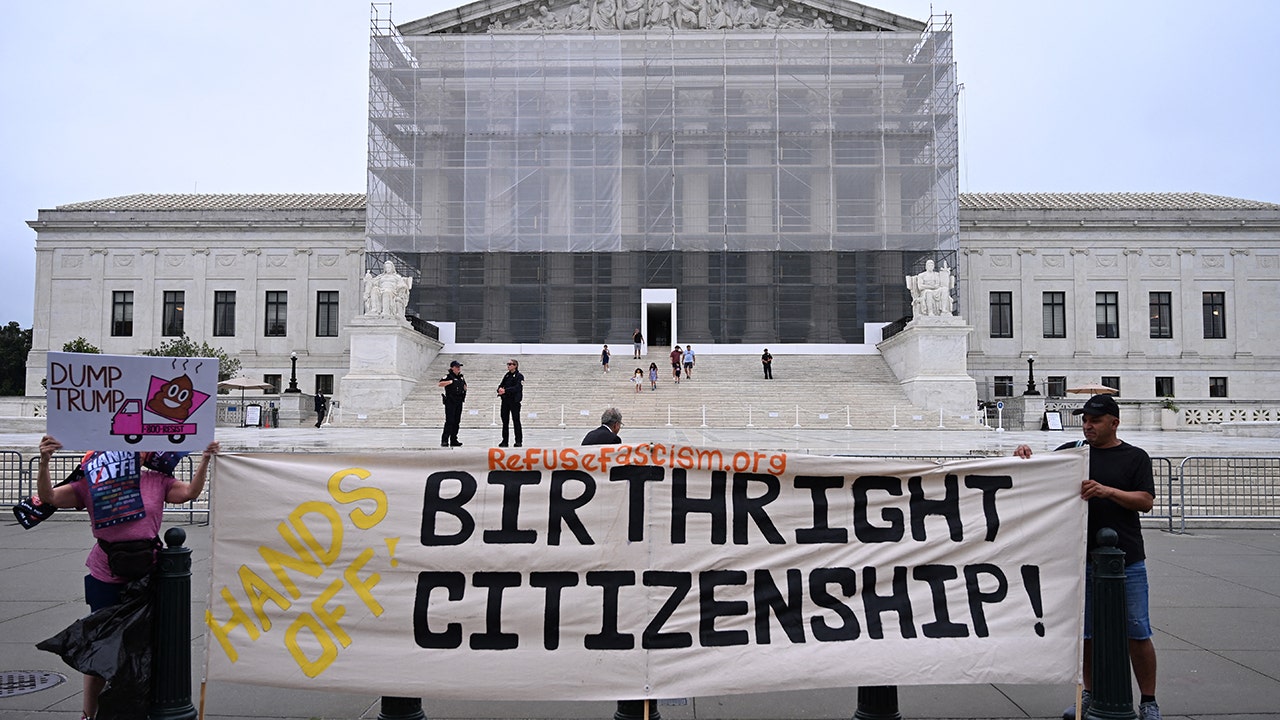
A federal judge in Washington blocked President Donald Trump’s second order restricting birthright citizenship on Wednesday.
The order sought to deny citizenship to some children born in the United States, including children of suspected terrorists or gang members and children born through surrogacy to foreign parents.
Judge Christopher Cooper’s ruling expanded protections to additional groups of U.S.-born children beyond those covered by an earlier court injunction.
Cooper said the president cannot create new exceptions to birthright citizenship for children born in the United States and subject to its laws.
The dispute concerns the Fourteenth Amendment’s guarantee of citizenship at birth and earlier Supreme Court rulings, including one involving a man born to Chinese immigrants.
The ruling is another setback to Trump’s effort to restrict birthright citizenship; the sources do not say what the administration will do next.

A federal judge blocked President Donald Trump’s latest executive order restricting birthright citizenship.
US District Judge Christopher Cooper ruled against the August order in Washington on Wednesday.
The order sought to exclude some US-born children from citizenship, including children of parents suspected of terrorism or gang membership and children born through surrogacy to foreign parents.
Cooper said the president could not create new exceptions to birthright citizenship for children born in the United States and subject to its laws.
The ruling expanded protections after another federal judge had partially blocked the order in September.
- Who
- US District Judge Christopher Cooper blocked the order issued by President Donald Trump.
- What
- Cooper struck down an executive order restricting birthright citizenship for some US-born children.
- When
- Wednesday, November 25, 2026.
- Where
- Washington, DC, in federal court.
- Why
- Cooper said the president could not create new exceptions to birthright citizenship for children born in the United States and subject to its laws.
Trump administration
Judge Christopher Cooper
Birthright citizenship restrictions
Trump administration
The administration’s August order sought to bar some US-born children from citizenship eligibility, including children of parents suspected of terrorism or gang membership and children born through surrogacy to foreign parents.
Judge Christopher Cooper
Cooper ruled that the president could not carve out new exceptions for children born in the United States and subject to its laws.
Scope of exceptions
Trump administration
The order sought to restrict citizenship for additional categories of children, including those with parents deemed “alien enemies.
Judge Christopher Cooper
Cooper said a parent’s purported status as an alien enemy, by itself, could not strip a US-born child of birthright citizenship.
Trump signed his initial executive order seeking to deny birthright citizenship to some US-born children.
The Supreme Court struck down Trump’s initial executive order, according to Fox News.
Trump issued a second executive order restricting birthright citizenship.
US District Judge Deborah Boardman partially blocked the second order.
Judge Christopher Cooper struck down the August order in a 67-page ruling.
- Judge
- Christopher Cooper
- Ruling
- 67-page decision striking down the August executive order
- Earlier partial block
- September 2, 2026, by Judge Deborah Boardman in Maryland
- Order’s targeted groups
- Some US-born children of parents suspected of terrorism or gang membership, and children born through surrogacy to foreign parents
- Relevant precedent
- United States v. Wong Kim Ark
2 sources
What people are saying
As the Supreme Court has made clear, however, the President cannot carve out new exceptions to birthright citizenship for children born within the United States and subject to its laws.
The merits in this case are clear-cut. The Supreme Court has twice confirmed that all children born in this country are U.S. citizens, save only for the small handful who are not subject to U.S. law.
Enough is enough
Third time is not the charm, and the president needs to accept that birthright citizenship is the law of the land.