

Science & Tech · Cybersecurity · 15 hrs ago
Malicious ads on Dutch websites exposed some iPhone users to data theft
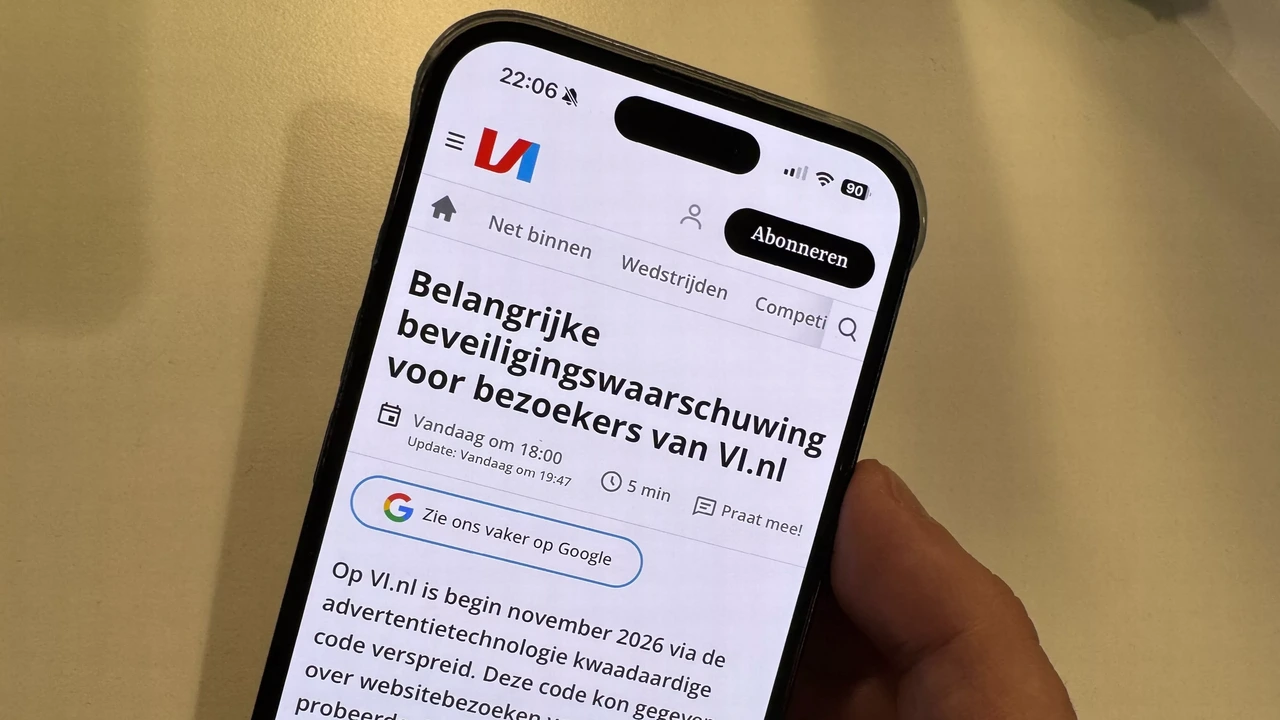
Malicious code delivered through ads on at least 14 Dutch sites and one Belgian site may have collected visitors’ data.
The affected sites include VI, GeenStijl, Bright, Scientias and several sports and lifestyle websites.
The risk involved people who visited between November 1 and 3, or on November 11, using an older iPhone or one without the latest update.
The code may have accessed messages, photos, contacts, saved passwords and information about browsing and the device.
The sites say data was sent to cybercriminals, but they cannot tell which individual visitors were affected or what information was taken from each person.
Ad company NextDay says it has fixed the security flaw, but the number of affected sites and users is not known.
Potentially affected users are advised to update their devices and change important passwords using a device they know is safe; Android phones, iPads and other computers were not at risk from this malware.

Malicious advertising code on multiple Dutch websites may have collected data from visitors using older iPhones or devices without the latest update.
At least 14 Dutch websites and one Belgian website warned visitors about the security flaw.
The affected sites said advertising company NextDay had fixed the vulnerability.
Possible data accessed included messages, photos, contacts, saved passwords and information about visitors’ browsing and devices.
The sites said data had been sent to cybercriminals, but they could not determine which individual users were affected or what data was taken.
- Who
- Visitors to affected websites, particularly those using older iPhones or devices without the latest update.
- What
- Malicious advertising code may have collected personal and device data.
- When
- Visitors were at risk on 1–3 November or 11 November 2026.
- Where
- At least 14 Dutch websites and one Belgian website; named examples include VI, GeenStijl, Bright and Scientias.
- Why
- The code was distributed through a security flaw in the websites’ advertising system.
This story does not have two clearly opposing sides.
Visitors to the affected sites using vulnerable devices may have been exposed to the code.
A further period of possible exposure occurred for visitors using vulnerable devices.
Dutch news outlets reported the malicious advertising code and the warnings to visitors.
- Affected sites
- At least 14 Dutch websites and one Belgian website
- Possible exposure dates
- 1–3 November and 11 November 2026
- Advertising company
- NextDay
- Possible data accessed
- Messages, photos, contacts, saved passwords, browsing and device information
- Android, iPads and other computers
- Not at risk, according to NOS
5 sources
Kwaadaardige advertentiecode op meerdere websites probeerde ook iPhones te besmetten
Meerdere Nederlandse sites verspreidden malware via advertenties
Nederlandse sites verspreidden onbewust kwaadaardige code die data buitmaakt
Meerdere grote websites verspreidden zogenaamde ’kwaadaardige code’: onder andere VI, GeenStijl en Men’s Health
What people are saying
Serieus slecht nieuws