

Health · Medical Research · 6 hrs ago
Researchers restore memory-linked neuron function in Alzheimer's mice
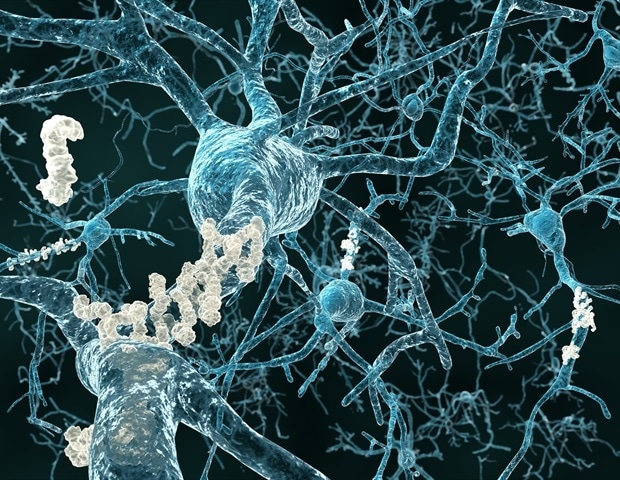
Researchers restored the function of memory-linked brain cells in mice designed to mimic key features of Alzheimer's disease.
The work focused on parvalbumin interneurons, or PV cells, which help produce fast brain rhythms called gamma oscillations.
These rhythms are involved in learning, forming memories and processing information, and are disrupted in people with Alzheimer's.
The team gave the mice a sodium channel subunit to enhance PV cell function, and the cells' activity patterns and gamma rhythms improved.
The findings show that PV cells are recruited in a timed sequence, rather than all working in unison as previously thought.
The results offer early evidence for a possible targeted treatment approach, but Alzheimer's is a human disease and the experiment was done in mice.
The research does not establish whether the approach will work in people or say what further steps researchers will take.

Researchers restored the function of memory-linked parvalbumin interneurons in mice that mimic key features of Alzheimer’s disease.
The intervention used a sodium channel subunit and was associated with improved gamma oscillations in the mice.
The researchers also found that parvalbumin cells are recruited in sequence, rather than all activating together.
The findings offer early proof of principle for a possible targeted therapy, but the research was conducted in mice.
The study was published in Neuron.
- Who
- Researchers led by Keran Ma, first author and assistant professor at UTHealth Houston.
- What
- They restored parvalbumin interneuron function in Alzheimer’s-model mice using a sodium channel subunit, improving gamma oscillations.
- When
- The findings were published on October 15, 2026.
- Where
- The research involved mice; the researchers were affiliated with UTHealth Houston, the Gladstone Institute of Neurological Disease and the Allen Institute for Brain Science.
- Why
- To investigate whether restoring parvalbumin cell function could improve gamma oscillations, which are disrupted in Alzheimer’s disease.
This story does not have two clearly opposing sides.
The researchers found that parvalbumin cell recruitment patterns were restored and gamma oscillations improved.
The findings were published in Neuron.
- Study journal
- Neuron
- Publication date
- October 15, 2026
- Intervention
- Sodium channel subunit
- Animal model
- Mice given a human version of an amyloid protein
- Research lead
- Keran Ma, UTHealth Houston
What people are saying
This is proof of principle that we can manipulate these PV interneurons to increase gamma oscillations.
They actually get recruited sequentially. There's a pattern of recruitment.