

Science & Tech · Science & Environment · 3 hrs ago
Lahore Has World's Highest Air Pollution Reading as Winter Smog Sets In
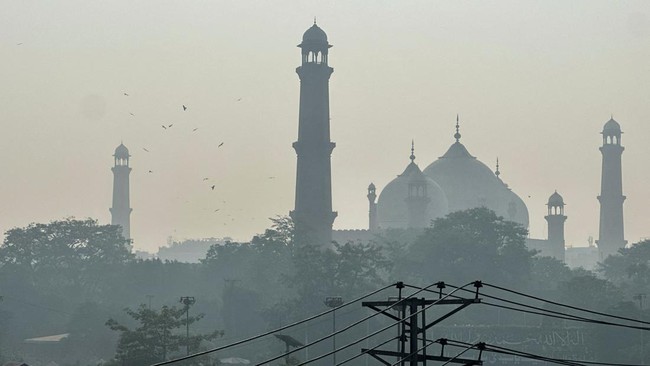
Lahore had the world’s highest pollution reading on Tuesday as smog gathered before winter.
The city’s air quality index reached 447, while a reading of 50 or lower is considered good.
Cold, dense air traps emissions from vehicles, construction sites and crop burning, driving pollution higher across the region.
Lahore’s PM2.5 level was 60 times the WHO annual guideline, and these tiny particles can enter the lungs and harm health.
Delhi authorities have imposed restrictions to address toxic smog over India’s capital.
Fireworks for the Hindu festival of Diwali, due on November 8, could add to pollution in India.

Lahore, Pakistan, had the world’s highest air pollution reading as winter smog set in.
IQAir recorded an air quality index of 447 in the city on Tuesday morning, November 3, 2026.
PM2.5 concentrations in Lahore were 60 times higher than the World Health Organization’s annual exposure guideline.
Cold, dense air traps emissions from vehicles, construction sites and crop-residue burning, raising pollution levels and health risks.
Authorities in Delhi were also imposing restrictions to address toxic smog, while Diwali fireworks were expected to worsen pollution in India.
- Who
- Lahore residents were exposed to the pollution. The report also mentions authorities in Delhi.
- What
- Lahore recorded the world’s highest air pollution reading, with an AQI of 447.
- When
- Tuesday morning, November 3, 2026.
- Where
- Lahore, Pakistan.
- Why
- Cold, dense air traps emissions from vehicles, construction sites and crop-residue burning.
This story does not have two clearly opposing sides.
Cold, dense air traps emissions from vehicles, construction sites and crop-residue burning, worsening air pollution.
IQAir recorded an AQI of 447 in Lahore on Tuesday morning.
Diwali was scheduled to take place, and fireworks were expected to add to pollution in India.
- Lahore AQI
- 447 on Tuesday morning
- PM2.5 level
- 60 times the WHO annual exposure guideline
- WHO AQI benchmark
- Up to 50 is considered good
- Diwali date
- November 8, 2026
- Pollution sources
- Vehicle emissions, construction and crop-residue burning