

Health · Medical Research · 1 hr ago
Study Finds Ovaries Keep Changing Decades After Menopause
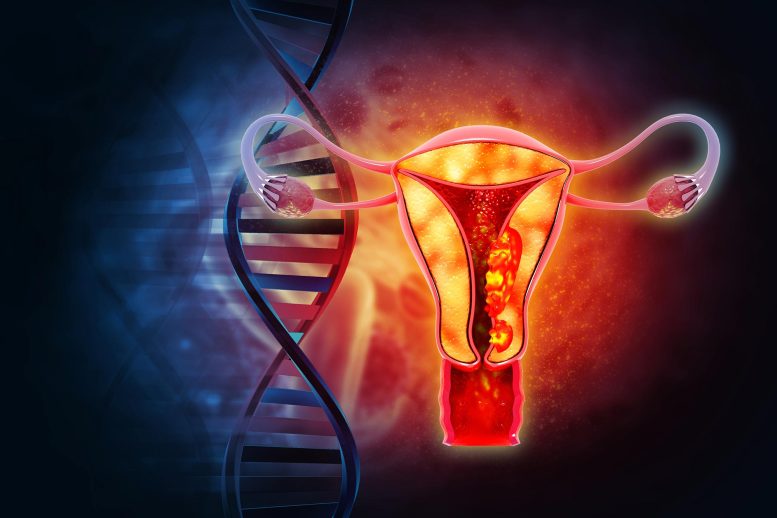
Researchers examined ovarian tissue from 28 women aged 50 to 75 to study changes after menopause.
They measured thousands of proteins and found that older ovaries had more proteins linked to inflammation and immune activity than those of women in their 50s.
Some patterns also resembled cellular senescence, in which aging or damaged cells stop dividing but remain active and affect nearby tissue.
The work was conducted by scientists at Northwestern University and the Buck Institute for Research on Aging.
It suggests ovaries remain biologically active after their reproductive role ends, rather than simply becoming inactive.
The researchers do not yet know whether these changes benefit health or become harmful, and say further research is needed to answer that question.

A study found that human ovaries continue to change for decades after menopause.
Researchers analyzed ovarian tissue from 28 women ages 50 to 75 and identified age-related changes in thousands of proteins.
Older ovaries had more proteins linked to inflammation, immune activity and tissue remodeling than younger postmenopausal ovaries.
Some molecular patterns resembled those associated with cellular senescence, but the researchers said they do not know whether the changes can become harmful.
The study by scientists at Northwestern University and the Buck Institute for Research on Aging was published in Aging Cell.
- Who
- Scientists at Northwestern University and the Buck Institute for Research on Aging.
- What
- Researchers found age-related changes in proteins in postmenopausal ovarian tissue.
- When
- Published October 25, 2026. The tissue came from women ages 50 to 75.
- Where
- The research was conducted by teams at Northwestern University and the Buck Institute for Research on Aging.
- Why
- To investigate how ovaries change after menopause, beyond changes in reproductive hormones.
This story does not have two clearly opposing sides.
This story does not have a timeline yet.
- Participants
- 28 women
- Age range
- 50 to 75
- Protein groups analyzed
- 5,812
- Publication
- Aging Cell
- Institutions
- Northwestern University and the Buck Institute for Research on Aging
What people are saying
But that’s what makes this study very different.
We do not yet know if there’s ever a point in a woman’s life when this organ is no longer beneficial and it’s actually harmful.
In fact, over the decades, there were quite dramatic differences in terms of some proteins’ levels would go up with age and some proteins’ levels would go down, which tells us this organ is quite dynamic.