

Business · Trade · 11 hrs ago
US rules on chip access raise concerns for Chinese AI firms
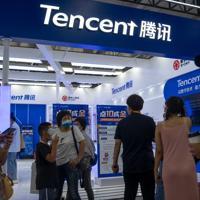
The US has restricted remote access to advanced chips through data centers in third countries, adding to limits on chip exports to China.
The rules affect Chinese technology firms including Alibaba and Tencent, which are building AI services and models.
Some firms had used overseas data centers to rent computing power, a way to work around earlier export restrictions.
Alibaba said the new rules could affect some of its global data center expansion plans, and it is still assessing the impact.
Tencent said training future AI models could take longer because firms in China will have less access to advanced computing power.
The measures matter because Chinese AI firms rely heavily on advanced Nvidia chips to train their models.
Analysts expect the US to tighten chip export controls further, though no specific next steps are given.

New U.S. rules restrict Chinese firms’ remote access to advanced chips through data centers in third countries.
Alibaba warned the rules could affect some of its global data center expansion plans and said it was assessing the impact.
Tencent said the restrictions could reduce access to advanced computing power in China and affect training timelines for future AI models.
Chinese firms have used overseas computing access to train AI models despite existing U.S. export restrictions on powerful chips.
A U.S. think tank estimated that overseas data centers could provide roughly one-third of China’s AI computing capacity by the end of 2027.
- Who
- Chinese technology firms, including Alibaba and Tencent, face the restrictions.
- What
- New U.S. rules restrict remote computing access to advanced chips through data centers in third countries.
- When
- The Trump administration issued the rules during the week of Nov. 21, 2026.
- Where
- The rules concern remote computing through data centers in third countries and access to computing capacity for Chinese firms.
- Why
- The rules aim to curtail China’s access to advanced chips and close a loophole that allowed firms to rent overseas computing access.
U.S. government
Chinese technology firms
Access to advanced chips
U.S. government
The rules restrict remote computing access through data centers in third countries to curtail China’s access to advanced chips.
Chinese technology firms
The restrictions reduce Chinese firms’ access to advanced computing power.
Impact on AI development
U.S. government
U.S. policymakers sought to close a loophole used to train AI models with overseas computing access.
Chinese technology firms
Tencent said the rules could affect training timelines for future AI models, while Alibaba warned of possible effects on data center expansion.
Alibaba’s CEO called its Zhenwu V900 chip the most powerful AI chip in China.
The Institute for Progress released a study estimating overseas data centers could account for roughly one-third of China’s AI compute by the end of 2027.
Tencent said the new U.S. rule on chip access would set everyone back in China.
Alibaba announced another quarter of strong revenue growth for its global AI cloud and compute services.
The Trump administration issued new rules restricting remote computing access through data centers in third countries.
- Alibaba AI cloud and compute revenue
- Nearly 61 billion yuan ($9 billion) in the July-September quarter, up 53 percent year on year
- Alibaba total revenue
- Almost 272 billion yuan ($41 billion) in the July-September quarter, up 10 percent year on year
- Alibaba capital expenditures
- 50.5 billion yuan ($7.6 billion) in the quarter, up 60 percent
- China’s AI compute from overseas data centers
- Roughly one-third by the end of 2027, according to an October study by the Institute for Progress
What people are saying
sets everyone back in China
Everyone is actually having less compute, advanced compute, to work with, no matter when you actually started leasing or building capacities outside of China
Chinese AI firms are still heavily dependent on the most frontier Nvidia chips