

Science & Tech · Science & Environment · 9 hrs ago
Review proposes flexible interfaces to protect high-capacity silicon batteries
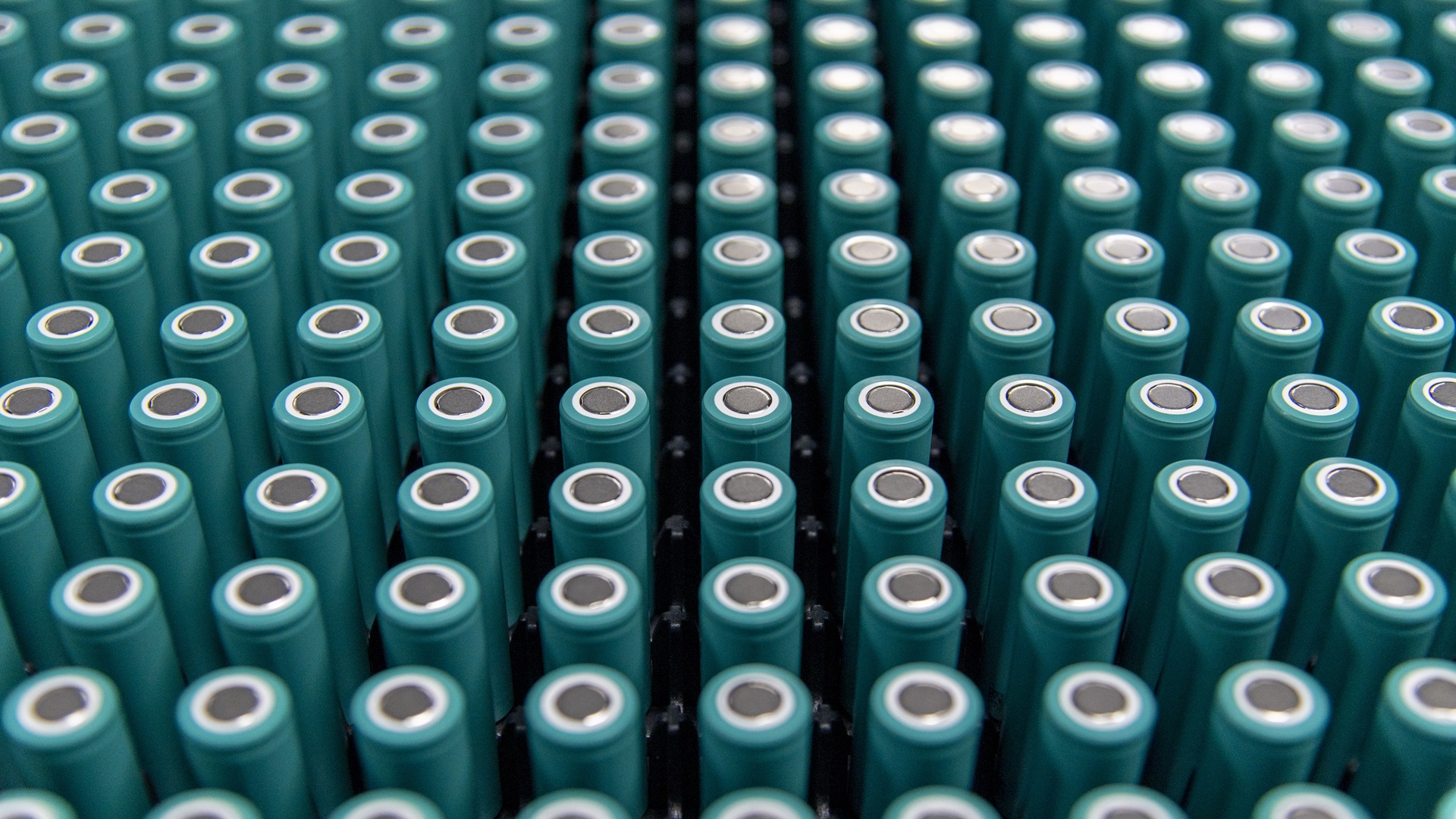
A review proposes protective interfaces that adapt to silicon instead of rigid coatings that can crack as the material changes size.
Silicon is being studied for battery anodes because it can store about 11 times as much charge as graphite, a material widely used in commercial batteries.
But silicon can expand by as much as 400 percent during charging, repeatedly damaging the layer that protects it inside a battery.
The proposed approach combines flexible polymers with stronger materials, aiming to absorb strain and help repair cracks.
The design has not been demonstrated in commercial-scale batteries, and the review says much research so far uses laboratory cells that may not reflect practical conditions.
The authors identify higher-capacity electrodes and more than 500 charge cycles with at least 80 percent capacity retained as practical targets, while data-driven design and machine-learning screening could guide further research.

A review proposes flexible, adaptive interfaces to protect silicon anodes as they expand and contract during battery charging.
Silicon has a theoretical charge-storage capacity of about 4,200 mAh/g, roughly 11 times graphite’s 372 mAh/g.
But silicon can expand by as much as 400 percent during charging, repeatedly cracking its protective layer.
The proposed interface combines rigid inorganic materials with flexible polymers that can distribute strain and potentially repair cracks.
The design principles have not yet been demonstrated together in a commercial-scale battery.
- Who
- The review’s authors, whose names are not stated.
- What
- They propose adaptive interfaces to protect silicon battery anodes from damage caused by expansion and contraction.
- When
- The review was published on November 21, 2026.
- Where
- The review was published in The Innovation; a geographic location is not stated.
- Why
- Silicon can store much more charge than graphite, but its expansion can fracture the protective interface and impair battery operation.
This story does not have two clearly opposing sides.
The electrolyte decomposes on the anode surface, forming a solid electrolyte interphase.
The review proposing adaptive interfaces was published in The Innovation.
- Silicon capacity
- About 4,200 mAh/g
- Graphite capacity
- 372 mAh/g
- Silicon expansion
- Up to 400 percent during charging
- Proposed lithium fluoride clusters
- Around 2 to 5 nanometres
- Practical cycle target
- More than 500 cycles while retaining 80 percent of initial capacity