

Science & Tech · Science & Environment · 1 hr ago
Triglav glacier’s last ice disappears after hot summer
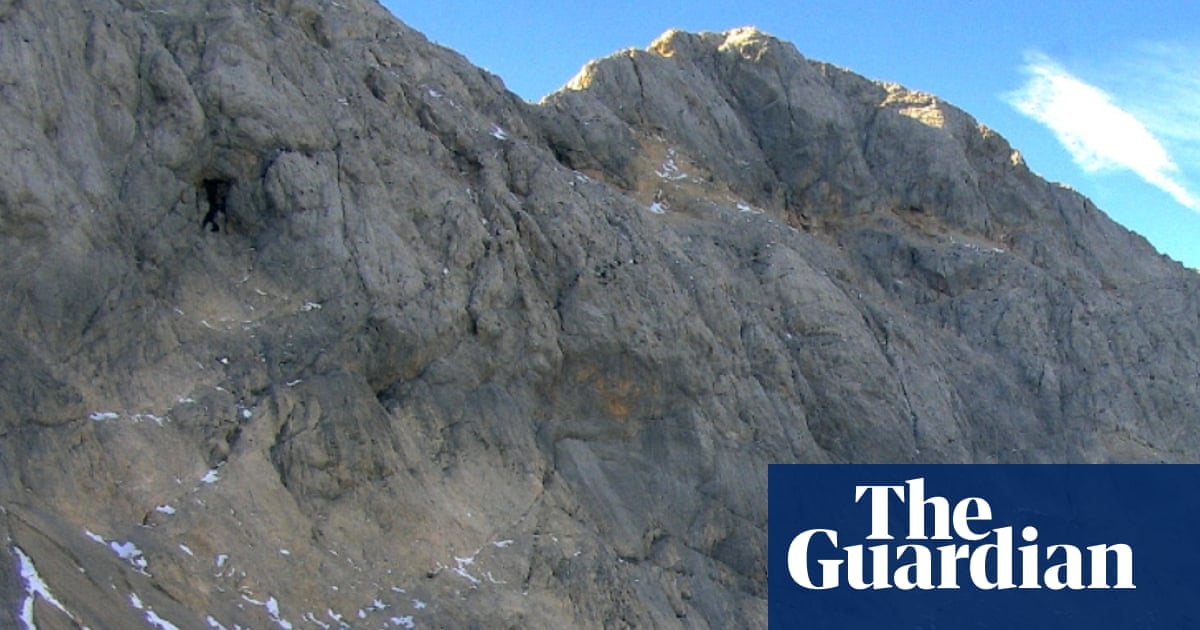
The last ice on Slovenia’s Triglav glacier has disappeared after a hot summer, photos of the mountain confirm.
The glacier sits on Mount Triglav, Slovenia’s highest peak, which has a central place in the country’s national identity.
It covered about 40 hectares in the mid-1800s, but had already lost 93% of its area between 1983 and 2003.
Small remnants then survived for another two decades before shrinking to isolated patches.
Heat made worse by carbon pollution has accelerated glacier loss across the Alps, including at Triglav.
The disappearance matters because the glacier was a record and indicator of climate change, as well as a cultural touchpoint for Slovenian people.
Scientists have found ice in caves beneath Triglav, while a smaller glacier on nearby Skuta is expected to last a few more years.

The final ice patch on Slovenia’s Triglav glacier has disappeared after a scorching summer.
The glacier lost 93% of its surface area between 1983 and 2003, then survived for about two more decades as small remnants.
Photos taken before and after snowfall this month confirmed that no ice remained on the mountainside.
Triglav is Slovenia’s highest peak and holds a central place in the country’s national identity.
Scientists say the glacier’s loss removes an important source of data and an indicator of climate change.
- Who
- The Triglav glacier in Slovenia has lost its last ice. Researchers, including Matija Zorn, tracked its decline.
- What
- The glacier’s final ice patch has melted away.
- When
- After a scorching summer in 2026; photos taken this month confirmed the loss.
- Where
- On Mount Triglav, Slovenia’s highest peak.
- Why
- The glacier has retreated amid rising heat and climate change. The sources describe heatwaves made hotter by carbon pollution.
This story does not have two clearly opposing sides.
Historical photographs and documents suggest the glacier covered about 40 hectares.
Scientists’ first formal measurements recorded an area of 14 hectares.
The glacier lost 93% of its surface area.
The remaining ice melted to isolated pockets, with the main body reduced to a few metres by the end of summer.
Photos taken before and after snowfall confirmed that no ice remained.
- Location
- Mount Triglav, Slovenia
- Elevation ranking
- Slovenia’s highest peak
- Estimated area in the mid-1800s
- About 40 hectares
- Area in 1946
- 14 hectares
- Surface-area loss, 1983–2003
- 93%
- Final ice
- Gone after the 2026 summer
2 sources
What people are saying
Every year I knew that the ice was going to be less and less
But I was shocked every year [by] how much less ice was up there.
nature is changing in front of our eyes