

Business · Economy · 5 hrs ago
Dutch supermarkets cut budget-brand prices, but grocery costs may rise
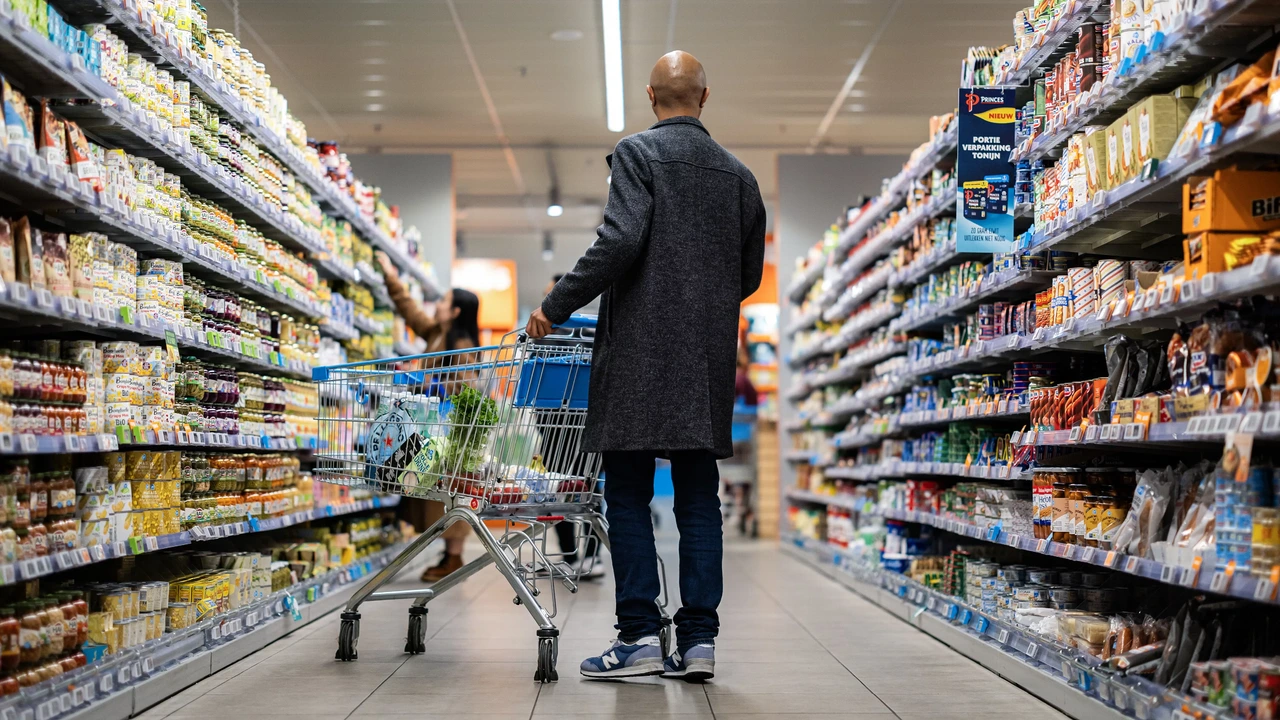
Some budget-brand groceries in the Netherlands have become extremely cheap, with the lowest-priced stroopwafels falling from 78 cents to 28 cents this year.
Supermarkets are competing to keep shoppers, who can quickly switch to a cheaper store or product when prices differ.
They often cut prices on basic products to attract customers, even if they make little or no profit on those items, hoping shoppers will buy other goods too.
Falling international raw-material costs have also helped lower prices, but changes take time to reach supermarket shelves because suppliers and retailers often agree on prices for a year.
Supermarkets and suppliers are now negotiating purchase prices for 2027, while manufacturers face higher costs than in 2025.
Retail professor Laurens Sloot expects groceries to cost 4% to 7% more next year, partly because energy has become more expensive and supermarkets will pay more in youth wages from January 1.

Prices of some Dutch supermarket budget-brand products have fallen to only a few dozen cents.
Retail professor Laurens Sloot says supermarkets earn little or sometimes lose money on these products, hoping shoppers will also buy higher-margin goods.
Price-sensitive consumers and competition between supermarkets are helping drive the cuts.
Falling international commodity prices have also fed through to supermarket prices after a delay.
Sloot expects grocery prices to rise by 4 to 7 percent next year as manufacturers face higher costs.
- Who
- Dutch supermarkets are cutting prices on budget-brand products. Retail professor Laurens Sloot expects grocery prices to rise next year.
- What
- Some budget-brand prices have fallen sharply, but grocery costs are expected to increase by 4 to 7 percent next year.
- When
- The price cuts have occurred in recent months. Sloot expects prices to rise next year.
- Where
- The Netherlands.
- Why
- Price-sensitive consumers, competition between supermarkets and falling commodity prices have contributed to lower prices. Higher manufacturers’ costs, energy prices and wage costs are expected to push prices up.
This story does not have two clearly opposing sides.
Many commodity prices peaked after Russia's invasion of Ukraine.
Many commodity prices fell, with the declines reaching supermarket prices later because suppliers and supermarkets often set purchase prices in annual agreements.
Manufacturers faced rising raw-material costs after a relatively cheaper 2025.
Supermarkets and suppliers negotiated purchase prices for 2027.
Sloot expects grocery prices to rise by 4 to 7 percent.
- Cheapest stroopwafels
- 28 euro cents
- Cheapest red cabbage
- 26 cents per jar
- Cheapest brown rice
- 45 cents per pack
- Grocery price forecast
- 4 to 7 percent higher next year
- Wage-cost change
- Youth wages rise from January 1
What people are saying
They are absurdly low prices
On the ultra-cheap products, supermarkets earn almost nothing. Sometimes they even sell them at a loss.
Whether this is a price war, I don't know, but perhaps we can now speak of a budget-brand war.
That will lead to a higher cost price